From ancient street parades to multicultural festivals, I discovered that while the rhythm might change, the spirit of Carnival stays the same. This year, I danced, observed, and vibed through Prague Masopust, Luton International Carnival, Berlin’s Karneval der Kulturen, and Vienna Carnival — each one revealing something new about culture, connection, and community.
My Carnival journey began with Prague Masopust, one of the oldest Carnivals in Europe. The celebration began with a lively re-enactment that brought centuries-old customs to life. Locals dressed as characters from folklore filled the streets, performing small sketches and dances before the main parade began. The energy felt intimate but deeply cultural, giving a glimpse into how Prague preserves its Carnival traditions through storytelling and community participation.
The costumes weren’t like mas outfits — people were bundled up for the cold, often in quirky looks that reflected their personalities. Despite the chilly weather, the community seemed happy walking together.
The most striking feature? Butchered pigs on display, part of the tradition. Masopust literally means “giving up meat,” so the pig symbolizes the big feast before Lent. My Czech colleague explained that this Carnival isn’t as widely embraced today, but it remains a cherished custom in smaller communities. It showed me how Carnivals in Europe often blend history, faith, and local pride in ways that are different, yet familiar.


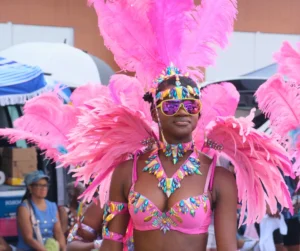
Luton Carnival was a whole different vibe. From the moment the moko jumbies appeared and the steelpan started playing, I could feel the Caribbean spirit. But Luton wasn’t just Caribbean; different groups brought their culture to the road. Groups from Africa, India, and Latin America brought their own styles, turning the road into a celebration of diversity. The theme this year focused on sustainability, and I loved seeing people use recycled materials to create stunning costumes — a creative throwback to Carnival’s grassroots origins.
Luton reminded me that Carnivals in Europe can be deeply Caribbean and proudly global at the same time — a space where culture, creativity, and community thrive together.


Berlin’s Karneval der Kulturen is one of the most famous Carnivals in Europe, and it lives up to its reputation. The streets overflowed with samba, reggae, African drums, Asian dance troupes, and Latin parades — a full celebration of global cultures.
My favorite performance came from Booty Therapy, a local group that celebrated empowerment and joy through dance. Their energy was infectious and reminded me of the same confidence and freedom we feel back home on Carnival Monday.
Caribbean culture was proudly represented too — a reggae truck, a soca crew, and plenty of flags waving. Yet I noticed how the event felt more like a cultural exhibition than a single unified parade. Still, Berlin proved that European Carnivals can serve as platforms for connection, creativity, and self-expression across cultures.


And then came Vienna Carnival, and suddenly, I felt at home again. It was smaller than Berlin and Luton, but it had that intimate, welcoming vibe that felt instantly familiar. What stood out most wasn’t just the music or costumes — it was the people. That openness, that willingness to embrace a stranger, reminded me of home.
In the Caribbean, everyone on the road feels like family. That sense of being embraced is exactly what makes Caribbean Carnival special. And, for a few hours in Vienna, I didn’t feel like an expat in Europe. I felt like I was back home, and Vienna’s carnival made me realize just how much community matters in Carnival. Vienna showed that Carnivals don’t have to be massive to be meaningful. The heart of Carnival (connection, culture, and freedom) can shine anywhere people come together to celebrate.


Traveling through these Carnivals in Europe taught me a lot. The biggest lesson? Be proud of your culture and embrace your community! Whether it’s a centuries-old tradition in Prague or a vibrant Caribbean festival in Austria, Carnival brings people together through pride, rhythm, and joy.
In the Caribbean, Carnival is family. You feel like everyone on the road is your neighbor, your cousin, your friend. In Europe, I found that same feeling expressed in new ways: in Luton’s unity, in Berlin’s diversity, and in Vienna’s warmth.
From Prague to Vienna, these experiences showed me that Carnivals in Europe might sound, look, or feel different from home — but the heartbeat is the same. Wherever there’s music, movement, and togetherness, the Carnival spirit lives on.
Yes! Several European cities host Caribbean-inspired Carnivals featuring soca, steelpan, moko jumbies, and full road parades. Cities like London, Munich, and Vienna bring island energy to Europe while blending in local culture.
Some of the most popular Carnivals in Europe include Notting Hill Carnival in London, Berlin’s Karneval der Kulturen, and multicultural celebrations like Luton International Carnival. Smaller events like Vienna Carnival and traditional celebrations like Prague Masopust offer completely different but equally meaningful experiences.
Not exactly. While some European Carnivals are deeply rooted in Caribbean culture, others are based on older European traditions tied to Lent and folklore. The vibe may differ, but the spirit of community and celebration remains strong.
Many European Carnivals happen between February and August, depending on whether they are traditional pre-Lenten festivals or Caribbean-style summer parades. It’s important to check each city’s carnival schedule before booking travel.
Some do, especially traditional pre-Lenten Carnivals like Masopust, which take place in winter. Caribbean-style Carnivals in Europe are usually held in summer for better weather and outdoor parades.
Yes, Prague Masopust is a traditional Czech pre-Lenten Carnival celebration. It focuses more on folklore, costumes, and community rituals rather than soca trucks and mas bands, offering a completely different cultural experience.
Berlin’s Karneval der Kulturen is known for its massive multicultural parade celebrating global communities. Expect samba, African drumming, Caribbean music, and cultural groups from around the world sharing the road together.
Luton International Carnival has strong Caribbean roots, but it also highlights African, Indian, Latin American, and other global cultures. It’s a true multicultural road parade that reflects the diversity of the UK.
Vienna Carnival may be smaller than London or Berlin, but it offers an intimate, welcoming experience with Caribbean vibes. It’s perfect if you want a close-knit road march where community energy takes center stage.
Yes! European Carnivals can feel less overwhelming than major Caribbean events, making them great for first-timers. They offer a mix of culture, accessibility, and vibrant energy without the massive crowds.
Specials are here!