Living in Prague has taught me that Czech cuisine doesn’t do small portions, and Masopust food is no exception. One sausage and a slice of bread can genuinely hold you for the entire afternoon. So consider this a practical, lived-in guide to Masopust food — what’s worth trying, what fills you fastest, and how to enjoy Czech Carnival cuisine without tapping out too early.
Masopust food is built for winter and tradition. It’s rich, warming, and meant to sustain you through hours outside — watching parades, walking between neighborhoods, and standing around food stalls with something warm in your hand.
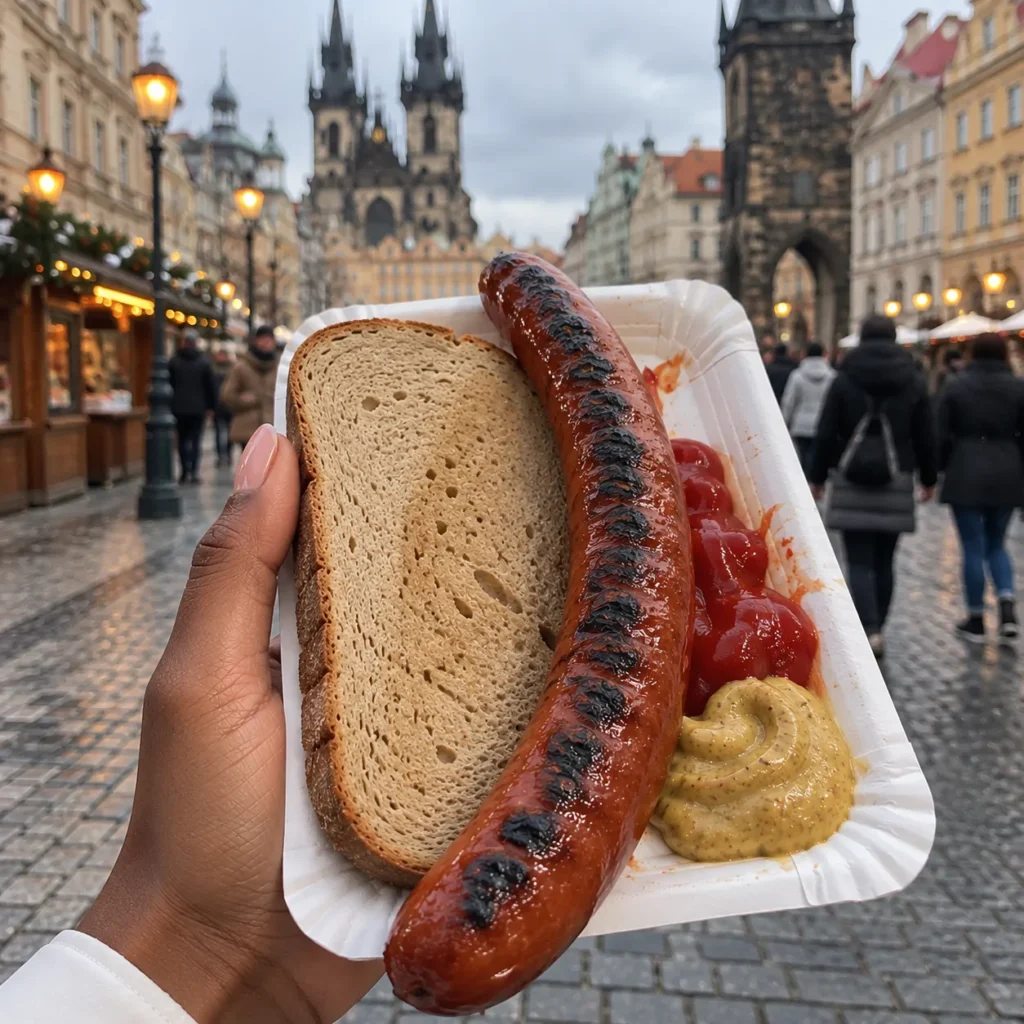
You cannot talk about what to eat at Masopust without starting with sausages. During Masopust, sausage stands pop up everywhere—near parades, village squares, and cultural centers. The sausages are thick, smoky, and grilled fresh, usually served with mustard, horseradish, and dense bread.
Here’s the honest truth: one sausage can be enough for the afternoon. If you’re with a Carnival companion, split it. You’ll enjoy more variety without feeling like you need to sit down immediately after.

The first thing most visitors notice is how pork-forward Masopust is. Pork is everywhere — roasted, smoked, ground, grilled, fried. Historically, this made sense. Winter was slaughter season, and Masopust was the moment to use everything before Lent began.
If you’re coming from a Carnival culture where food is already heavy and celebratory, this will feel familiar in intention, even if the flavors are new. Masopust food isn’t designed for balance — it’s designed for fullness.
During Masopust, these are the foods you’ll see most often at stalls and local celebrations:
These are the kinds of dishes where a few bites go a long way. If you’re trying multiple foods, this is where sharing becomes your best strategy.
Czech Carnival food doesn’t stop at savory. Masopust sweets are just as rich — and just as filling.
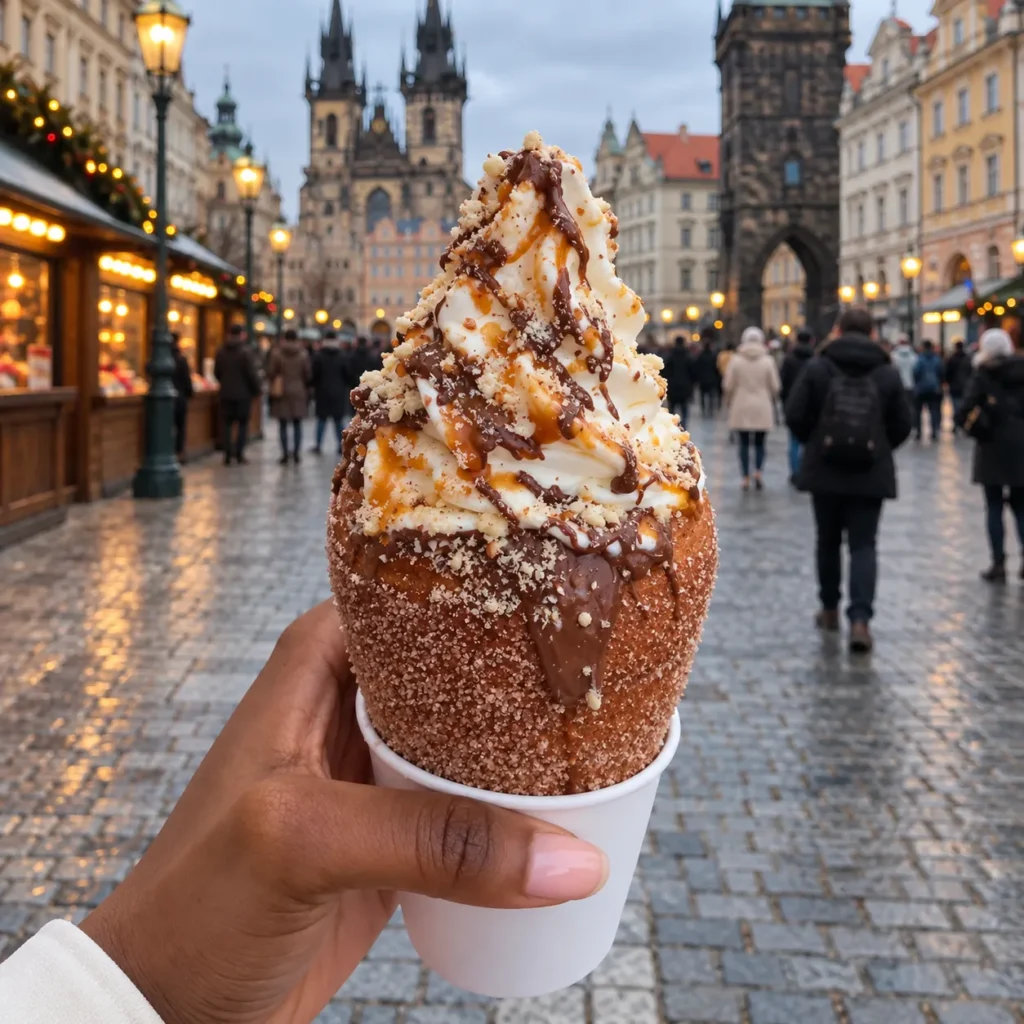
You’ll also see trdelník everywhere in Prague during winter, Masopust included. This spiral-shaped pastry is rolled in sugar, grilled over an open flame, and served warm — which, in cold weather, makes complete sense. What caught me off guard was watching people order theirs filled with ice cream while I was standing there with a warm drink, bundled up and shivering. It looks good, no doubt, but on a cold Masopust day, trdelník on its own is more than enough.
If you do try it, know this: it’s filling. Sweet, doughy, and heavier than it looks. Like most Czech treats, it’s best shared if you’re planning to keep eating your way through the city.
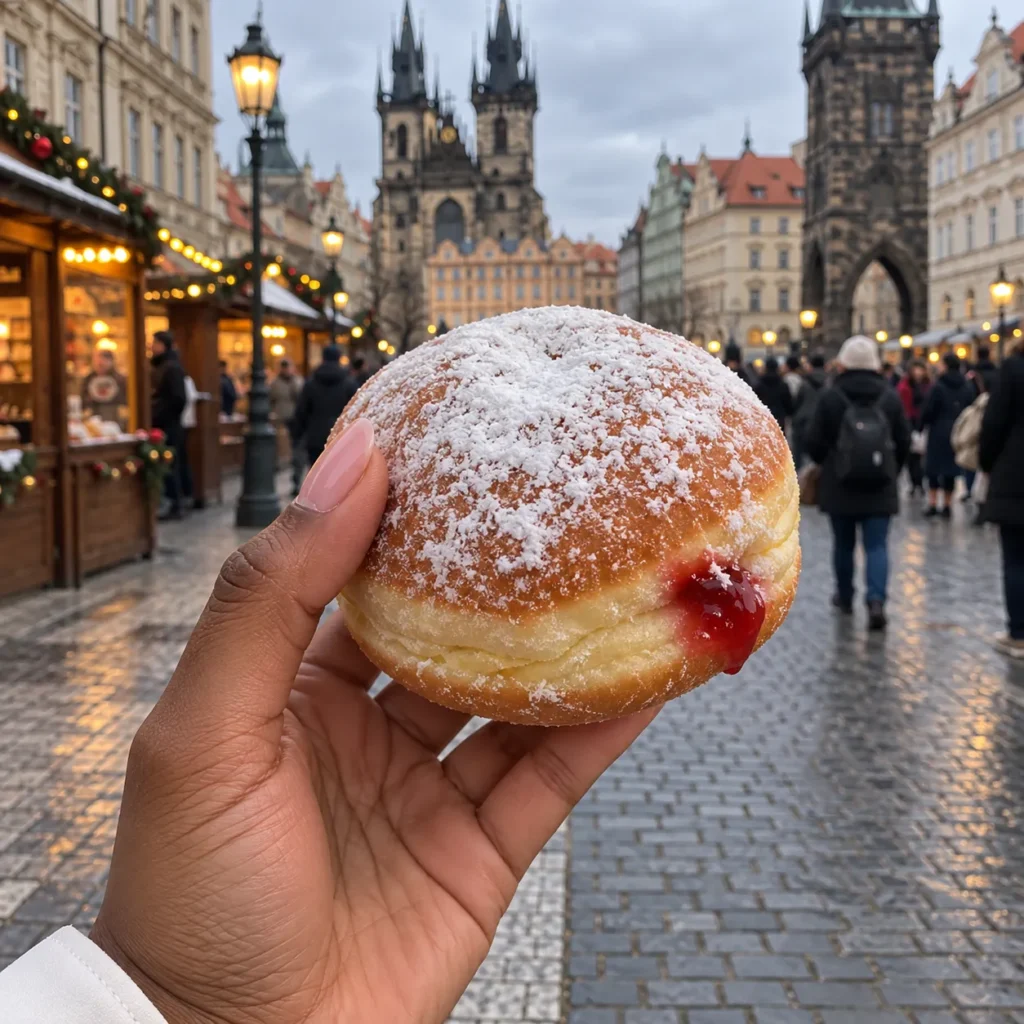
Koblihy are the Masopust staple you’ll see everywhere. These jam-filled doughnuts are deep-fried, dusted with sugar, and best eaten fresh. They’re comforting, familiar, and very easy to underestimate due to their lightness.
Masopust sweets follow the same logic as the savory dishes: this is indulgence before Lent. Butter, sugar, flour, and fat are used generously, because the point isn’t restraint — it’s celebration.
Cold-weather Carnival is a different experience, and Masopust teaches you very quickly that warm drinks aren’t optional—they’re part of the rhythm of the day.
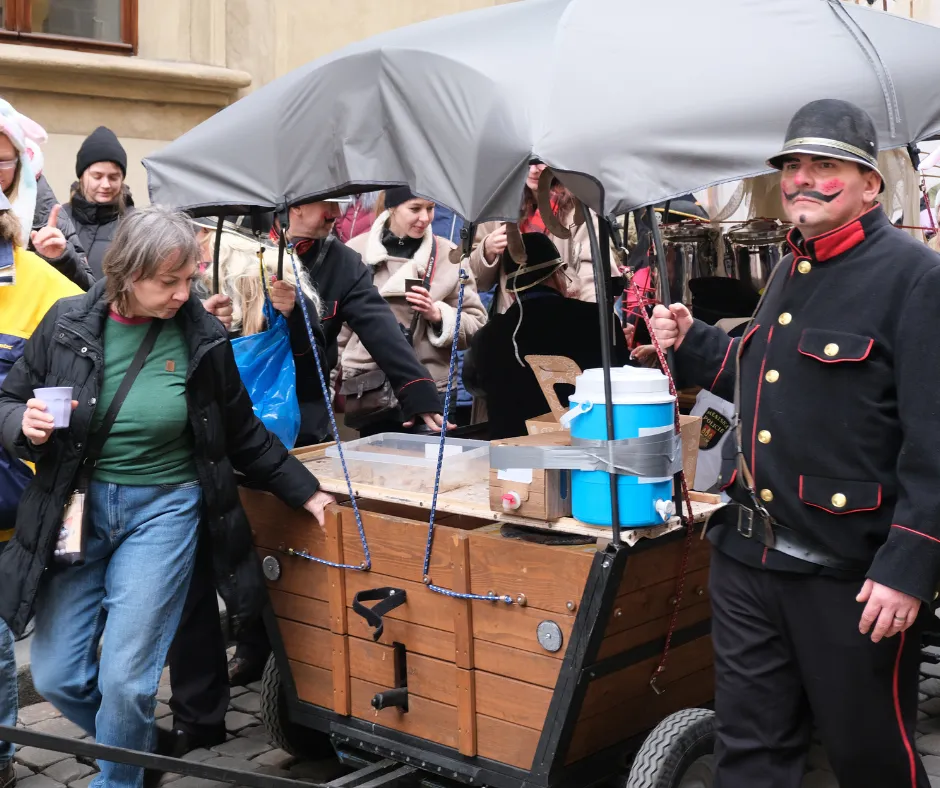
This is the most common warm drink you’ll see during Masopust. Svařák is red wine heated with sugar and spices like cinnamon, cloves, and citrus peel. It’s aromatic, comforting, and does exactly what it needs to do on a cold February day—warm you up fast.
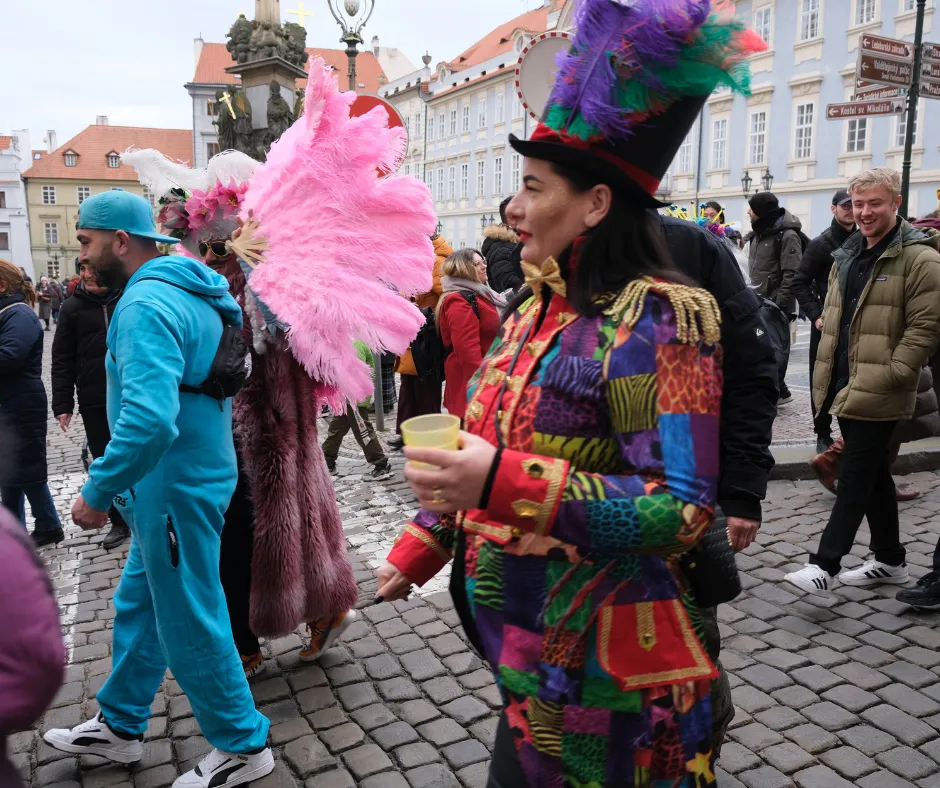
Hot mead is the quiet star of Masopust—and easily one of my personal favorites. Made from fermented honey and gently warmed with spices, medovina is smoother and less acidic than mulled wine, with a soft sweetness that feels comforting rather than heavy.

Beer is consumed heavily in the Czech Republic, and Masopust is no exception. During the celebrations, beer feels less like an add-on and more like part of the infrastructure. Along the parade itself, you’ll see beer being sold from mobile setups on wheels that move with the procession. Czech lagers are light and crisp, which helps balance out the richness of the food.
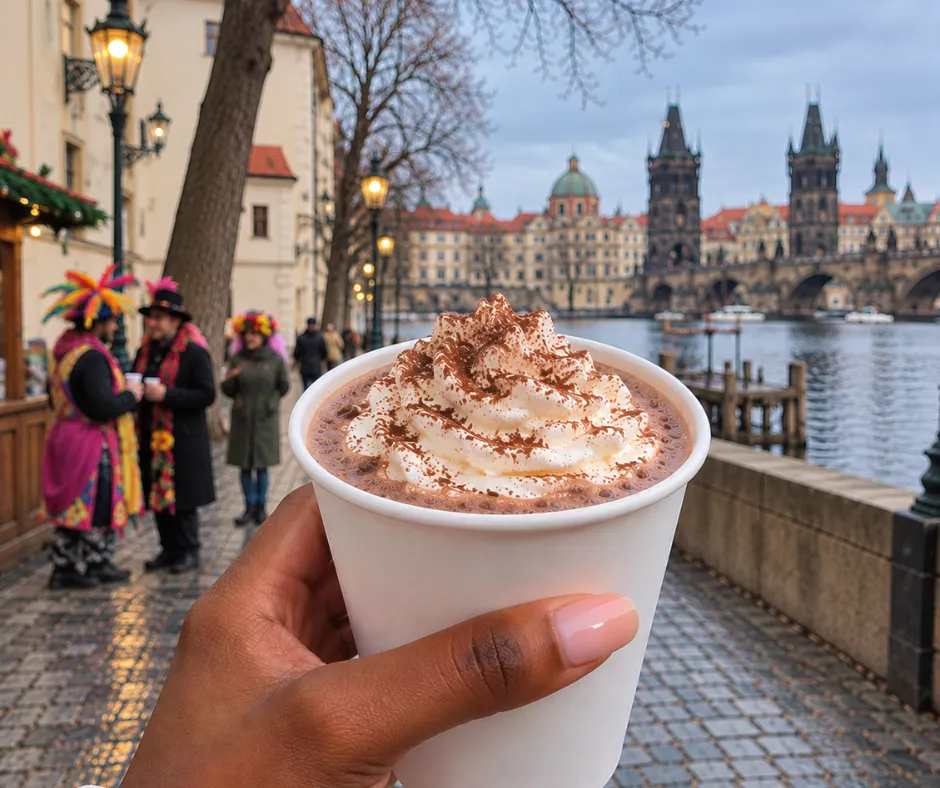
Not everyone wants alcohol, and Masopust caters to that too. Hot chocolate stalls are common, especially in more touristy areas. Czech hot chocolate tends to be thicker and richer than what many visitors expect—closer to melted chocolate than cocoa. It’s indulgent, filling, and perfect if you’re taking a break from savory foods or attending Masopust with children or non-drinkers.
Treat the hot chocolate like dessert rather than a drink you grab on the go.
If you’re visiting Prague for Carnival or any other reason, Masopust season is one of the best times to experience Czech cuisine at its most traditional. Just come hungry — and maybe with a food partner, because one plate goes a long way.
Masopust is the Czech Carnival season before Lent, (usually in February) marked by parades, masks, music, and traditional food.
Masopust food centers around pork dishes, sausages, fried pastries like koblihy, beer, spirits, and hot wine.
Yes. Pork is the foundation of Masopust cuisine and appears in multiple forms throughout the festival.
Vegetarian options are limited but usually include pastries, bread, cheese, and sweets.
Yes. During Masopust, food is widely available anywhere celebrations are taking place.