Every carnival is built to end. After the last band passes and the final note of soca or brass fades into the night, something strange and beautiful happens in cities thousands of miles apart: a towering figure (a king, a bull, a giant papier-mâché reveler) is set alight, and the crowd gathers to watch him burn. It is one of the oldest gestures in the carnival calendar, and it turns up in almost identical form on both sides of the Atlantic. Burning the carnival king is how the Caribbean says goodbye, and it is how much of Europe does too.
If you have only ever known carnival as pure celebration, this final act can feel like a plot twist. Why would people who have danced for days come together to destroy the very symbol of their joy? The answer is the same whether you are standing on a Caribbean waterfront or in a European square, and once you understand it, the fire becomes the most moving part of the whole season.

The reason the tradition looks so alike in Fort-de-France and Cologne is that it grew from the same soil. Most carnivals in both regions sit on the Christian calendar as the last great blowout before Lent, the season of fasting and restraint: the word carnival itself traces back to the idea of putting meat away before the fast. Older still are the pre-Christian rites that carnival absorbed along the way: seasonal rituals meant to drive out winter, purge the old year, and clear the ground for spring.
The burning figure is where those two inheritances meet. It becomes a vessel for the excess, the mischief, the grievances, and the sheer abandon of the season, and when it burns, all of that is released at once, leaving the community clean and ready to begin again. That is also why the figure is so often a king. Carnival is a world turned briefly upside down, where the ordinary rules loosen and anyone can be royalty for a week. Crown a king of misrule and, sooner or later, you have to bring him down.
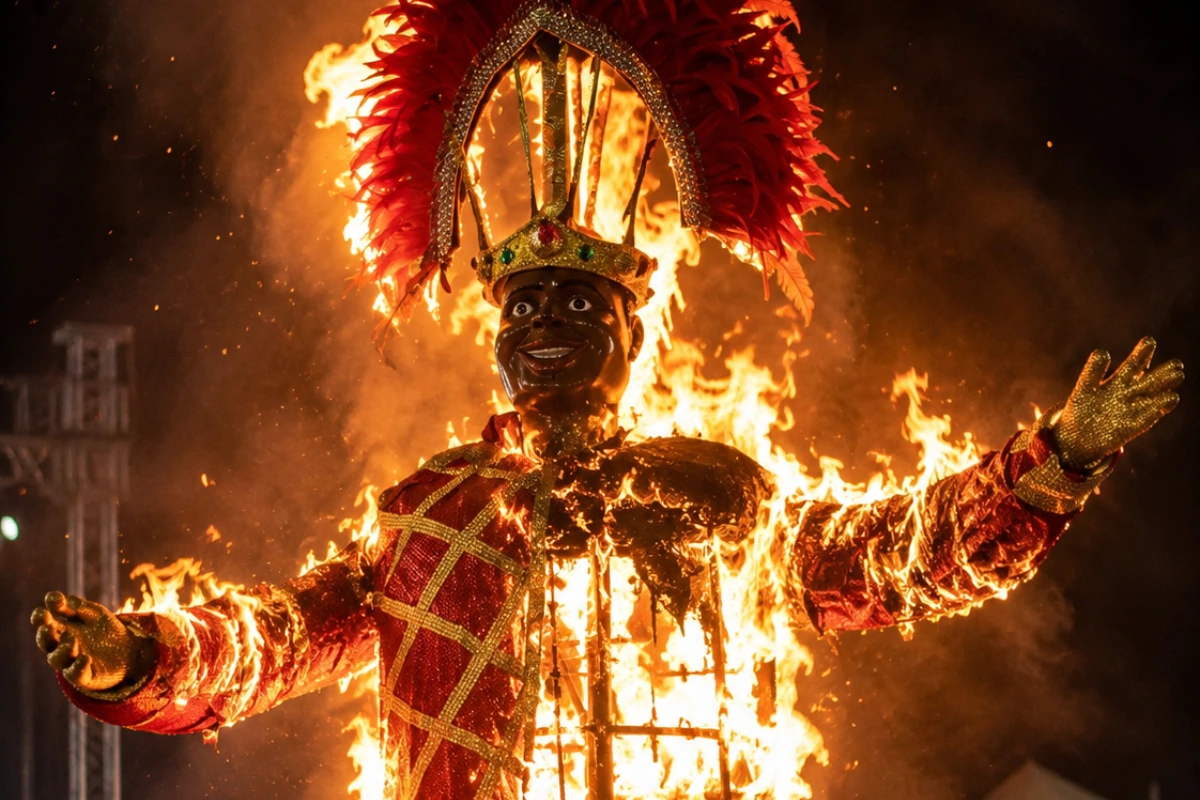
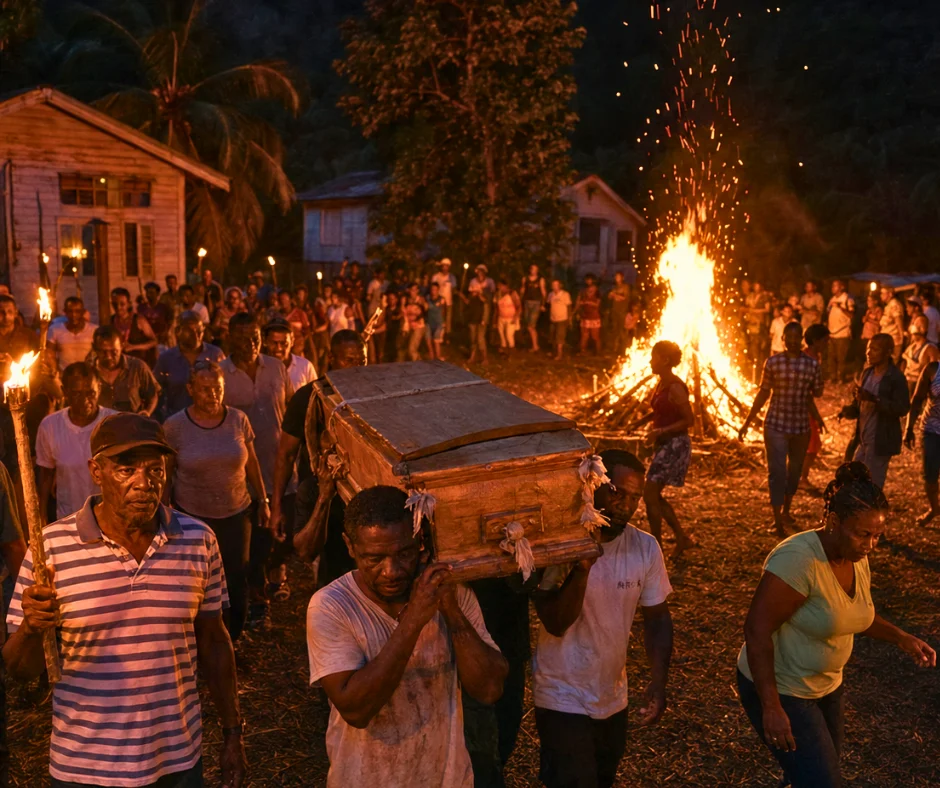
In the Caribbean, this figure has a name and often a personality. He is Vaval across the French Antilles, a shared tradition that stretches from Martinique to Guadeloupe to Dominica. At Martinique Carnival, revelers dress in black and white as they burn his figure on Ash Wednesday, marking the end of the festivities and the beginning of Lent: it is grief and party at once, you weep and you wine, because everyone knows he will be back. Guadeloupe Carnival marks the same day with its own “Brûlé Vaval,” burning its effigy in Pointe-à-Pitre and Basse-Terre while mourners chant “Vaval ka kité nou,” Vaval leaves us. At Dominica Carnival, known as Mas Domnik, the same farewell is called Tewe Vaval, “Bury the Carnival”: a coffin holding the spirit of the season is carried through the streets in a mock funeral, then set alight in a bonfire at nightfall, kept most vividly alive in Dominica’s Kalinago Territory.
Across the Dutch Caribbean, the figure answers to King Momo, the very spirit of revelry and excess. At Sint Maarten Carnival, Aruba, Curaçao, and Bonaire, the season ends with King Momo set on fire in a symbolic ceremony: the farewell that signals the return to everyday life after weeks of celebration.
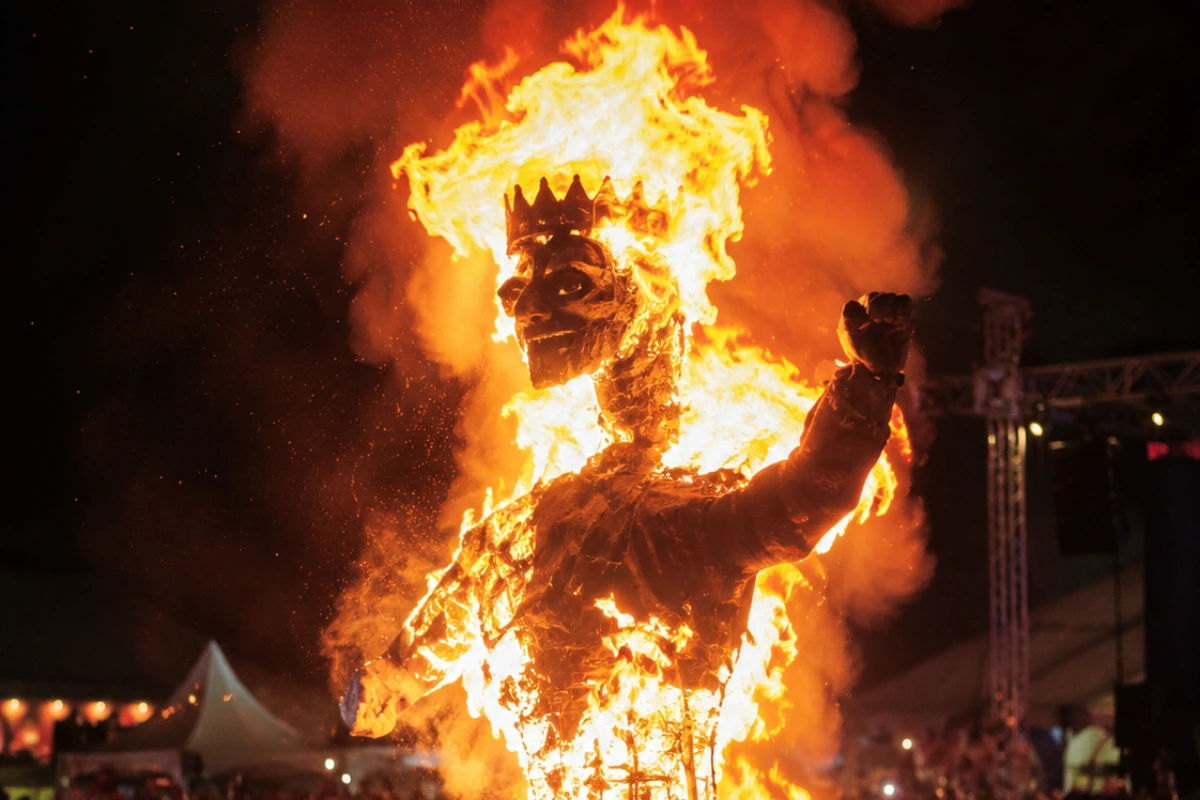
Cross to Europe and you meet the same ritual wearing different costumes. In southern France, Limoux Carnival (one of the longest-running carnivals in the world) ends its months-long run with the Nuit de la Blanquette, where His Majesty Carnival is put on trial, judged, and burned.
Sometimes the figure is not a king at all, yet the meaning holds. At Spain’s Carnaval de Águilas, the festivities close with the Burial of the Sardine, a procession that is part mock-funeral and part comedy, ending with a sardine going up in flames. In Germany, Cologne Carnival reaches its climax on Ash Wednesday with the burning of the Nubbel, a straw figure blamed for every sin committed during the wild days of celebration, sent into the fire so the city can begin Lent with a clean conscience.
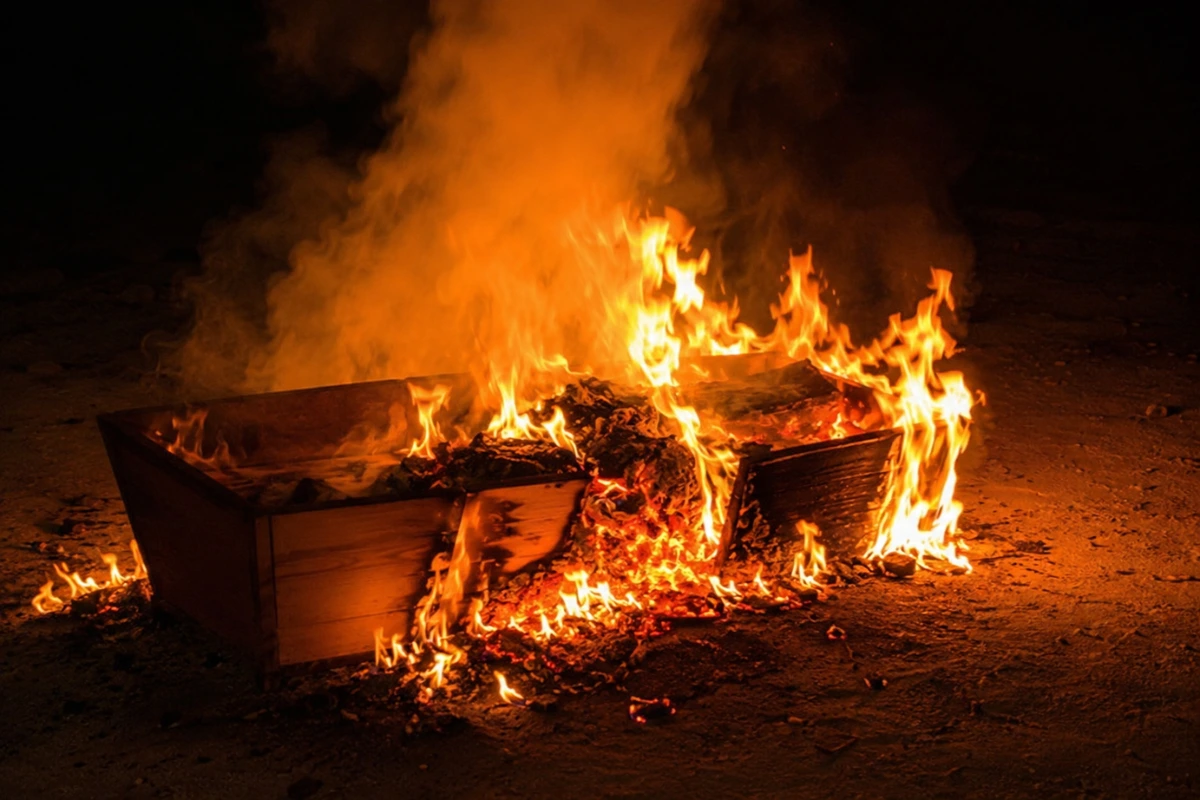
We felt the full weight of this the night we stood at Gabels Torv for the Burning of the Bull at Aalborg Karneval, Scandinavia’s largest. The international parade earlier that day had been all colour and noise; as evening fell, the mood shifted, and the crowd went quiet as the flames took the figure and the meaning settled over everyone: the end of excess, the turning of a cycle. What struck me most was how familiar it felt. I had grown up watching King Momo burn back home in the Caribbean and grieved him with a smile on my face; here, on a cool northern night, thousands of strangers were doing the very same thing to a bull, for the very same reasons. Carnival, it turns out, ends the same way wherever it is truly loved.
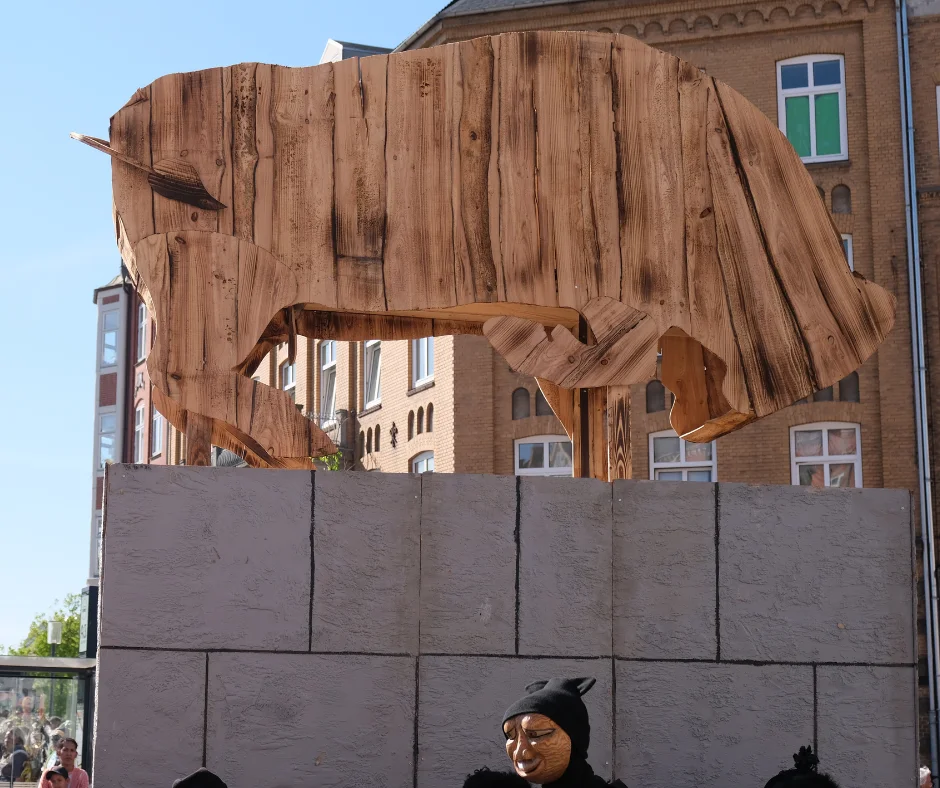
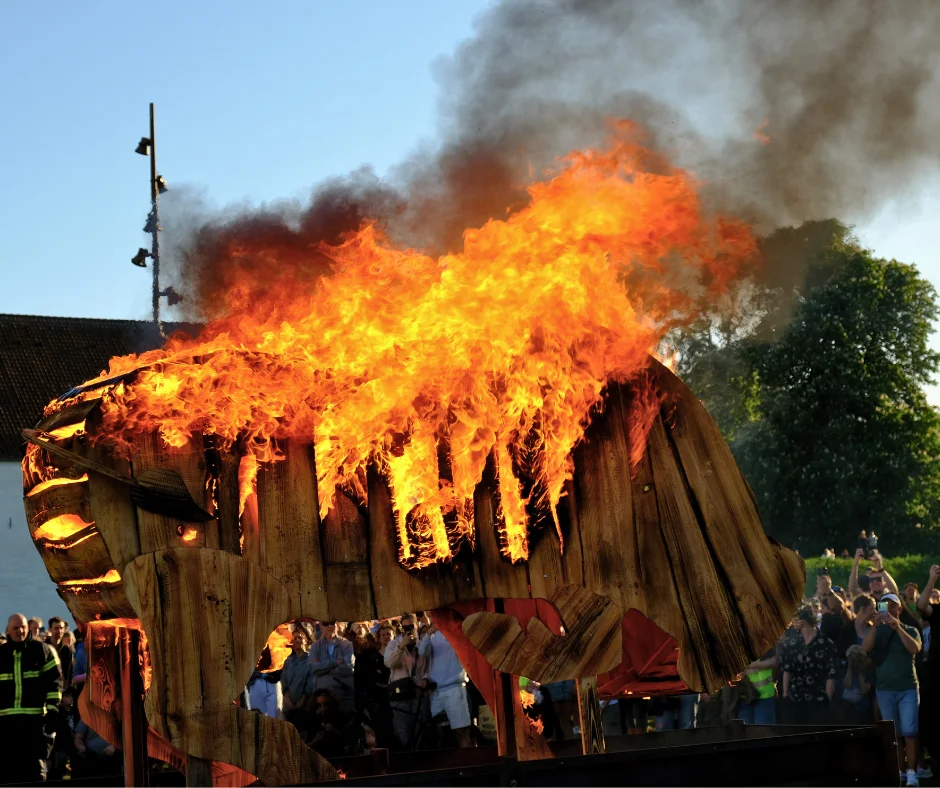
So why fire, and why a farewell? Because carnival was never only about escape; it was always about release and return. A single burning figure lets a whole community pour in its year and then let it go: the satire and the score-settling (Limoux literally puts its king on trial; Cologne pins its sins on the Nubbel), the indulgence, the roles swapped and the rules bent. The fire is the reset button. Watching it burn is cathartic precisely because it is shared: no one has to grieve the king alone.
The impulse runs so deep that it survives even where the flames do not. At Colombia’s Barranquilla Carnival, the season ends not with a burning but a burial: the mock funeral of Joselito Carnaval, where the crowd “mourns” the death of joy before the quiet of Lent. Burned or buried, the message is identical: the party has a natural end, and marking it is part of the magic.
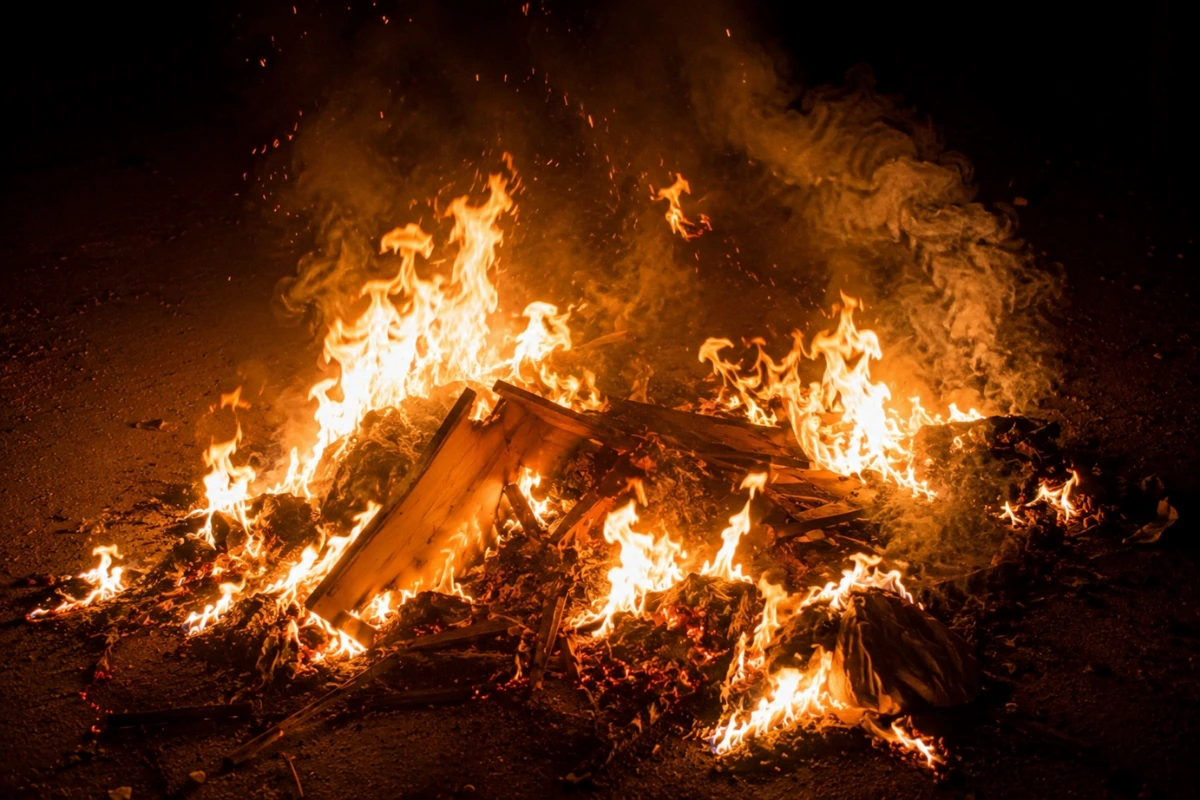
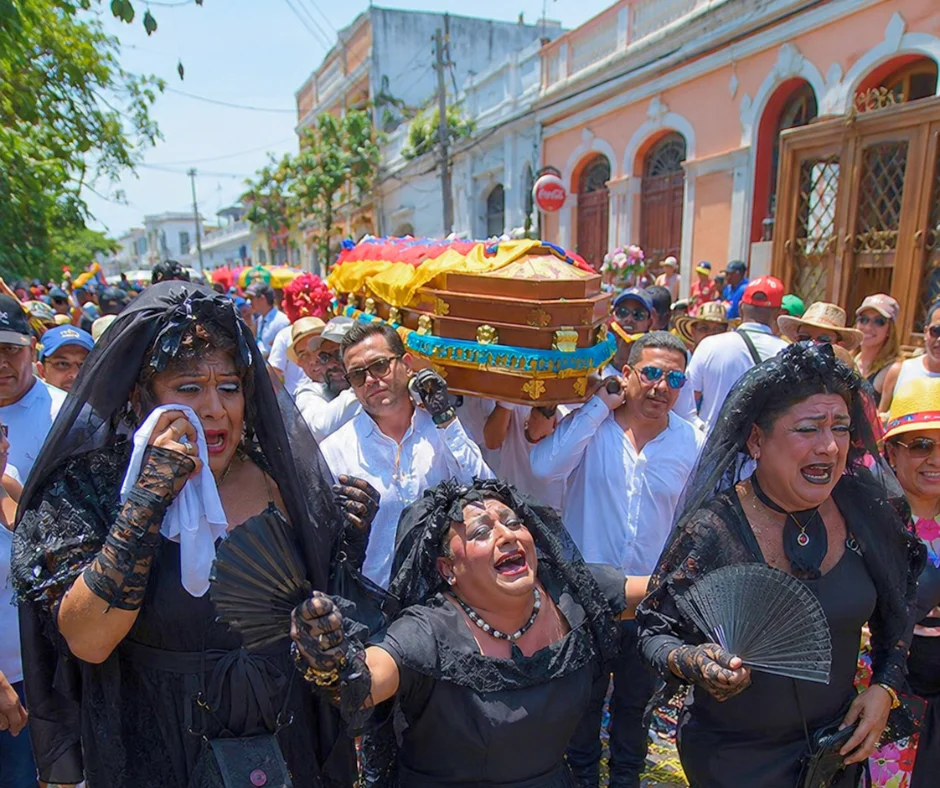
Vaval, King Momo, Tewe Vaval, His Majesty Carnival, the Nubbel, the Sardine, the Bull, Joselito: the names shift from one island or country to the next, but the gesture never does. From the Caribbean to the Mediterranean to the shores of the North Sea, carnival ends the same way: a whole community gathers to send its king into the fire (or, in Barranquilla, into the ground) and, in doing so, agrees to put the ordinary world back together again. It is the clearest proof that these celebrations, however different they look on the surface, are branches of the same old tree.
And here is the part first-timers should hold onto: the fire is not really goodbye. Every figure that burns is a promise that carnival will rise again next season, louder and brighter than before. So if you ever find yourself in the crowd as the king goes up in flames, in Martinique, in Aalborg, or anywhere the tradition still lives, stay for it. It is the moment the whole celebration finally makes sense.
The figure becomes a vessel for the whole season’s excess, satire, and revelry, so setting it alight releases all of that at once and lets the community reset. For carnivals that sit on the Christian calendar, the fire also marks the turn from celebration into the fasting season of Lent.
He goes by different names from place to place: Vaval at Martinique Carnival, and King Momo at Sint Maarten. Whatever he’s called, he personifies the spirit of revelry and excess, which is exactly why he’s sent off in flames when the party ends.
Yes, the same farewell runs across Europe, from the trial-and-burning of “His Majesty Carnival” at Limoux Carnival to the Burial of the Sardine at Carnaval de Águilas and the Nubbel at Cologne Carnival. The figures and names change from country to country, but the meaning stays the same.
No, Rio’s King Momo is a living reveler who is crowned and handed the key to the city, and Rio Carnival closes with the Champions Parade rather than a burning. In South America, the send-off tradition appears instead at Barranquilla Carnival, which “buries” Joselito Carnaval at the end of the festivities.
It usually falls on the final night of each carnival’s season: for Martinique, that means Ash Wednesday itself. But it is never truly the end: every burning is a promise that carnival will rise again, bigger and brighter, next season.
Specials are here!