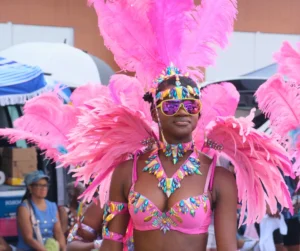
Most first-timers pick a band because they saw one costume they loved. That is the easiest mistake to make. The costume is one part of what you are buying. The band controls the music truck you dance behind, whether there is food and drink on the road (the parade route), whether there is somewhere to sit down when the sun is high, how long you wait before crossing the stage, and who is jumping beside you for eight hours. Get the band right and the costume almost takes care of itself.
Here is how to work through the decision.
A mas band (short for masquerade band) is the group you register with in order to play mas, which means taking part in the parade of bands in costume. Bands are not the Carnival organizer. They are separate companies and community groups that design a yearly theme, build costumes, and take a registered group of masqueraders on the road.
Each band splits its theme into sections. Every section has its own design, colorway, and price. This matters more than people expect, because sections sell out independently. A band can still be open for registration while the exact section you had your heart set on is long gone.
New to the language of Carnival? Keep our guide to Caribbean Carnival terms you need to know before you go open in another tab. And if you are still deciding which Carnival to attend in the first place, start with How to Pick Your First (or Next) Carnival and come back here once you have locked in a destination.
Every major Carnival has a governing body or organizing committee that registers the bands allowed on the road. That list is your starting point, and it is also your first safety check. A band that is not on it is not sanctioned to parade.
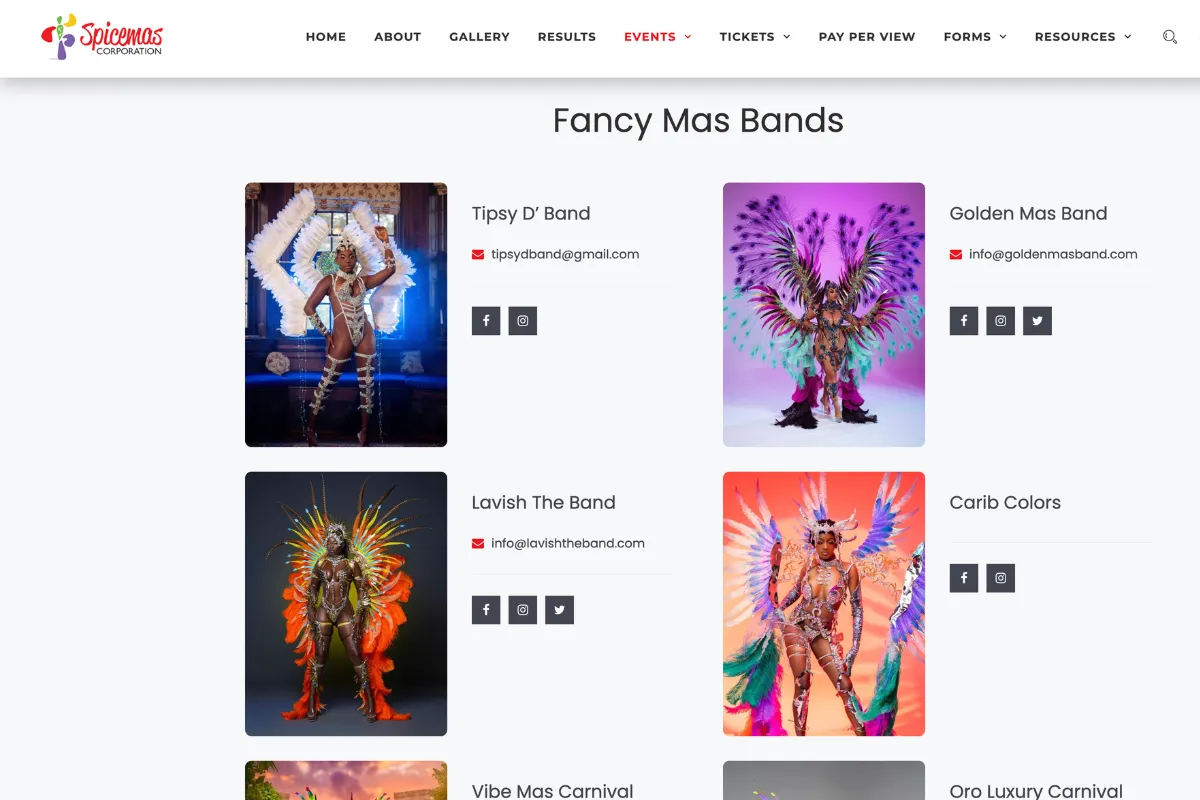
For Grenada Spicemas, that is the Spicemas Corporation. For Notting Hill Carnival, the official 2026 band list includes adult bands, children’s bands, steel bands, and Brazilian bands, and the organizers advise anyone wanting to parade to contact bands directly through their own official pages. For Miami Carnival, Toronto Caribbean Carnival, Trinidad Carnival, and so on, the same principle applies.
Not every Carnival organizer keeps a working website, and some go down entirely during the busiest part of the season. If you cannot find an official band list that way, go to the organizer’s social media pages instead. Organizers routinely repost and reshare participating bands’ launch announcements, registration links, and section reveals, so their feed doubles as an unofficial band directory. Anything they have shared has cleared their approval, which is the check you were looking for in the first place.
Once you have your list, then go look at the bands’ own social media, launch videos, and last year’s road footage. Do it in that order.
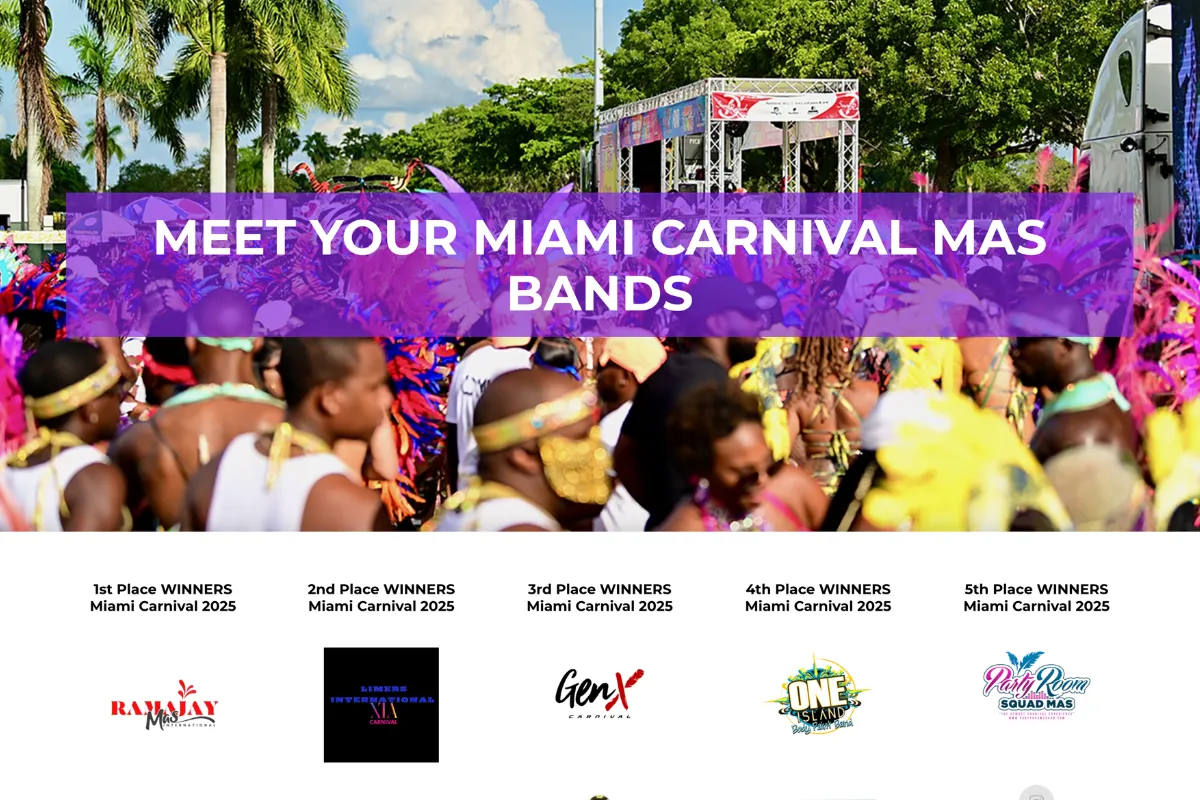
Watch footage of the band on the road, not just the launch. A launch shows you costumes on models under studio lights. Road footage shows you the crowd, the music, the pacing, and how the band actually looks after six hours in the sun.
Work out what you can spend on the whole trip first, then decide how much of that goes to the costume. Flights, accommodation, fetes, J’ouvert (the pre-dawn street party that opens Carnival), transport, and Monday wear all come out of the same pot, and the costume is rarely the biggest line item once you add everything up. Monday wear, if the term is new to you, is the simpler outfit many masqueraders wear on Carnival Monday, saving the full costume for Tuesday.
As of August 2026, band websites across the region list registration deposits in the range of roughly US$200 to US$500, with premium sections and frontline options at the higher end. Trinidad’s TRIBE, for example, publishes a deposit of TT$2,500 (about US$400), with an additional deposit required for large and extra-large backpacks. Those figures shift year to year, so treat them as a planning guide and confirm current numbers on the band’s own site before you commit.
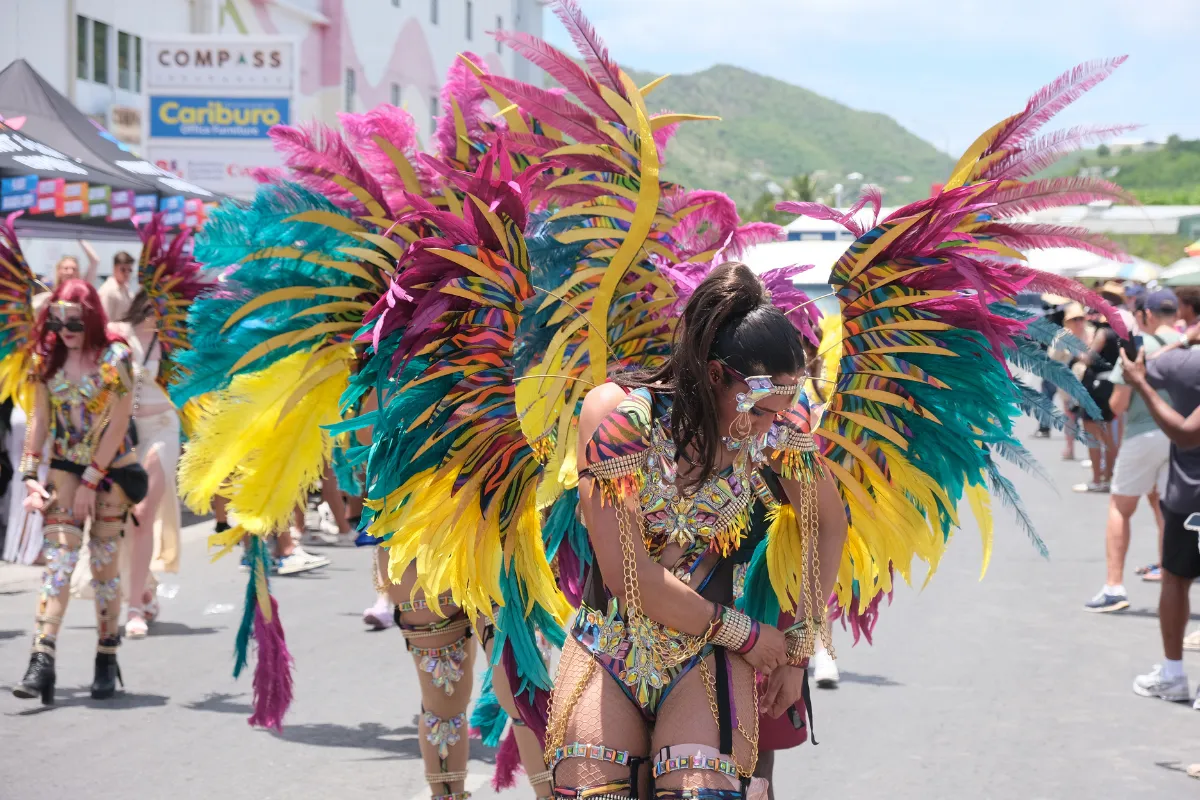
Our list of Caribbean Carnivals with dates and where to stay covers the dates and accommodation areas for each one, which is the part you want settled before you put money down on a costume.
This is where most first-timers get caught. “All-inclusive” is not a standard term. Every band defines it differently, and there is no rule forcing them to match.
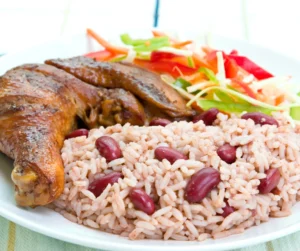
At the fuller end, all-inclusive can mean your costume plus food, unlimited alcoholic and non-alcoholic drinks, security, road marshals, portable bathrooms, cool-down zones, on-site paramedics, and a goody bag with your cup and wristband. At the leaner end, it can mean your costume plus drinks and nothing more. Both bands will use the same two words.
Things to check line by line on the section page before you pay:

That last one catches people constantly. J’ouvert is usually a separate package, either from the same band or an affiliated one. Some bands bundle a J’ouvert package with every costume. Others sell it on its own. Some do not offer it at all. Never assume registering for the road covers your pre-dawn morning too.
Screenshot the section page showing what is included at the moment you register. Band websites get updated through the season, and a screenshot with a date on it is the cleanest way to sort out any confusion later.
Bands range from around 75 masqueraders to several thousand. Toronto categorizes them formally as small, medium, and large, and the bands themselves often suggest medium-sized options for first-timers or anyone who finds big crowds stressful.
Bigger is not better, it is just different. A large band gives you scale, energy, and a serious presence on the road. A smaller band gives you space to actually move, easier access to the drinks truck, and a group where people start recognizing your face by midday. If crowds drain you, do not talk yourself into the biggest band because it is the one everyone posts about.
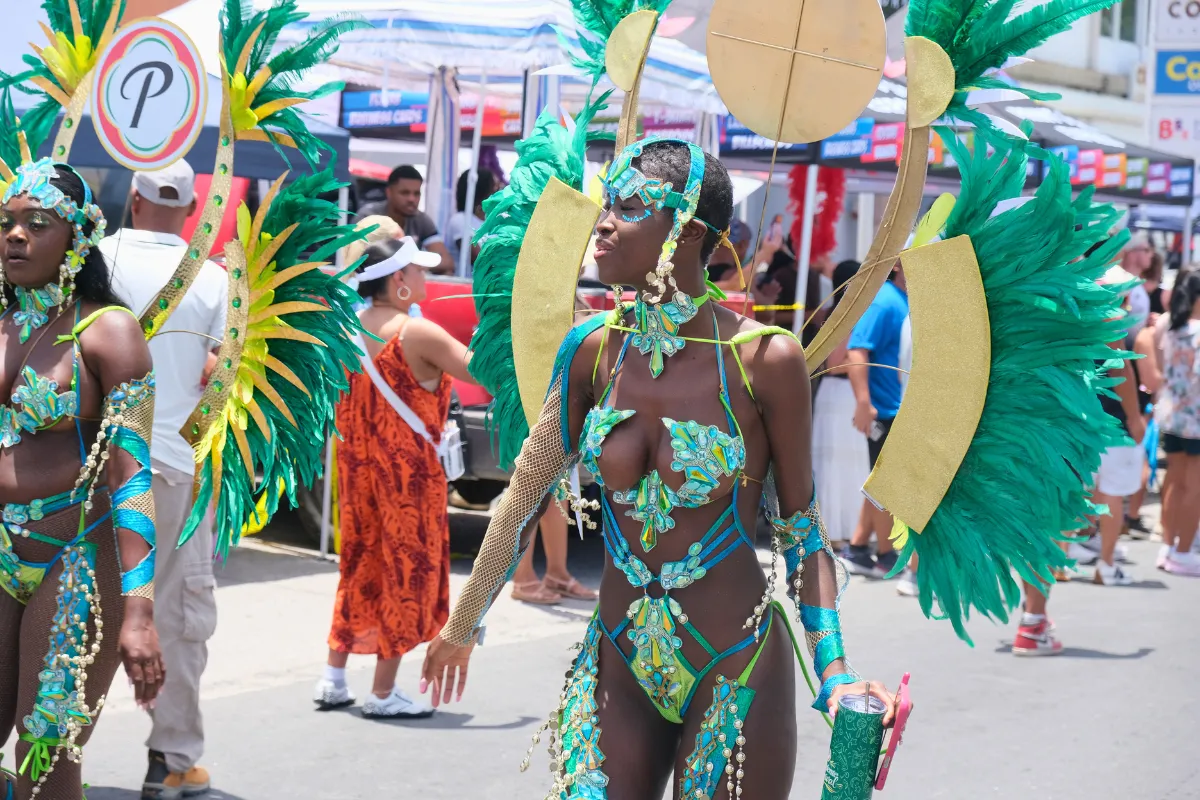
Not every band competes for Band of the Year. Some are built around the judging points along the route, including the stage, the main judging venue where bands perform for the judges and the crowd. Others are party bands, focused entirely on the road experience.
This changes your day in a real way. Competing bands spend time lining up, holding formation, and waiting their turn to cross. Party bands keep moving. Neither is wrong. Just know which one you are joining, because “why are we standing still for 40 minutes” is a bad thing to discover on the day.
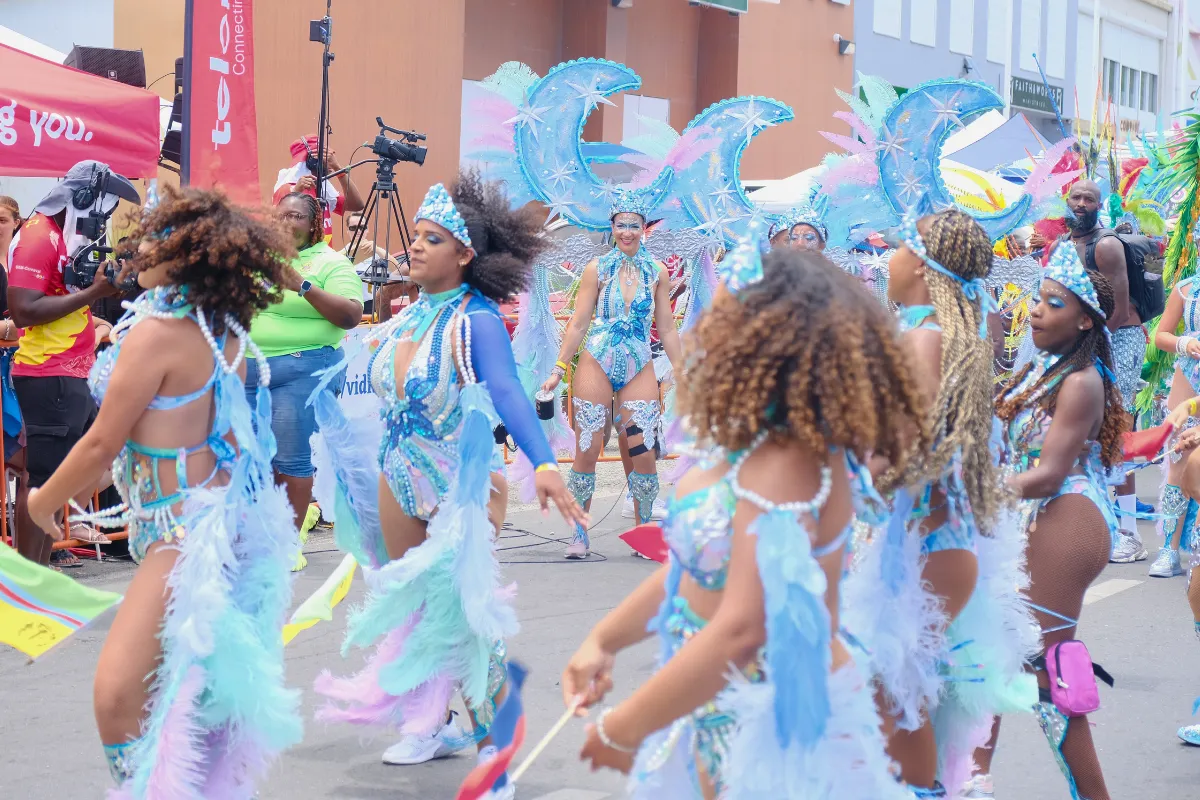
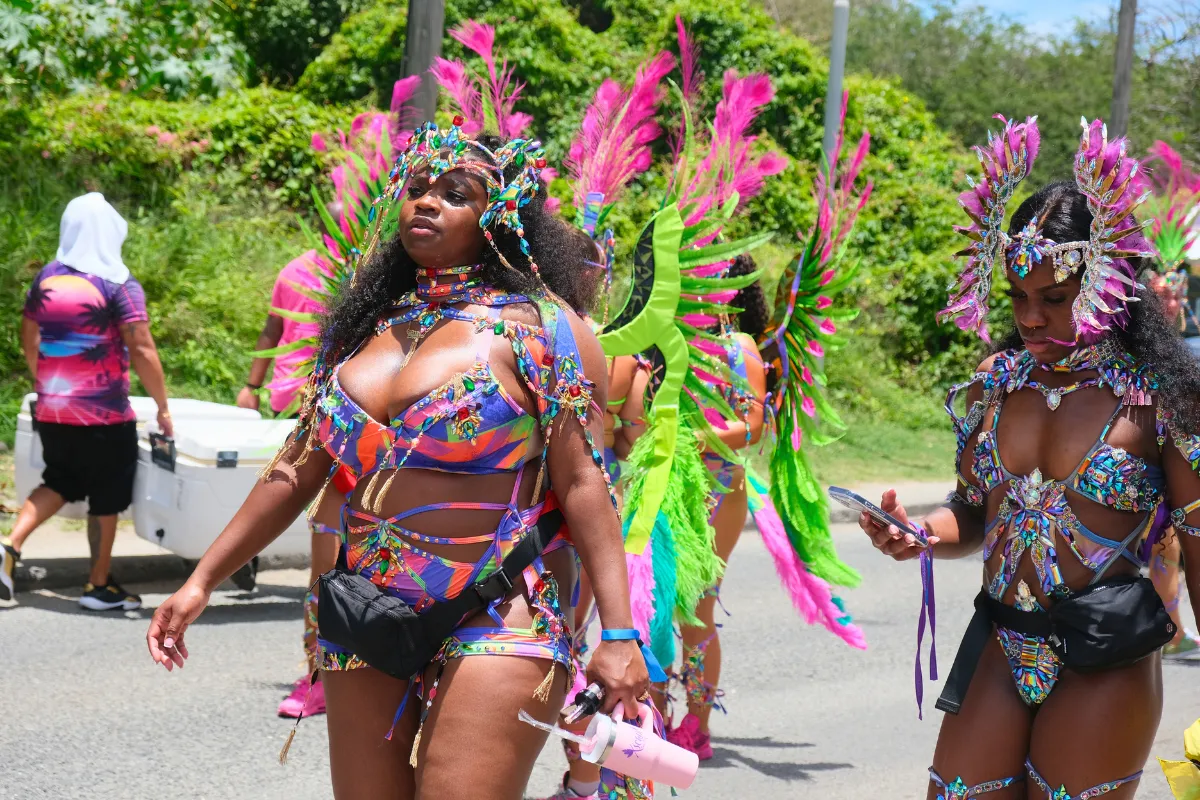
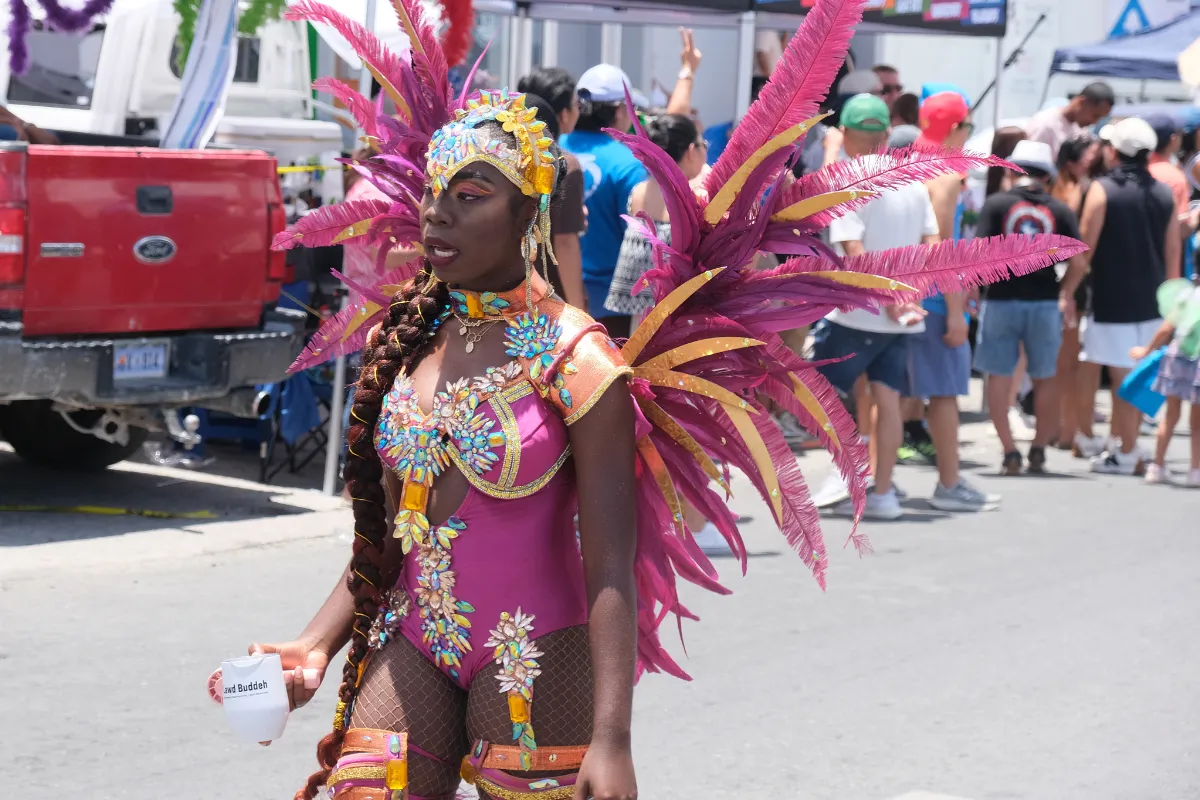
Most bands offer the same basic structure. Note that a backpack in mas is not a bag: it is a wire-framed arrangement of feathers, gems, and trim that sits on your shoulders and rests against your back.
the standard package, typically bodywear with little to no feathers, or a small collar. The most popular and most affordable option. You get the identical band experience, food, drinks, and road service as everyone else.
the middle ground. Usually a smaller backpack or feathered collar, more detail than backline without the size and cost of frontline. Not every band offers it, so check the section options before you assume it is there.
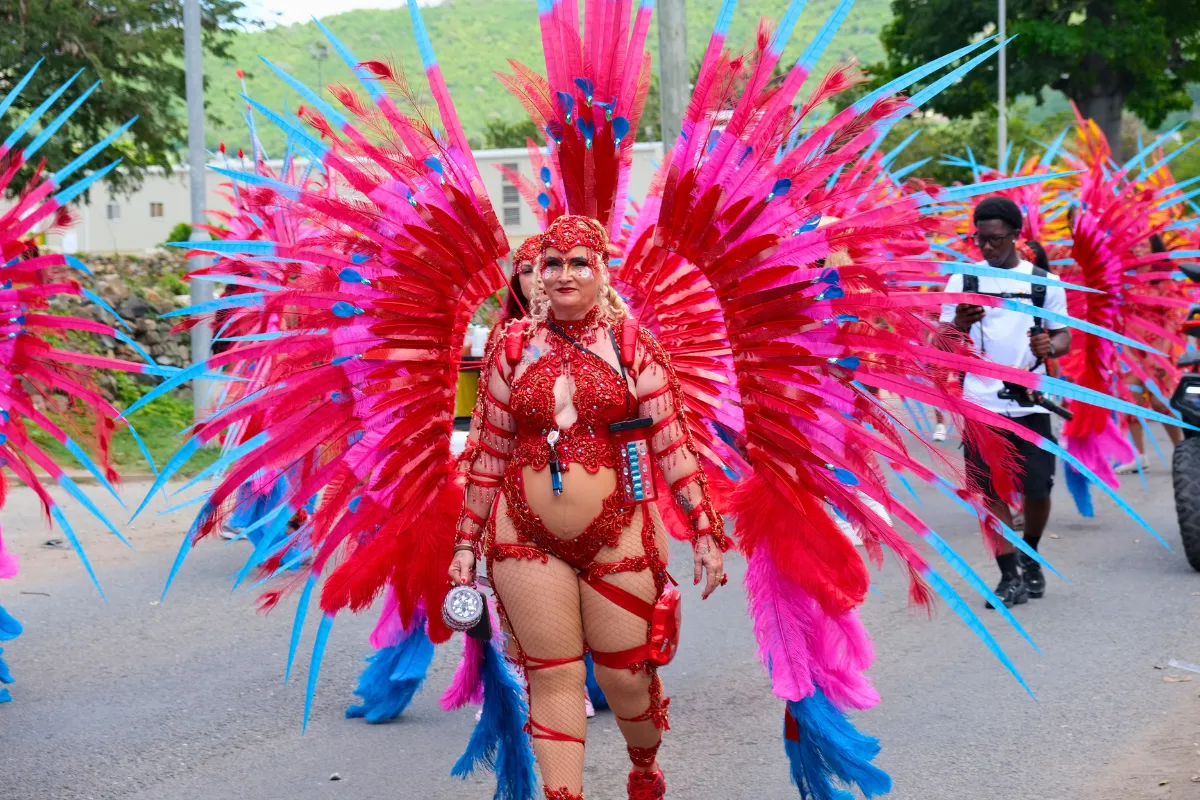
premium sections at the front, with larger wire bras, bigger headpieces and backpacks, more feathers and gems, and the most photographed designs. Priced accordingly, and often close to double a backline costume in the same section.
Many bands also sell add-ons, which let you start with a backline costume and buy a collar or a small backpack separately. That is often the smarter route to the look you want without the frontline price.
For a first Caribbean Carnival, backline or midline is a sound choice. You are already handling a new country, a new schedule, and a full day on the road. A smaller backpack is a genuine mercy on hour six.
Large backpacks photograph beautifully and get in your way constantly. They make crowds, bathroom breaks, and windy stretches harder. If you have never played mas before, go smaller than your instinct tells you.
Carnival costumes are custom-built to order, which is why band payment terms are stricter than almost anything else you book for a trip. Every band FAQ we checked says versions of the same thing.
They secure your spot and cover production costs. If your plans change, that money is generally gone.
FreaksMas publishes a staged schedule requiring set percentages by set dates, and states that missing a deadline forfeits the costume and every payment already made. Other bands deduct the deposit plus a processing fee from any refund they do issue. Yuma sets a final payment deadline months ahead of the parade.
Feathered backpacks, upgraded headpieces, and alternative bras typically require 50% down at registration and must be paid off earlier than your main balance, and an unpaid add-on can be forfeited on its own.
Costumes are produced to the size you submit. Yuma and FreaksMas both state that no refund or exchange is granted for fit issues. Some bands will consider size changes only while stock allows, and production can begin as early as March for a summer Carnival.
Take your measurements against the band’s own size chart before you register, not your usual store size. If your weight tends to move, ask whether the band has a seamstress on site at costume distribution. Bands that do can take in or let out your bodywear on the spot, which turns a costume that no longer fits into a quick fix instead of a ruined Carnival.
Not every band uses open online registration. TRIBE requires you to register through the mas camp directly, a committee member, or a listed marketing affiliate, and publishes its affiliate list so you can check. Other bands take payment straight through their website or a registration portal.
Whatever the band’s system is, use it. Paying an individual who is not a verified committee member or affiliate is how people lose deposits. If someone approaches you offering a spot, confirm them against the band’s own published list first. The same goes for costume resales: contact the band directly to verify the seller and the transfer policy before any money moves.
Bands typically launch between three and six months before the parade. Notting Hill bands launched in March for an August Carnival. Caribbean island bands launch on their own schedules, but popular sections can sell within weeks of the reveal.
If you already know which Carnival you are attending, follow your shortlisted bands on social media now so the launch announcement reaches you the day it drops. The gap between “registration is open” and “your section is sold out” can be very short.
One blog review is one person’s day. Look for a range of masquerader accounts across different sources, including hashtag searches and Carnival review pages and groups, where the feedback tends to be blunt. Pay attention to patterns rather than single complaints. One person saying the drinks ran out is a bad afternoon. Twenty people saying it across three years is a band that under-supplies.
Also test the band’s customer service before you pay. Send an email or a message with a specific question about what is included. How quickly and how clearly they answer tells you a great deal about how they will handle you when something goes wrong closer to Carnival.
Ask the band one question you already know the answer to from their website. If the reply contradicts their own published information, that is worth knowing before your deposit is in.
Registration is the beginning, not the end. Next comes payment, distribution, and collection week, which we walk through step by step in How to Get a Carnival Costume: A Guide to Ordering and Collection. And for everything that makes the road day itself go smoother, our 5 Insider Tips for Rocking Carnival Like a Seasoned Reveler covers what experienced masqueraders wish someone had told them the first time.
Take your time with this one. The right band turns a good trip into the reason you start planning the next Carnival before you have even flown home.
No. Plenty of people enjoy Carnival from the sidewalk, at fetes, and at the competitions without ever registering with a band. Joining a band is what puts you inside the parade rather than watching it, and it is the only way to play mas in costume.
The band is the whole organization: the theme, the trucks, the service on the road, and everyone parading under that name. A section is one costume design within that band, with its own colorway and price. You register with a band by choosing one of its sections.
For a first Caribbean Carnival, usually yes, because you are not spending the day hunting for food, drinks, or a bathroom in an unfamiliar city. The catch is that all-inclusive means different things at different bands, so read the section page line by line rather than trusting the label.
Almost never in full. Deposits are non-refundable at effectively every band, and many state that missing a payment deadline forfeits the costume along with everything already paid. Some bands allow a transfer to another masquerader, but only through their own process, so ask before you register if there is any chance your plans could change.
Yes, and it is more common than people expect. You register as an individual, and once you are on the road you are surrounded by a few hundred or a few thousand people moving to the same music all day. Smaller and medium bands tend to feel friendlier if you are arriving without a group.
No. Most bands take registrations online or through listed affiliates, and travellers register from abroad every year. What you do need to sort out is collection, since costumes are usually picked up in person during distribution week.
As soon as the band launches, which is typically three to six months before the parade. Popular sections can sell out within weeks of the reveal, so following your shortlisted bands on social media before launch season is the practical move.
Bands produce costumes to the size you submitted at registration, and most state that fit issues are not grounds for a refund or exchange. Some bands have a seamstress on site during distribution who can make adjustments, which is worth asking about before you register.
Specials are here!