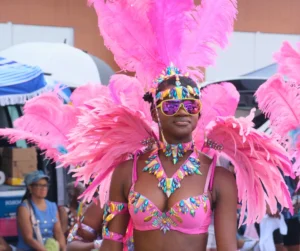
Carnival in the Caribbean is not just a festival. It’s a celebration of life built on color, sound, and flavor. As we gear up for Carnival 2027, let us take you across continents, from the Caribbean to the streets of London, Toronto, and Vienna, where the same culture lands in different places and finds a new shape each time.

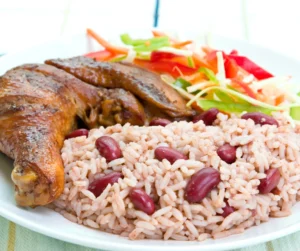
Wherever Carnival goes, the food goes with it. Walk any Carnival food stall and you’ll find the same core dishes turning up thousands of miles from where they started. Doubles, the Trinidadian street food of curried chickpeas folded into soft fried bara, are the thing to eat when you’ve been on the road since morning. Bakes, jerk chicken, and roti fill out most stalls, and Bajan cou-cou shows up wherever there’s a Barbadian crowd.
You’ll also find dishes that only exist because two food cultures met on the same street. At Toronto Caribbean Carnival, jerk chicken poutine puts Jamaican seasoning on a Québécois classic, and it works exactly as well as it sounds like it should.
The pattern holds whether you’re in Port of Spain or west London. The recipes travel with the people who cook them, which is why the food is one of the most reliable ways to tell how deep a Carnival’s roots run. If you want to know what to order first and what everything actually is, start with our guide to must-try Caribbean foods at Carnival.
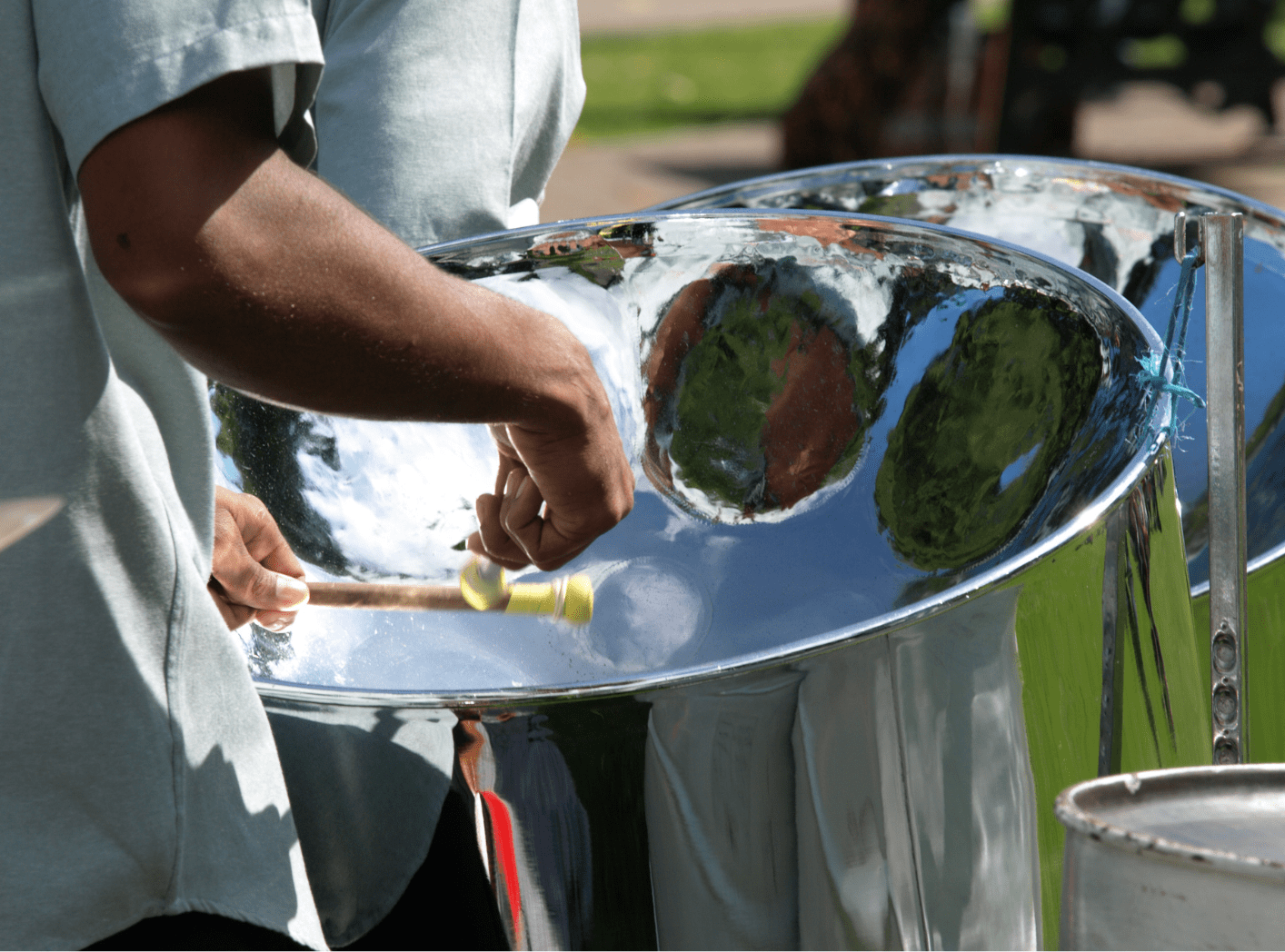
Carnival music is not one sound. Soca is the driving, up-tempo music that moves the road, born in Trinidad in the 1970s out of calypso. Calypso itself is the older tradition, built on wit, storytelling, and social commentary. Steelpan is the instrument that carries both, invented in Trinidad and now played worldwide. Bouyon, out of Dominica, brings a heavier, faster sound that has taken over a lot of road playlists.
You can hear how seriously the diaspora takes this at Notting Hill Carnival, where the UK National Panorama steel band competition opens the whole weekend before a single parade truck moves. That’s not decoration. It’s the same competition format that anchors Carnival in Trinidad, running in west London.
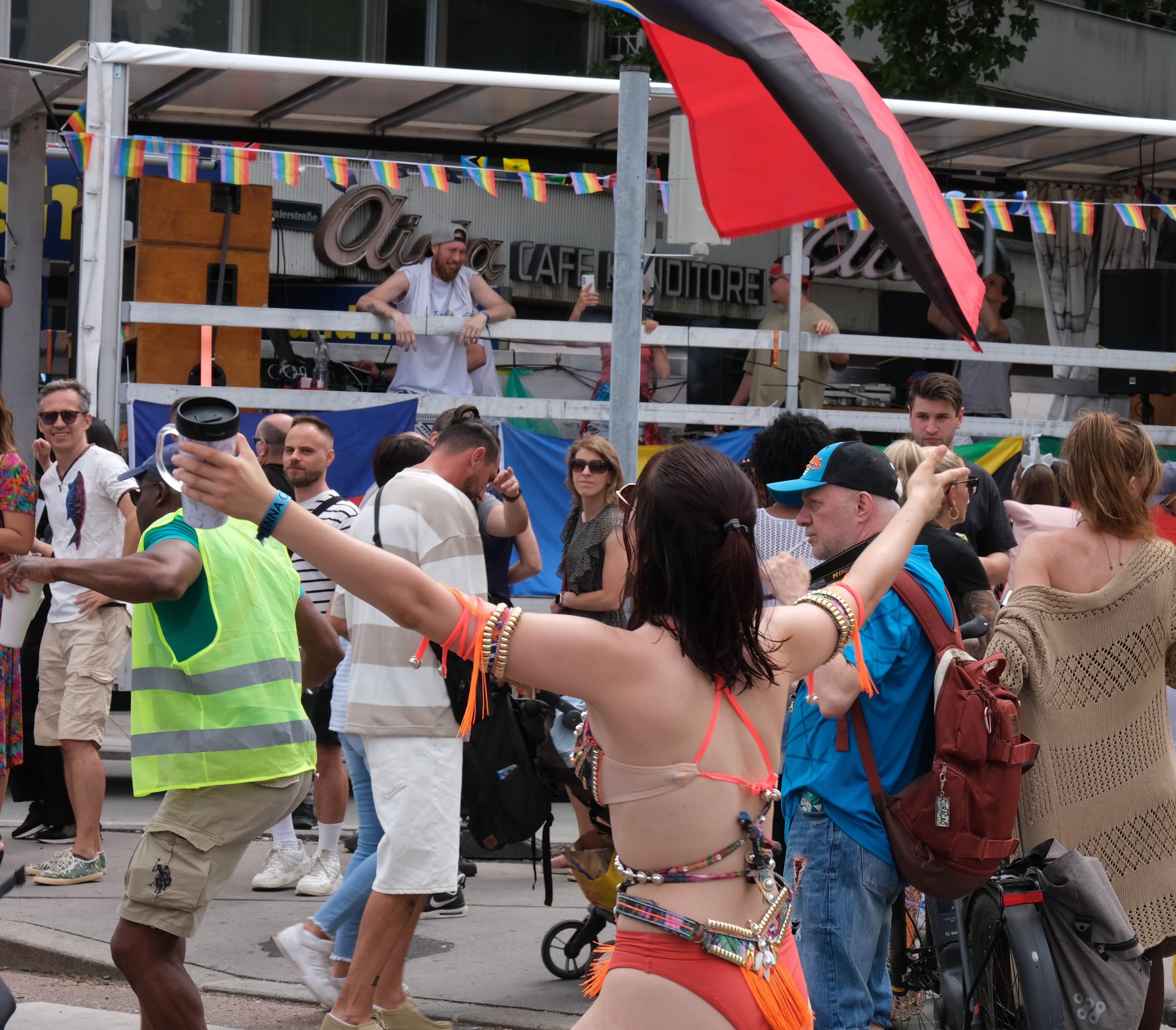
From the Caribbean to the rest of the world, Carnival is a time when barriers dissolve. It’s not just a party. It’s a community celebration of joy, resilience, and unity.
What’s striking is how differently that lands depending on where you are. In Port of Spain, Trinidad Carnival is the origin point, the scale and the standard everything else is measured against. Toronto Caribbean Carnival is one of the largest in North America, built by a diaspora that made a Canadian city its second home. Vienna Carnival is small enough that you’ll recognize faces by the second day, which is exactly why first-timers tend to love it.
Different scale, different countries, same culture. That’s the part worth traveling for.

Carnival 2027 is set to be a spectacular global celebration, and at Carnival Vibez we’re here to guide you through every beat and flavor. Whether you’re planning to explore the origins of Carnival in the Caribbean or experience its echoes around the world, we want your trip to be as colorful as the festival itself.
So pack your costumes, tune your senses to the rhythms of the world, and get ready for an adventure that dances across borders. Let the worldwide Carnival community welcome you in. We can’t wait to celebrate with you.
The best time to book a Carnival trip is 3–6 months in advance, especially for major events like Rio Carnival or Caribbean Carnivals. Flights and accommodations sell out quickly because thousands of travelers attend each year. Booking early usually helps you secure better prices and better locations near parade routes.
Visa requirements depend on your nationality and the country hosting the Carnival. Some destinations require travelers to apply for a tourist visa before arrival, while others allow visa-free entry for short visits. Always check official government travel websites before booking your trip.
Carnival travel costs vary depending on the destination, flights, accommodation, and events you plan to attend. Many travelers budget between $1,000 and $4,000 or more for flights, hotels, costumes, and party tickets. Costs often increase closer to the festival because demand is very high.
Carnival can be very safe if you take normal travel precautions. Avoid carrying valuables, keep your phone secure, and stay aware of your surroundings during crowded street events. For more tips, read: Enjoying the Carnival Parade: A Guide to Staying Safe and Having Fun
Pack light clothing, comfortable shoes, sunscreen, and portable phone chargers for long days of celebrations. A small crossbody bag can help keep valuables secure in crowded areas. If you plan to participate in a parade, you may also need to bring costume accessories.
Carnival celebrations can last anywhere from a few days to several weeks depending on the destination. Some events focus on a single weekend parade, while others include weeks of parties, concerts, and cultural events leading up to the main parade. Planning ahead helps you choose the best travel dates.
Hotels near the city center or parade route are usually the most convenient during Carnival. However, these locations sell out quickly and can become expensive during peak festival days. Many travelers book early or choose nearby neighborhoods with good public transport access.
Choosing the right Carnival depends on the type of experience you want. Some carnivals focus heavily on cultural traditions and heritage, while others are known for massive parades and international crowds. Researching destinations and event schedules can help you find the best Carnival for your travel style.
Many Carnival festivals include family-friendly events such as cultural shows, children’s parades, and daytime street celebrations. However, some parties and nightlife events are designed for adults and may run late into the night. Checking the event schedule can help you plan accordingly.
Specials are here!