Let me tell you something — if you’ve ever stood on a road and felt the bass hit your chest before you even heard the melody, if you’ve ever found your waist moving before your brain gave it permission, if you’ve ever lost yourself so completely in a crowd of strangers that somehow felt like family — then you’ve already met Soca music. You just didn’t know her name yet.
To understand Soca music, you have to understand where it came from. Trinidad and Tobago. The twin islands. The birthplace of Carnival culture and some of the most creative, most expressive, most alive people you will ever meet in your life.
In the early 1970s, Calypso — our beloved original music of social commentary, wit, and storytelling — had been the heartbeat of the islands for generations. But a young musician named Lord Shorty (later known as Ras Shorty I) looked around and felt something stirring. The youth wanted to move. They wanted to jump and wave. They wanted a sound that carried the soul of Calypso but with a rhythm that wouldn’t let you stand still.
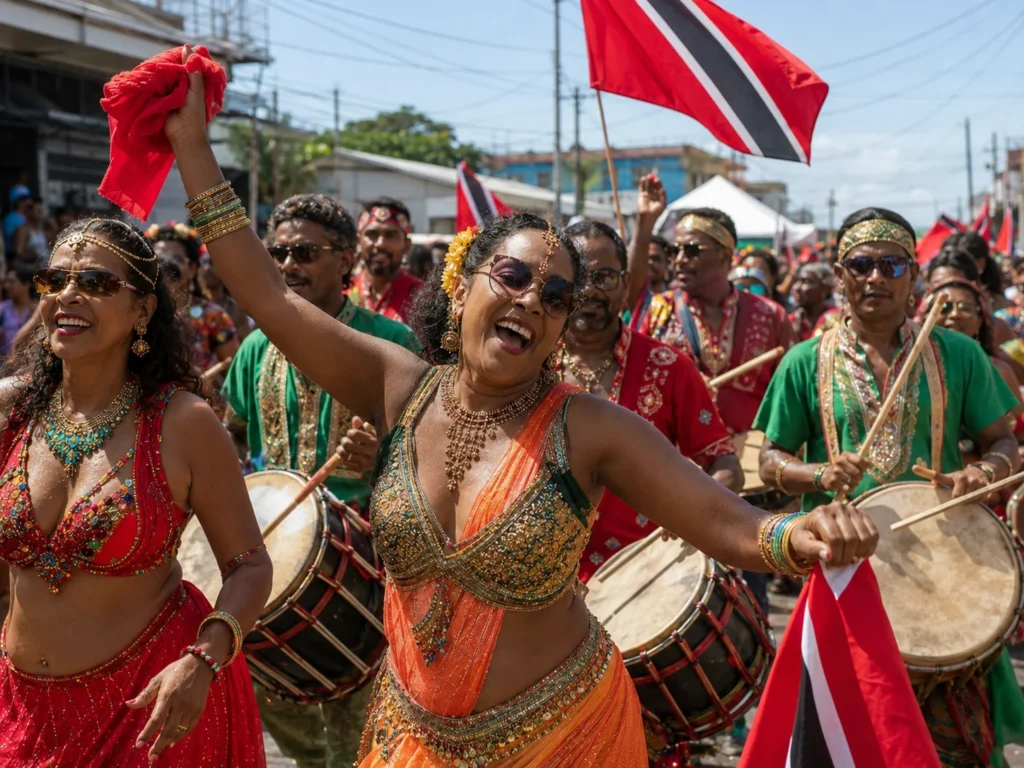
So Lord Shorty fused the syncopated rhythms of Calypso with the East Indian musical influences already woven into Trinidad’s rich cultural fabric — the dhol drum, the dholak, Indian folk melodies — and something electric was born. He called it “Soul of Calypso” — and from those words came the name we know today: Soca.
The first sparks flew around 1973. By the late 1970s and into the 1980s, Soca music had spread like sunrise across the Caribbean. By the time the world caught on, we had already been dancing for decades.
If you want to understand the music, close your eyes and imagine this: a four-on-the-floor kick drum driving forward like a heartbeat that refuses to slow down. Brass horns stabbing bright and joyful through the air. A bassline so deep it lives in your belly. Vocals that aren’t asking you to dance — they’re commanding you.
That’s Soca music.
The BPM (beats per minute) typically sits between 120 and 140 — fast enough to get your blood pumping, rhythmic enough to make you lose track of time entirely. The melodies are infectious on purpose. The lyrics? Simple, powerful, and built for a crowd of thousands to sing together at the top of their lungs. Soca lyrics celebrate life. They celebrate the road. They celebrate freedom, love, rum, togetherness, and the purest joy of being alive under a Caribbean sky. There’s no place in Soca for sulking. On this road, we fete (that’s party, for those who don’t know yet).
One thing I want you to understand — Soca music is a family, not a single voice. Over the decades, the genre evolved and branched, each sub-genre carrying its own energy and flavor.
This is the one that hits you like a freight train. Heavy bass, relentless drums, high-energy anthems designed to make thousands of people on a Carnival road move as one body. Machel Montano, the undisputed King of Soca, is the master of this form. When he performs, stadiums tremble.
Slower, smoother, more soulful. This is the one that makes you sway and wine (that’s a dance, a way of moving the waist in fluid, rhythmic circles — the most natural thing in the world once you learn it). Groovy Soca lets you feel every note. It reaches into your chest.
The beautiful marriage of Soca with Indian folk music, born right there in Trinidad. Chutney Soca carries the rhythms and melodies of the Indian diaspora and weaves them into Soca’s framework. Artists like Rikki Jai have made this sub-genre an art form. It is a sound that speaks to the full tapestry of who we are as a people.
Soca fused with dancehall’s Jamaican fire. Faster. Rawer. A little rougher around the edges. Pure road energy.
Born in Dominica, this is Soca’s wilder cousin, blending in influences from Cadence-lypso and Bouyon drum patterns. Each island puts their stamp on the music. That’s the beauty of the Caribbean — we are many islands, one spirit.
You cannot talk about Soca music without talking about its people.
And then there are the artists across the islands — Skinny Fabulous from St. Vincent, Mr. Killa from Grenada, Shal Marshall, Voice, Ricardo Drue from Antigua — the Caribbean breadth of Soca music is staggering. Every island has their champions.
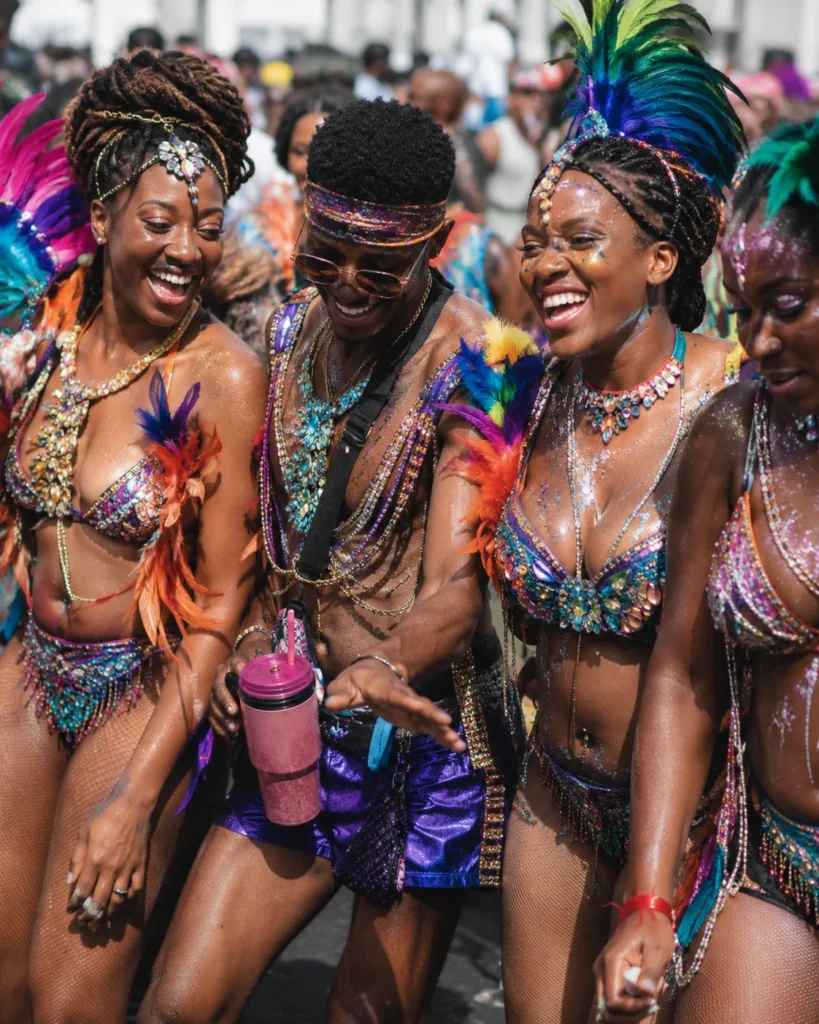
Here is the truth: Soca music and Caribbean Carnival are not two things. They are one thing with two names.
Carnival season in Trinidad begins right after Christmas and builds to a fever pitch by the Monday and Tuesday before Ash Wednesday. From January, the fetes begin — outdoor parties where new Soca releases are tested, where thousands of people hear the songs for the first time and feel in their bones which ones will be anthems.
Then comes the competitions. The International Soca Monarch — held the Friday before Carnival — is perhaps the most thrilling music competition on earth. Artists battle for the Power and Groovy crowns, pouring everything they have into performances that can last years in memory.
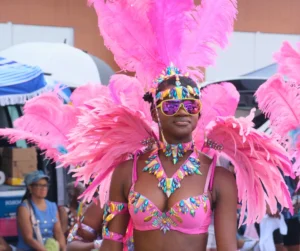
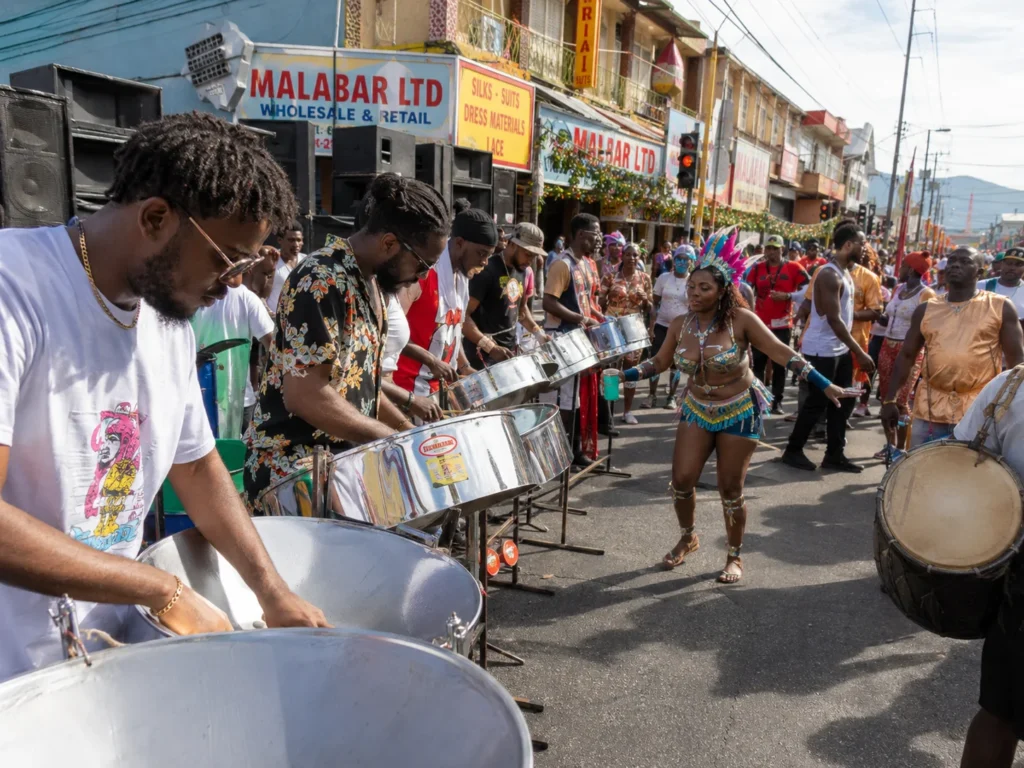
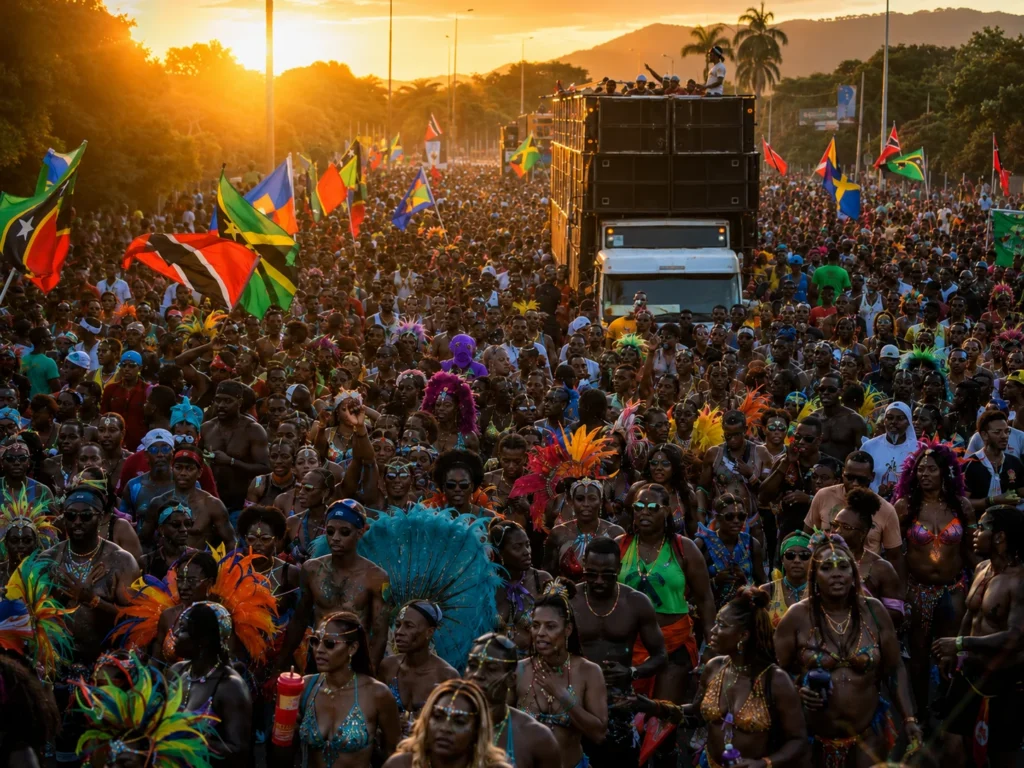
And then — Carnival Monday and Tuesday. The Road March. Thousands of costumed revelers (called masqueraders, or simply “mas players”) pour into the streets behind trucks loaded with massive speaker stacks. The DJ plays Soca music. The crowd wines and waves. The sun beats down. There is rum. There is color. There is joy so concentrated it becomes something close to sacred. And before all of that? There’s J’ouvert — the pre-dawn street party that opens Carnival.
The Soca song played most often on the Carnival road wins the Road March title — one of the most coveted prizes in Caribbean music.
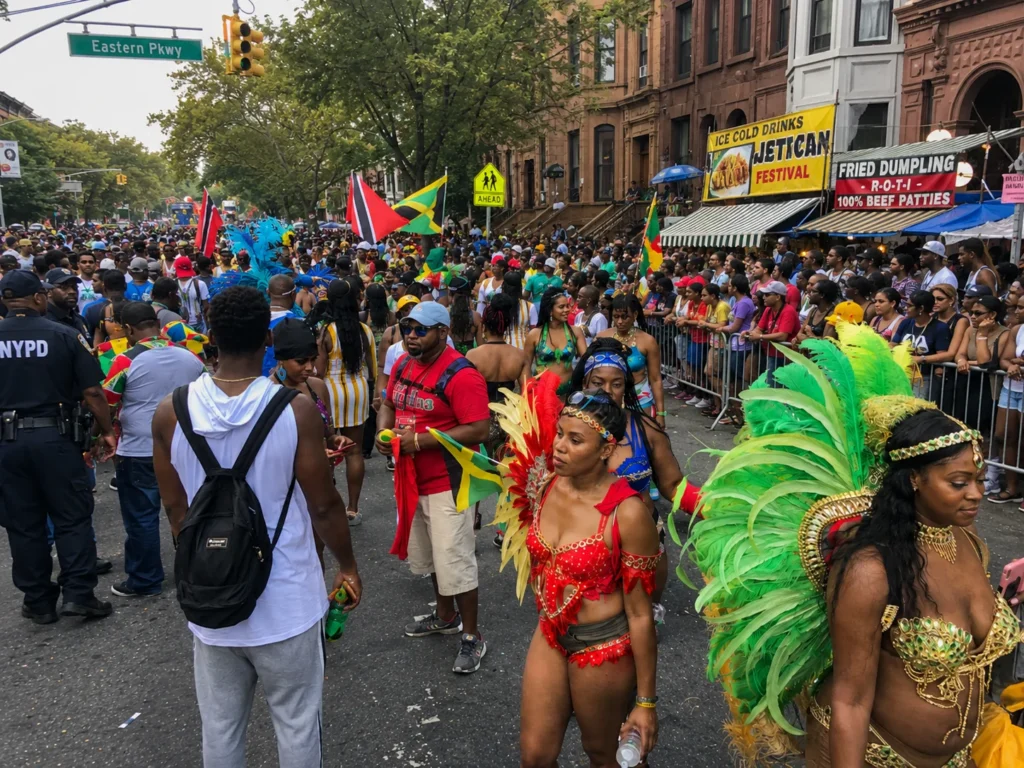
Beyond Trinidad, Caribbean Carnival culture has spread across the globe. Notting Hill Carnival in London, Toronto Caribbean Carnival, New York’s West Indian Day Parade, Miami Carnival, Atlanta Carnival, Rotterdam Carnival — wherever Caribbean people scattered across the diaspora, they brought Soca music with them. And their communities, their neighbors, their coworkers — they came too. And they danced too.
I want to be honest with you about something deeper.
Soca music emerged from a region with a history of immense pain. The Caribbean was the site of the transatlantic slave trade, of colonialism, of the stripping away of culture and identity. The East Indian indentured laborers who came to Trinidad after emancipation brought their own traditions, their own music, their own way of surviving.
What became Soca is what happens when a people refuse to be defeated. When they take everything that was thrown at them — the African rhythms, the Indian melodies, the colonial languages, the borrowed instruments — and forge from it something entirely, irrevocably new.
Soca music says: we are here. We are alive. We are joyful. And you cannot take that from us.
Every time the music plays and a people march down the road together, wearing their colors, waving their flags, singing the same words — that is not just entertainment. That is cultural affirmation. That is resistance dressed as celebration. That is what it looks like when a people love who they are.
I’ve tried to explain Soca music to you with words, but I should be honest — words are always going to fall a little short. Some things you have to feel.
What I can tell you is this: when Soca plays at full volume and a crowd comes alive, there is no divide between strangers. There is no outside. There is only the rhythm, the bass, the horn, and the shared electricity of thousands of people choosing, in this moment, pure joy.
Lord Shorty gave us a gift when he fused those rhythms together in Trinidad more than fifty years ago. Every artist who picked up Soca music, evolved it, pushed it further, took it to London and Toronto and New York — they carried that gift to the world.
And now you know what it is.
So the next time you feel a bass hit your chest before you hear the melody? The next time your waist starts moving before your brain gives it permission?
That’s Soca music.
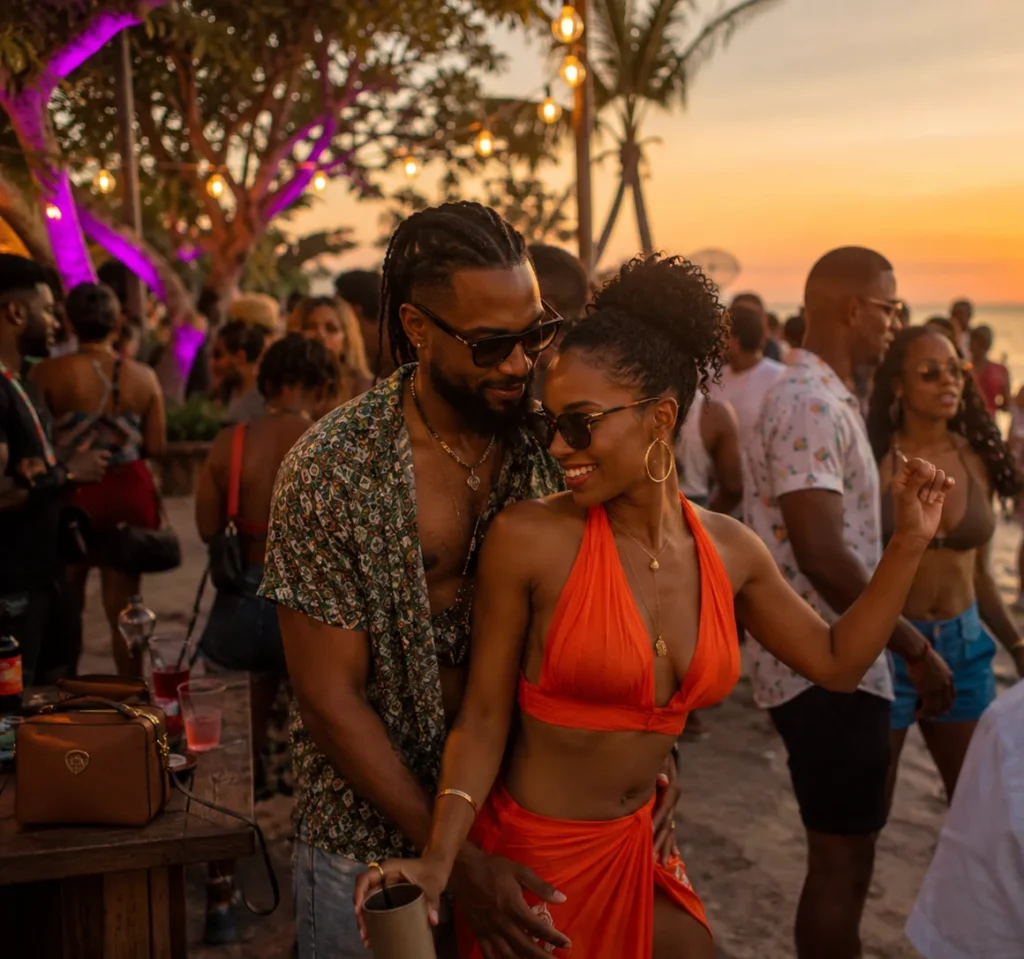
If you’re new to Soca music, welcome. We have been waiting for you.
Start with the classics that crossed over — “Cocoa Tea” by Kes, “Famalay” by Machel Montano, Skinny Fabulous & Voice, “Hookin Meh” by Farmer Nappy, “Dollar Wine” by Colin Lucas (one of the songs that introduced Soca music to the world in the ’90s).
Then go deeper. Find a Soca playlist from any Carnival season — 2019, 2022, 2023 — and let it run while you’re cooking, while you’re driving, while you’re getting ready in the morning. Notice how the house feels different. Notice how your feet start moving on their own.
And if you ever get the chance — go to a Caribbean Carnival. Any Carnival. Put on your colors. Find a band. Step on the road.
You will never be the same again.
Calypso is the older genre, rooted in storytelling, social commentary, and slower, more lyrical rhythms that originated in Trinidad and Tobago. Soca music evolved from Calypso in the 1970s, injecting faster tempos, heavier bass, and an emphasis on dancing and celebration over narrative.
Soca music was born in Trinidad and Tobago, created by Lord Shorty (Ras Shorty I) in the early 1970s by blending Calypso with East Indian musical influences. From Trinidad, the genre spread across the Caribbean islands and eventually to diaspora communities in the UK, North America, and beyond.
The music most associated with Caribbean Carnival is Soca music, which powers the road march, fetes, and Carnival competitions across Trinidad, Barbados, Grenada, St. Vincent, and many other islands. Steelpan music is also a beloved part of Carnival culture, particularly in Trinidad where the steelpan was invented.
Wining (also spelled “whining”) is a Caribbean dance style central to Soca music culture, involving fluid, rhythmic rotations of the hips and waist in time with the music. It is a skilled, expressive dance form with deep cultural roots across the Caribbean and is a defining part of the Carnival experience.
Soca and Reggae are two distinct genres that both come from the Caribbean but sound very different. Reggae originates from Jamaica and is typically slower, with an emphasis on the offbeat and themes of spirituality and resistance, while Soca music comes from Trinidad and is faster, higher-energy, and built for dancing and celebration.
Carnival season varies by island, but Trinidad and Tobago’s Carnival (the most internationally recognized) takes place in the days leading up to Ash Wednesday, typically in February or March. Other major Caribbean Carnivals and diaspora celebrations featuring Soca music, such as Notting Hill Carnival in London and Toronto Caribbean Carnival, are held during the summer months.
Specials are here!