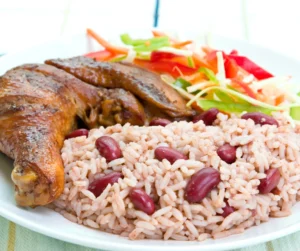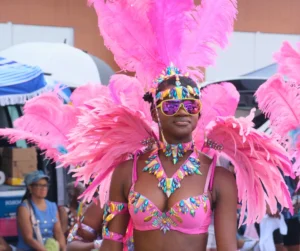
This year, I set out to explore Europe’s Carnivals through my Caribbean lens. Some felt familiar, like stepping right back into mas. Others were different, but still full of life and joy. What stood out most, though, was how Caribbean culture continues to shape Europe’s biggest and most colorful Carnival celebrations.
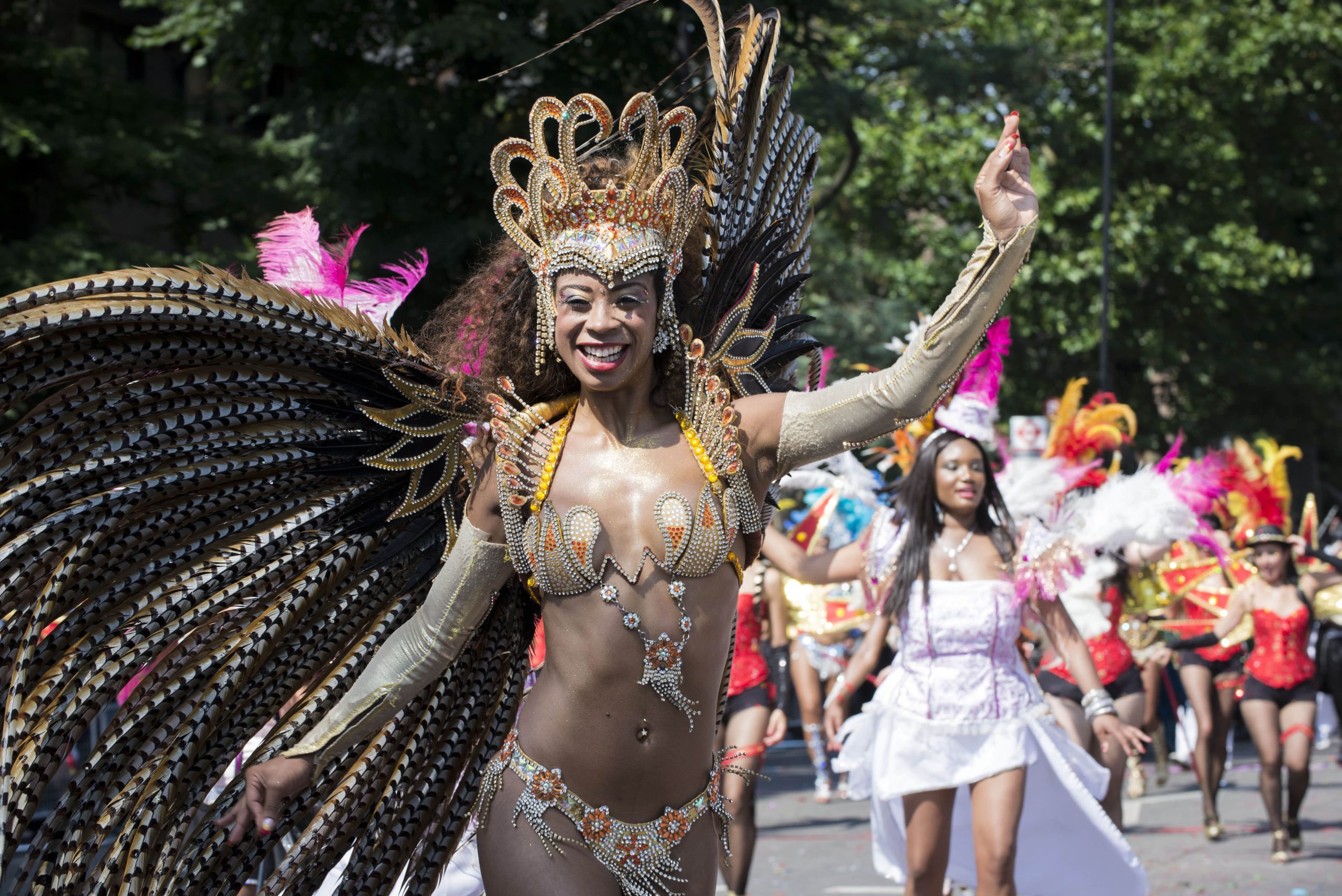
Notting Hill Carnival is the crown jewel of Caribbean culture in Europe. Every August, West London transforms into a Carnival paradise with over two million people flooding the streets. There are mas bands, steelpan, sound systems, and food stalls that bring the Caribbean right into the heart of London.
The energy is very reminiscent of back home — soca pumping through the crowd, flags waving, and that contagious freedom in the air. But here’s an observation: many UK locals felt Notting Hill was “too crowded.” And honestly? They weren’t wrong. But that’s the spectator experience. For masqueraders, it was a completely different experience: excitement and vibes. If you’re planning to go, where you stay makes a real difference to how the weekend feels.
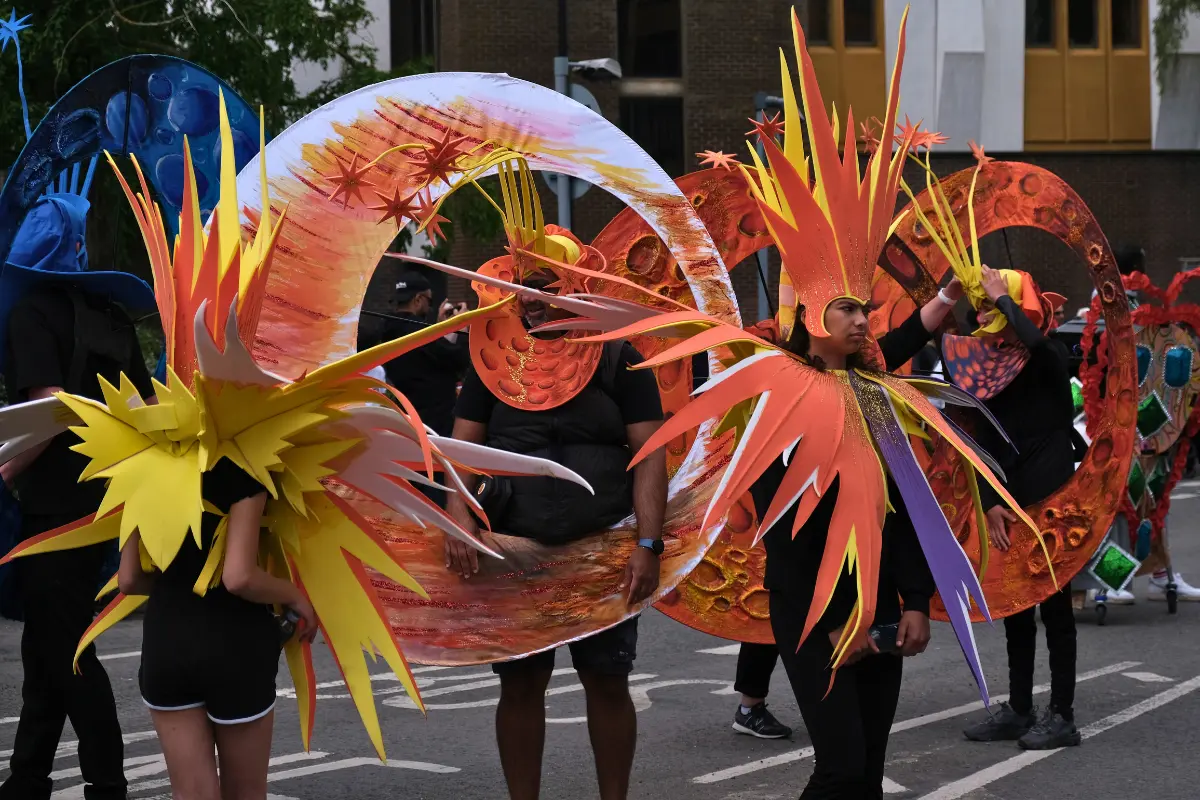
Before Notting Hill, there was Leeds. Founded in 1967, it’s recognized as the UK’s first authentic Caribbean-style Carnival.
Smaller and more intimate than London, Leeds is where traditional mas still thrives. It’s community-centered and deeply rooted in authenticity. While I haven’t made it there yet, it remains one of the most important Carnival celebrations in Europe for preserving that original Caribbean spirit.
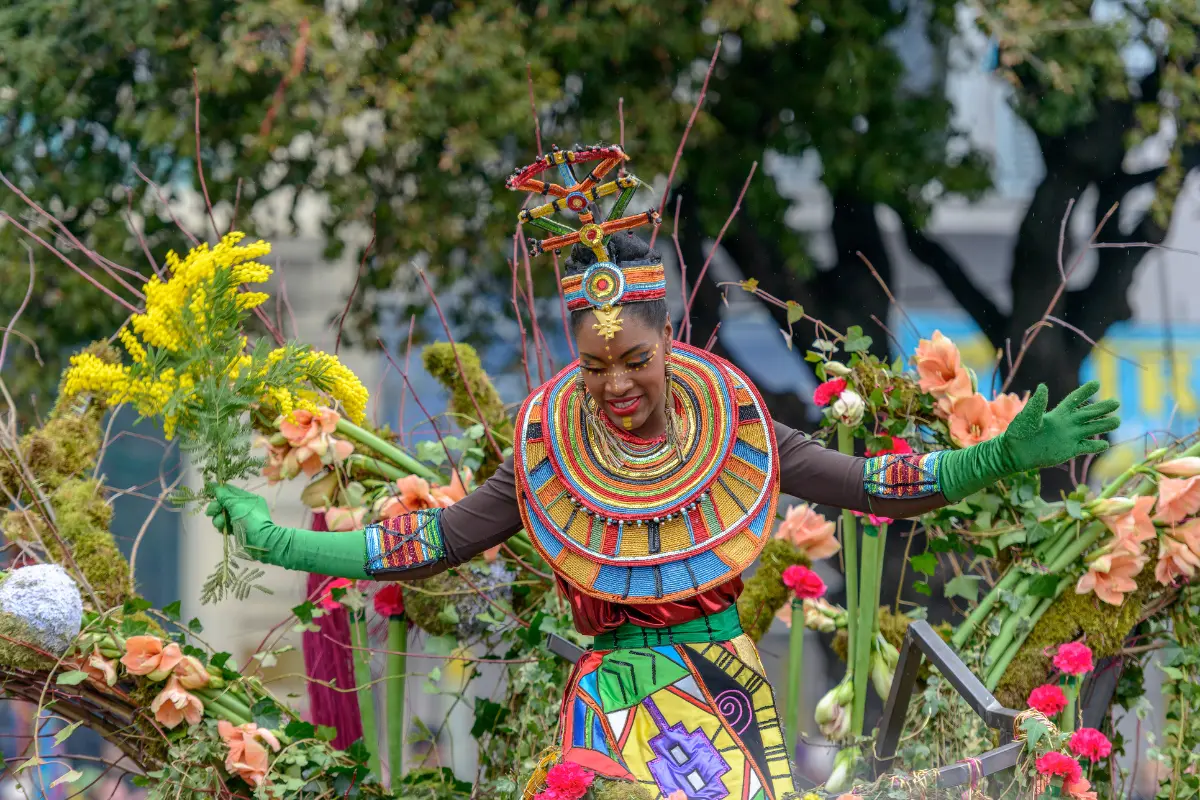
Paris isn’t the first city that comes to mind when you think Carnival, but during July, the streets transform for Carnaval Tropical. Inspired by the French Caribbean islands — Guadeloupe, Martinique, and beyond — the celebration fuses traditional drumming, zouk, and Caribbean mas.
Earning a spot on next year’s carnival bucket list, I love how this Carnival highlights the French-Caribbean diaspora’s role in shaping Paris’s cultural identity. It’s a growing event that proves Caribbean Carnival thrives wherever we plant roots.
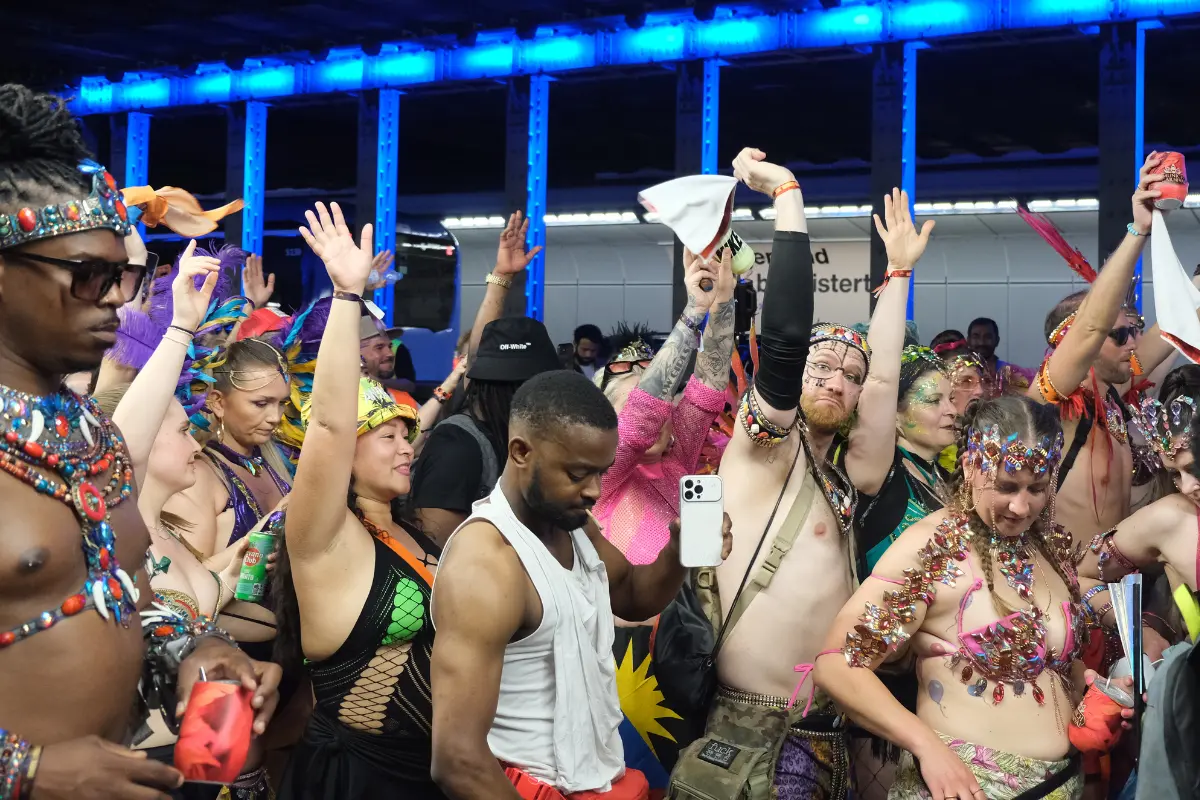
Ask most people to name a Caribbean Carnival city in Germany and they will say Berlin. Munich is quietly making its own case. Munich Carnival takes the culture seriously: fetes, dance workshops, and a Road March through the city centre. It has also brought J’ouvert, the paint and powder session that traditionally opens Carnival before daybreak, to a late-evening slot instead. That makes complete sense once you have felt how cool a Bavarian morning can be. The spirit was unchanged. Paint, powder, jab jab oil, soca, and pure revelry.
The Road March brought the bigger surprise: familiar faces. Not Munich locals, but Caribbean people who had travelled in from Berlin, Vienna, and beyond. Carnival here is still fighting for its space on the road, but the community showed up for it, and that is what makes the trip worth taking. There’s more in our full Munich Carnival recap.

Vienna might not be on everyone’s Carnival radar, but the city’s event continues to grow year after year, always working to introduce authentic Caribbean culture to new audiences. This year, that commitment was clear with the introduction of jab jab traditions at the Misbehave J’ouvert — a raw and powerful reminder of the roots of Carnival.
The soca truck, the masqueraders, and the welcoming atmosphere gave Vienna an authenticity that stood out. It showed how even in a smaller European city, the Caribbean spirit can shine brightly when the community intentionally brings those traditions to life. Vienna Carnival is proof that Carnival doesn’t have to be massive to feel real, and it’s one I’ll definitely be keeping an eye on as it continues to grow.
Carnival is about freedom, but when you’re traveling, a little preparation makes all the difference.
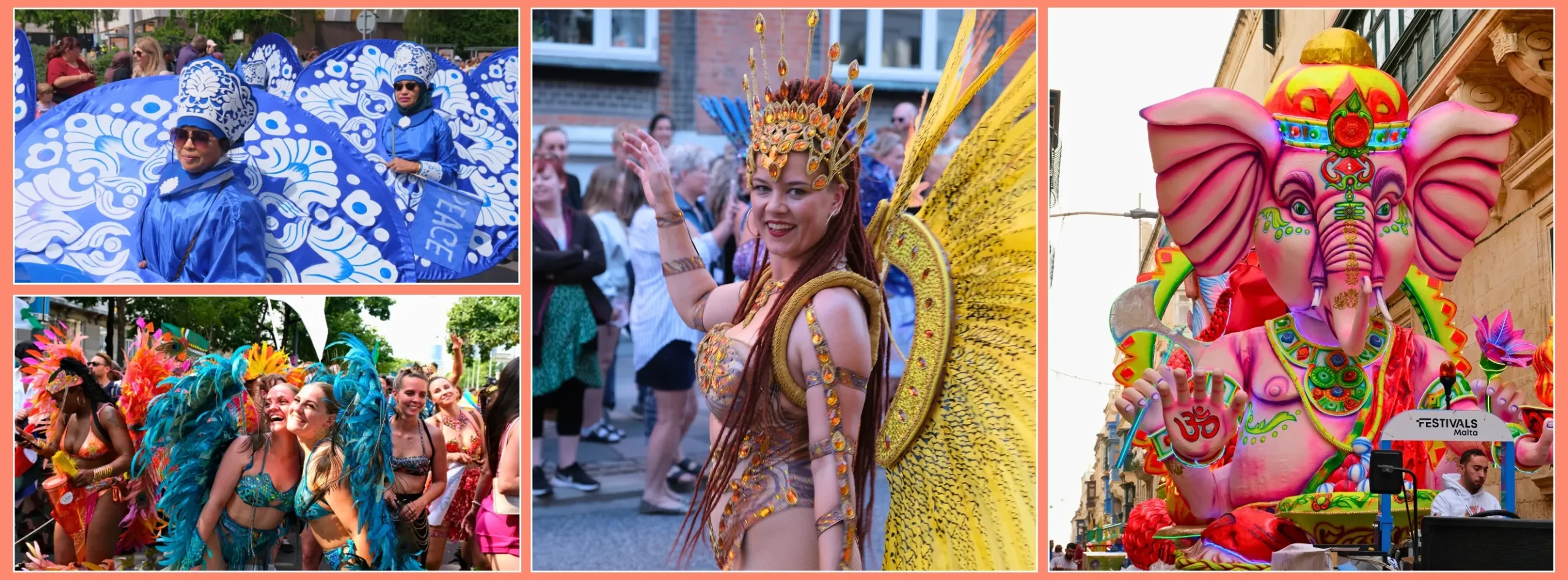
Carnival may have its earliest roots in Europe and Africa, but it was in the Caribbean that it was transformed into a powerful expression of culture, freedom, and identity. That version (our version) is what now shapes some of Europe’s biggest and most beloved Carnivals.
For me, the journey through Europe’s Carnival scene has been about more than costumes and music. It’s been about seeing how Caribbean culture not only survives but flourishes on foreign streets. From the massive crowds of Notting Hill to the authenticity of Vienna, one truth stands out: wherever Caribbean people go, Carnival follows.
And that, to us, is the real power of our culture.
If you want more of what these Carnivals taught us about culture and community, read Exploring Carnivals in Europe: Lessons on Culture and Community.
Yes! Several European cities host Caribbean-inspired Carnivals featuring soca, steelpan, moko jumbies, and full road parades. Cities like London, Munich, and Vienna bring island energy to Europe while blending in local culture.
Some of the most popular Carnivals in Europe include Notting Hill Carnival in London, Berlin’s Karneval der Kulturen, and multicultural celebrations like Luton International Carnival. Smaller events like Vienna Carnival and traditional celebrations like Malta Carnival offer completely different but equally meaningful experiences.
Not exactly. While some European Carnivals are deeply rooted in Caribbean culture, others are based on older European traditions tied to Lent and folklore. The vibe may differ, but the spirit of community and celebration remains strong.
Many European Carnivals happen between February and August, depending on whether they are traditional pre-Lenten festivals or Caribbean-style summer parades. It’s important to check each city’s carnival schedule before booking travel.
Vienna Carnival may be smaller than London or Berlin, but it offers an intimate, welcoming experience with Caribbean vibes. It’s perfect if you want a close-knit road march where community energy takes center stage.
Yes! European Carnivals can feel less overwhelming than major Caribbean events, making them great for first-timers. They offer a mix of culture, accessibility, and vibrant energy without the massive crowds.