“Carnival” gets used as a catch-all term, but Caribbean Carnival and South American Carnival are really two different traditions wearing the same name. They share a season, a love of music, and a commitment to celebration, but the history behind each one — and the way you experience it on the ground — couldn’t be more different. Here’s an honest look at how the Caribbean’s road-based mas culture lines up against South America’s more performance-driven traditions.
Caribbean Carnival traces back to Trinidad and Tobago Carnival, where formerly enslaved Africans reshaped the masquerade traditions introduced by French colonizers into something entirely their own — a celebration of freedom, resistance, and community that still defines the culture today. That foundation spread across the islands and eventually crossed oceans, shaping diaspora carnivals worldwide while staying rooted in that original spirit.

South American Carnival has a more direct line back to European pre-Lenten tradition. In Brazil, it grew out of Entrudo, a Portuguese custom of street mischief that later absorbed Afro-Brazilian rhythm and gave rise to samba — and Rio Carnival became its most visible showcase. Elsewhere across the region, similar fusions of African, Indigenous, and European influence took shape, each developing into something more performative and competitive than the collective release found on a Caribbean road.
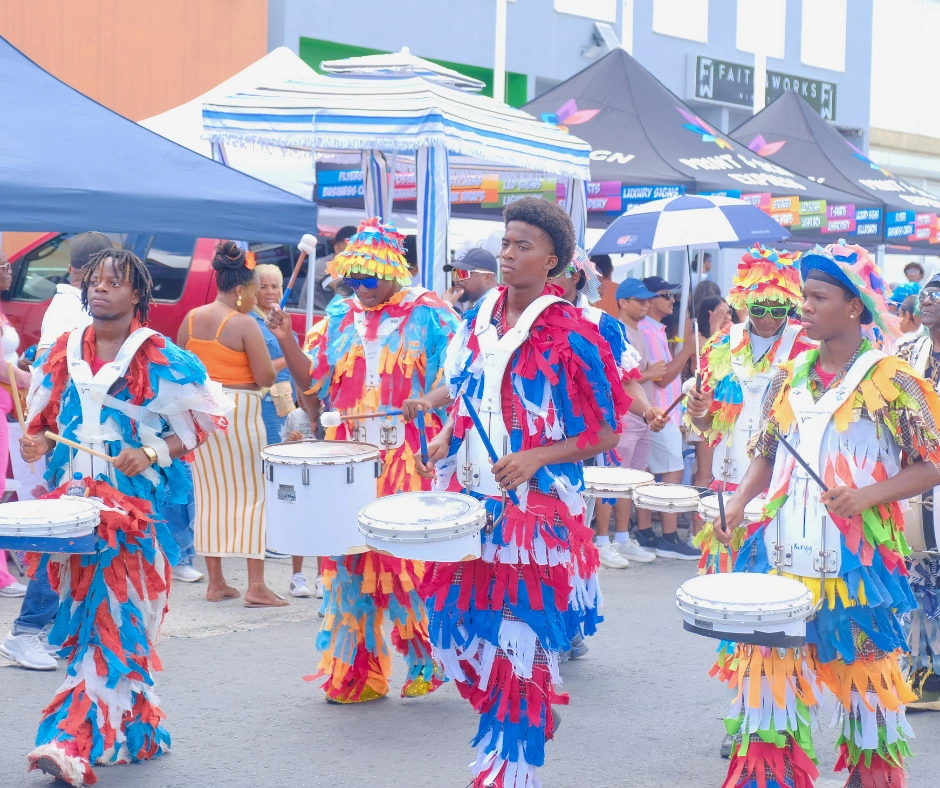
Caribbean Carnival runs on soca and calypso — fast, bass-heavy music engineered to keep a moving crowd dancing for hours behind a line of trucks. Trinidad and Tobago Carnival is where it all started, and that sound now travels with the diaspora to every Caribbean carnival worldwide.
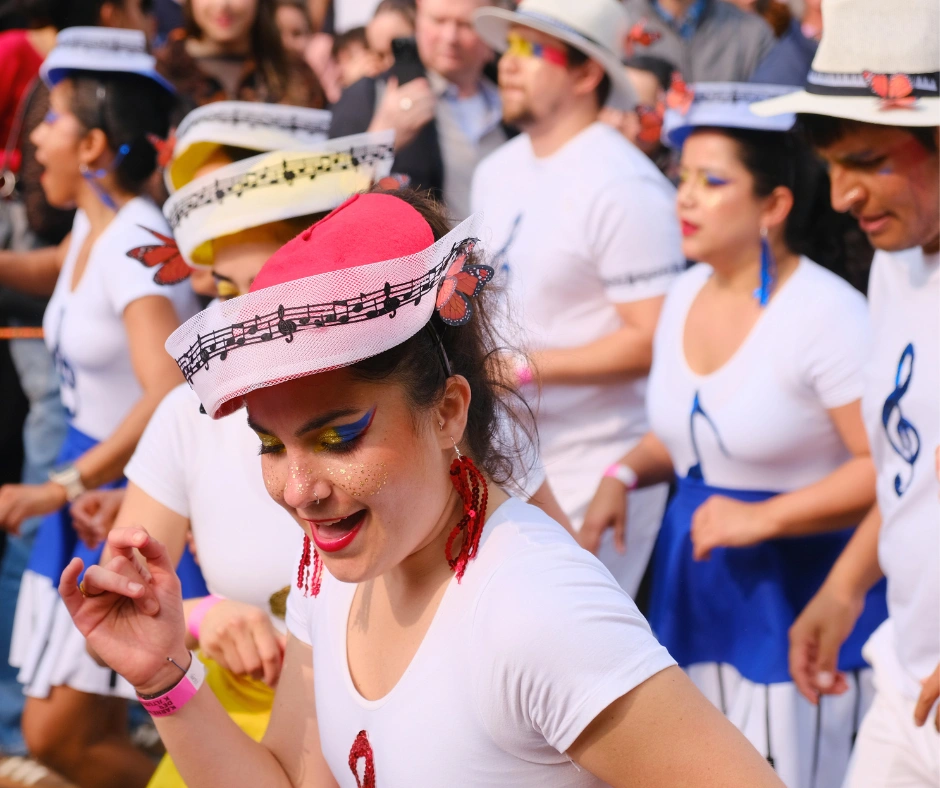
South American Carnival has its own musical engine. Samba (the rhythm behind Rio Carnival) anchors the sound across the region, while individual countries layer in their own variations: cumbia and vallenato in Colombia, candombe and murga in parts of Argentina.
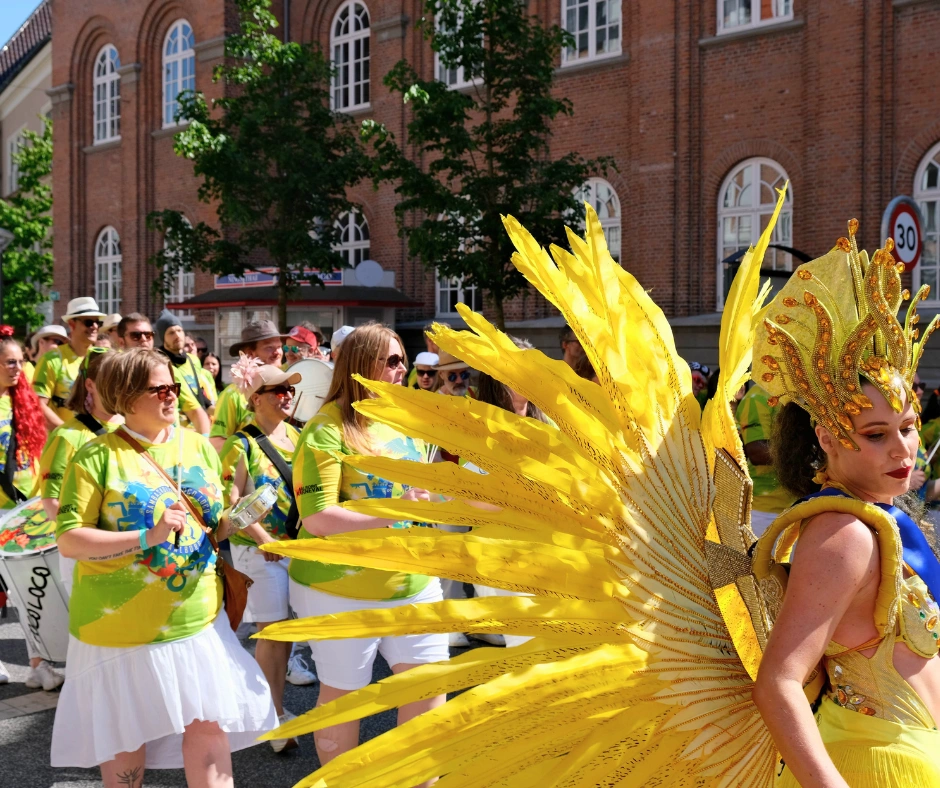
Each genre is built for how its carnival actually moves, suited to staged, choreographed routines rather than an open-road jump-up. For a deeper dive into how these sounds evolved, see Carnival music from samba to soca.
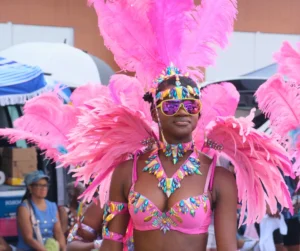
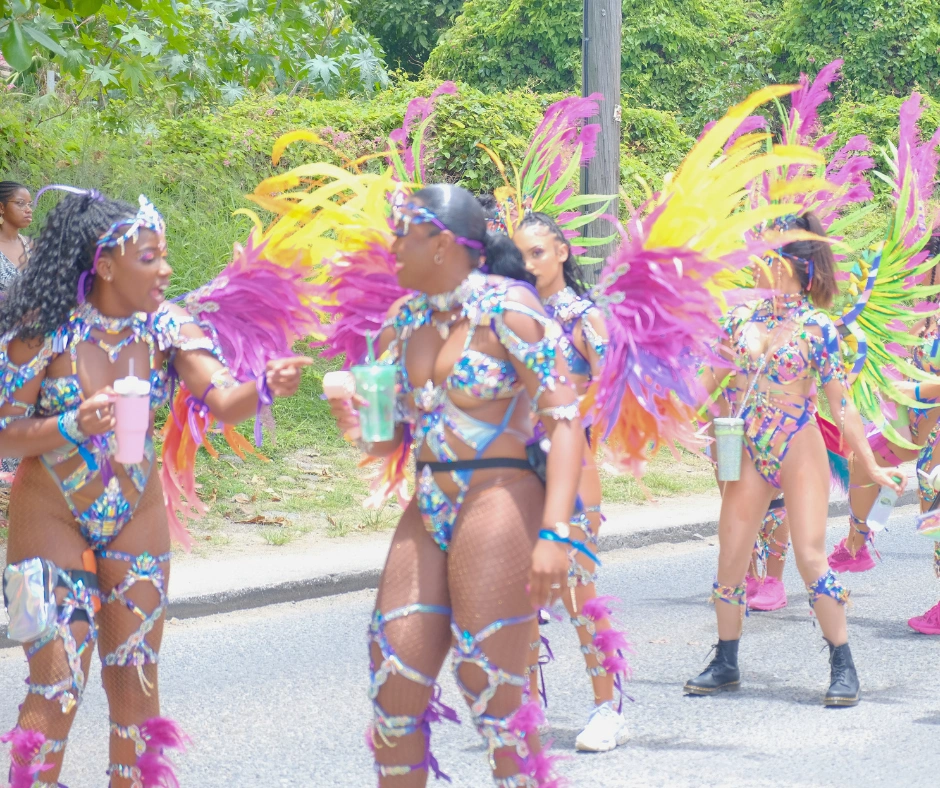
On a Caribbean road, you play mas — and the costume you wear has been months in the making. Mas bands design and build their pieces from scratch, everything from wire frames and headpieces to gems and feathers, all part of a coordinated band presentation judged on the road.
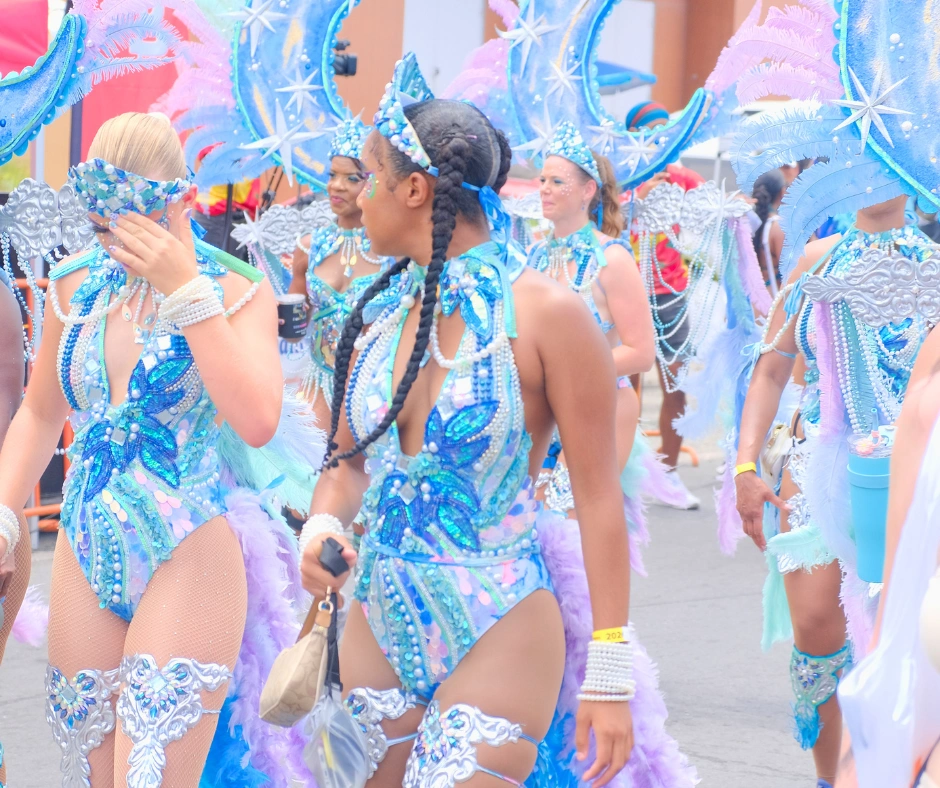
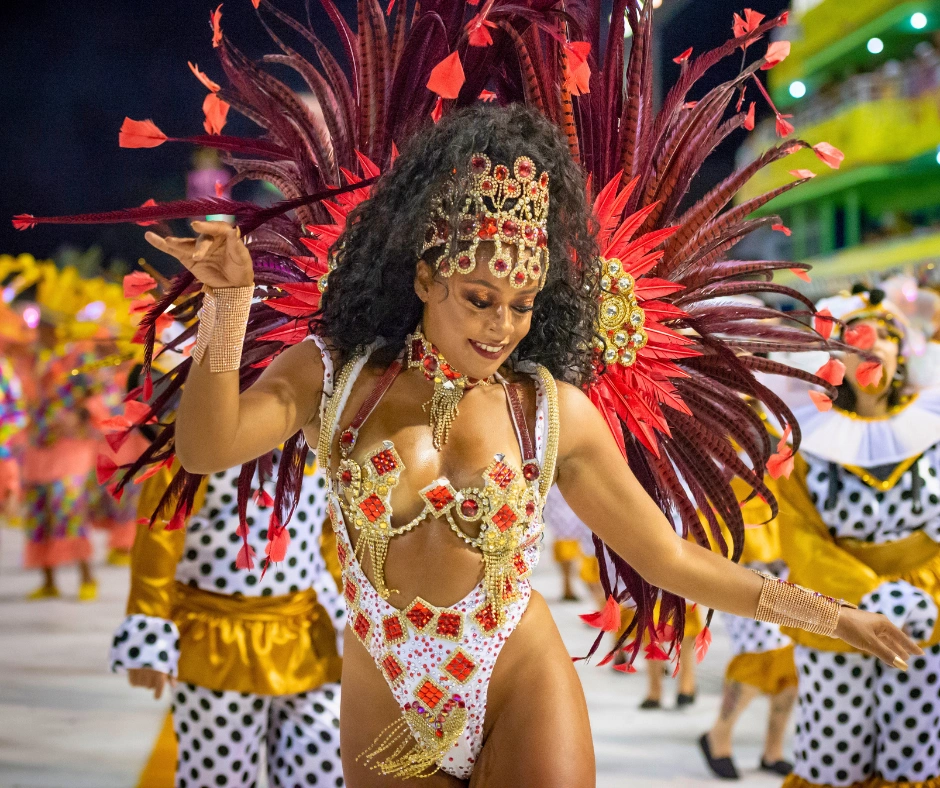
South American carnival costumes are built to tell a story. In Brazil, samba schools spend the entire year constructing elaborate themed pieces — feathers, sequins, towering headdresses — all part of a single coordinated production judged on the night. You wear a character, not just a costume.
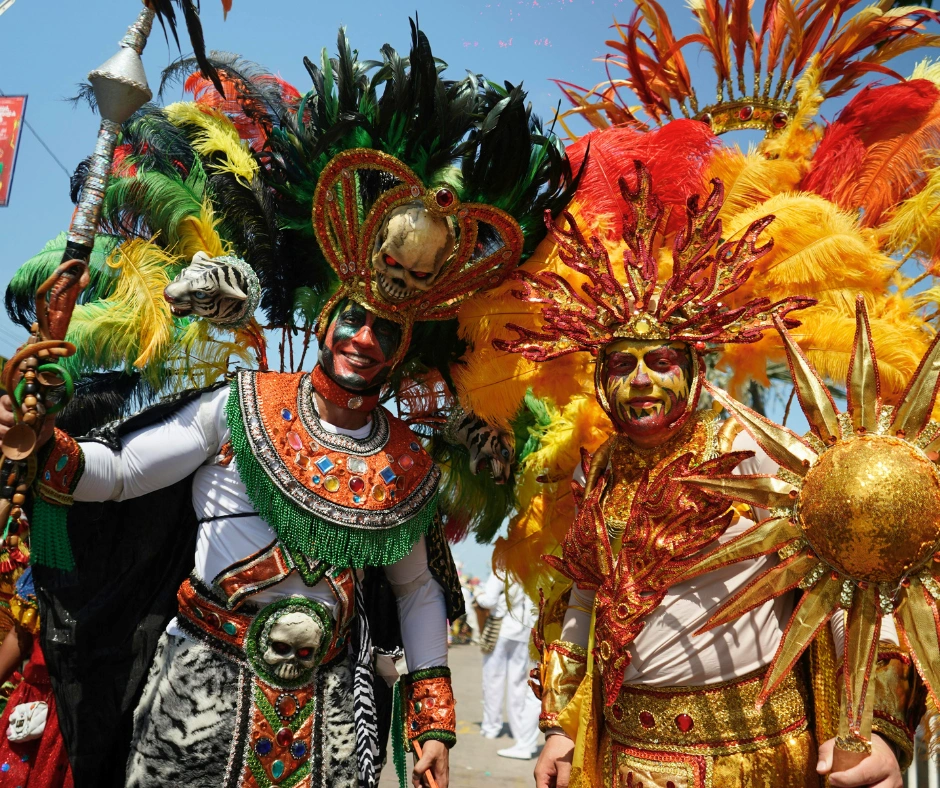
Caribbean Carnival is a moving road march. Masqueraders cover miles of route behind music trucks, with the energy built entirely around forward motion. Bands are judged as the parade passes through designated points along the route, and a winning band is crowned by the end of Carnival.
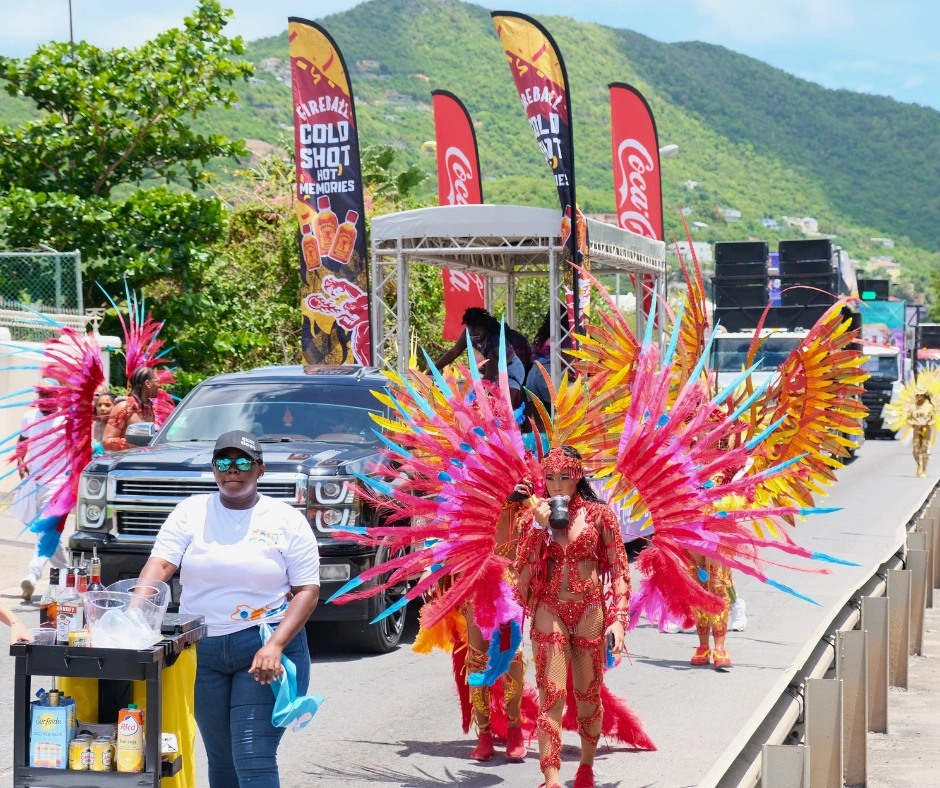
South American Carnival tends to be staged and judged, with elaborate productions built for an audience rather than a moving crowd. Competing groups often perform inside purpose-built stadiums on a strict time limit, or parade down a fixed route designed for spectating rather than open participation.
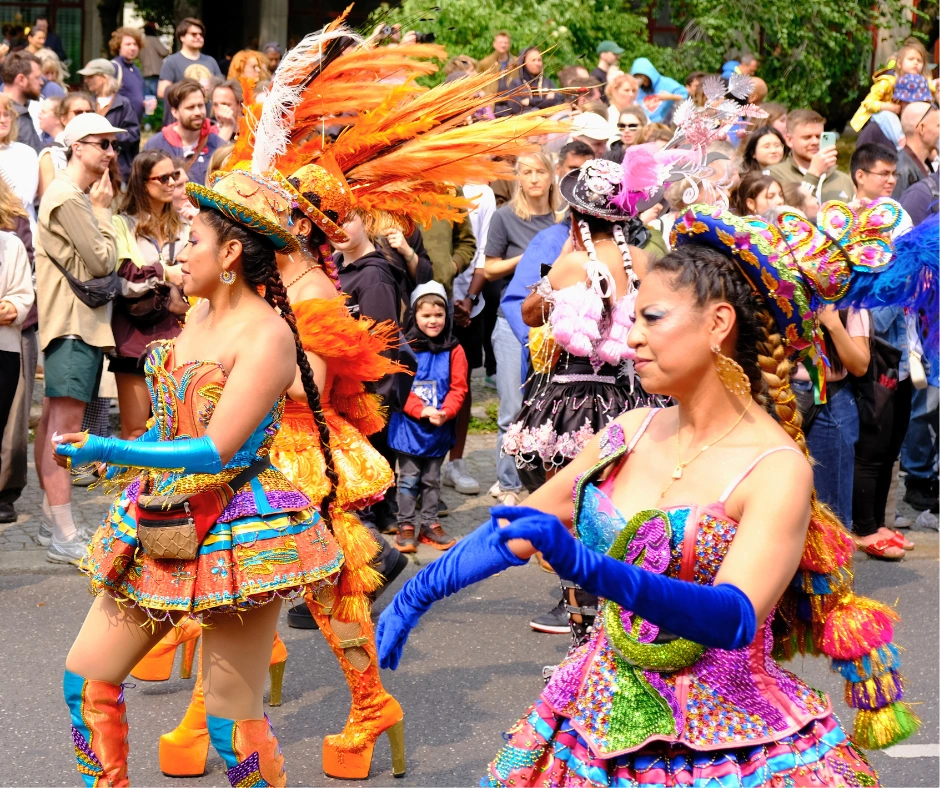
The default at Caribbean Carnival is to play mas: register with a band, get a costume, and become part of the road instead of watching from the sidewalk. For a full walkthrough of that process, see How to Get a Carnival Costume: A Guide to Ordering and Collection.
South American Carnival leans more toward spectating, at least for its headline events, though exceptions exist depending on the country and carnival. Joining a samba school or a comparsa is possible in some cities with enough planning, and a few carnivals open up more directly to crowd participation than others.
Neither tradition is better than the other, just built differently. If hands-on, body-to-body energy on the road is what you’re chasing, Caribbean Carnival delivers it from the first J’ouvert step. If a high-production spectacle with elaborate stagecraft is more your speed, South American Carnival is worth experiencing at least once. Either way, knowing the difference going in means showing up with the right expectations — and the right costume.
Ready to start planning? Browse the full lineup of Caribbean Carnivals and South America Carnivals to find your next trip.
Caribbean Carnival is rooted in post-emancipation African-diaspora culture and centres on the road march — a moving parade where you play mas alongside a band. South American Carnival draws more from European pre-Lenten tradition blended with indigenous and Afro-Latin influences, and is generally more performance-driven, with competing groups performing for crowds rather than moving with them.
They share a name and a festive spirit, but they’re two distinct traditions. Rio Carnival is built around samba school competition inside a purpose-built stadium, while Caribbean Carnival is an open road march fuelled by soca and calypso where the crowd is the parade. The music, costumes, format, and cultural roots are all different.
It depends on what you’re looking for. Caribbean Carnival puts you in the action from day one — you register with a band, wear a costume, and move with the crowd for hours. South American Carnival offers world-class spectacle that’s easier to experience as a visitor without advance planning. Browse Caribbean Carnivals and South America Carnivals to see which lineup fits your travel window.
Caribbean Carnival runs on soca and calypso — high-energy, bass-driven music designed for hours of dancing on the road. South American Carnival is anchored by samba in Brazil, cumbia and vallenato in Colombia, and candombe and murga in parts of Argentina, each tuned to a more staged and choreographed format. For the full story on how these sounds connect, see Carnival music from samba to soca.
At Caribbean Carnival, participation is the point — you register with a mas band, collect your costume, and play on the road. South American Carnival skews more toward spectatorship at its headline events, though options like joining a samba school or a comparsa exist with enough planning. For everything you need to know about getting a costume and playing mas, see How to Get a Carnival Costume: A Guide to Ordering and Collection.
Specials are here!