This guide walks through that history in plain terms. You’ll learn where Carnival in Malta came from, why women were once banned from wearing masks, how floats started out on the water, and why one sword dance still matters so much.
Malta celebrates Carnival because it is the last stretch of indulgence before Lent, the 40-day period when Christians traditionally fasted and gave up meat. The name says as much. It traces back to the Latin carni levare, tied to that practice of putting meat aside. In Christian societies, Carnival became the approved window for eating, drinking, and celebrating before the fasting began. Malta, a deeply Catholic island, has kept that rhythm for centuries.
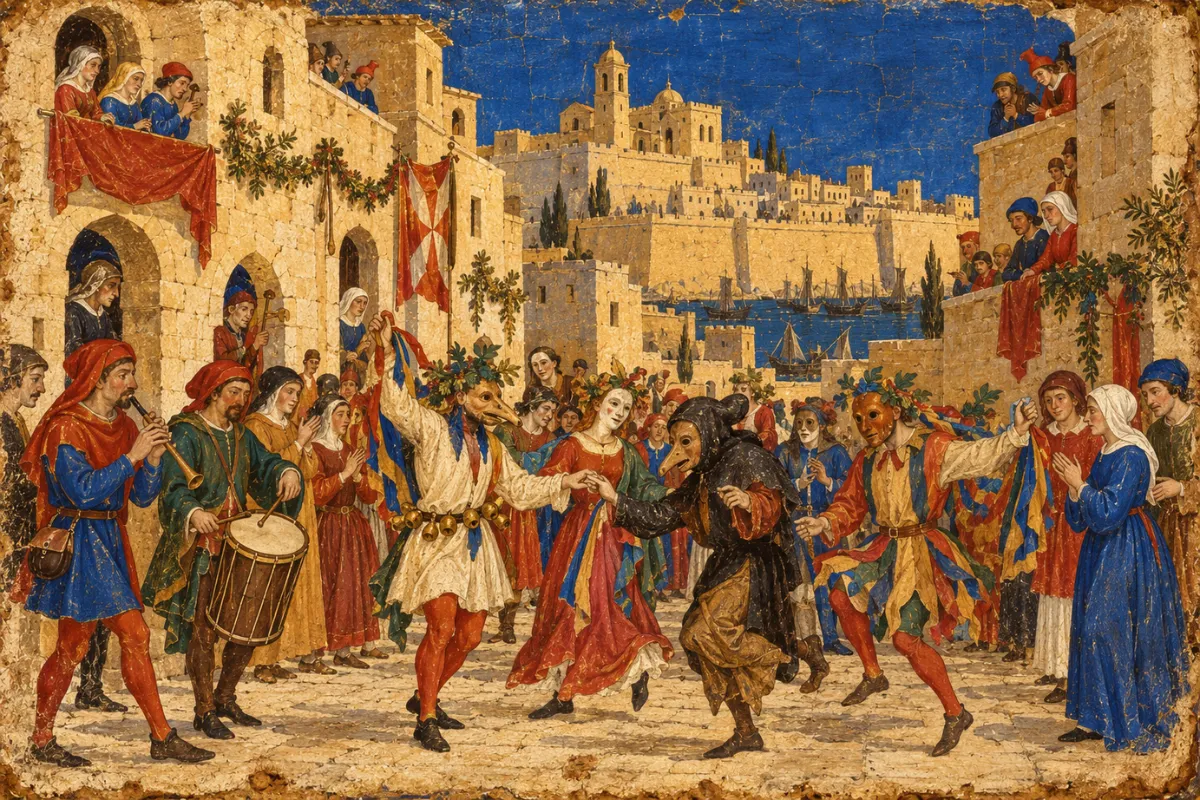
That explains the timing, but not why Carnival became such a big deal. For that, you have to go back further, to ancient festivals that celebrated fertility, the renewal of the year, and the end of winter. During those festivals, everyday rules relaxed, the usual lines between social classes blurred, and people were allowed to do things that were frowned upon the rest of the year. That freedom is the part Malta held onto, especially through disguise and satire, which means using humor to poke fun at people and events. Carnival became the few days a year when Maltese society could laugh at itself and at the people in charge, and it has reflected the island’s changing values, tensions, and ambitions ever since.
You’ll often hear that the Knights of St. John brought Carnival to Malta after they took over the islands in 1530, and that the tradition dates to around 1535. That’s a myth. Professor Stanley Fiorini spent three decades gathering the documents that prove otherwise, published as Documentary Sources of Maltese History, a 13-volume collection of more than 5,000 records issued by Malta University Press between 1996 and 2016. Among the things those documents reveal is the celebration of Carnival well before the arrival of the Order of St. John. The evidence includes minutes from the town council between 1450 and 1498 and records from the Santo Spirito Hospital in Rabat covering 1494 to 1562. Malta also had long-standing ties with Sicily and mainland Europe, where Carnival traditions had been firmly established for centuries, which makes an early arrival on the islands highly likely.
So where did the myth come from? Two things kept it alive. Written records from medieval Malta are relatively scarce, which leaves long gaps in the story, and the writings of a 16th-century chronicler of the Order were misread by later writers. Between the missing documents and the misreading, the Knights ended up with credit for a tradition that was already there when they landed.
The Knights of St. John were a religious order of knights who ruled Malta from 1530 to 1798, led by a Grand Master. The first of them to leave a mark on Carnival wanted less of it, not more. During Piero del Ponte’s brief rule from 1534 to 1535, celebrations were marked by austerity rather than excess. He curbed the revelry and redirected it into chivalric tournaments and martial exercises, which he considered more fitting for a community of knights.
Carnival was not his only concern. The Order was religious, yet some of its knights behaved in ways that had nothing to do with faith, and del Ponte wanted it corrected. He called a general assembly to censure what he saw as erratic behavior, and he held it at St. Lawrence’s Church in Birgu, the Knights’ principal city in the years before Valletta was built.
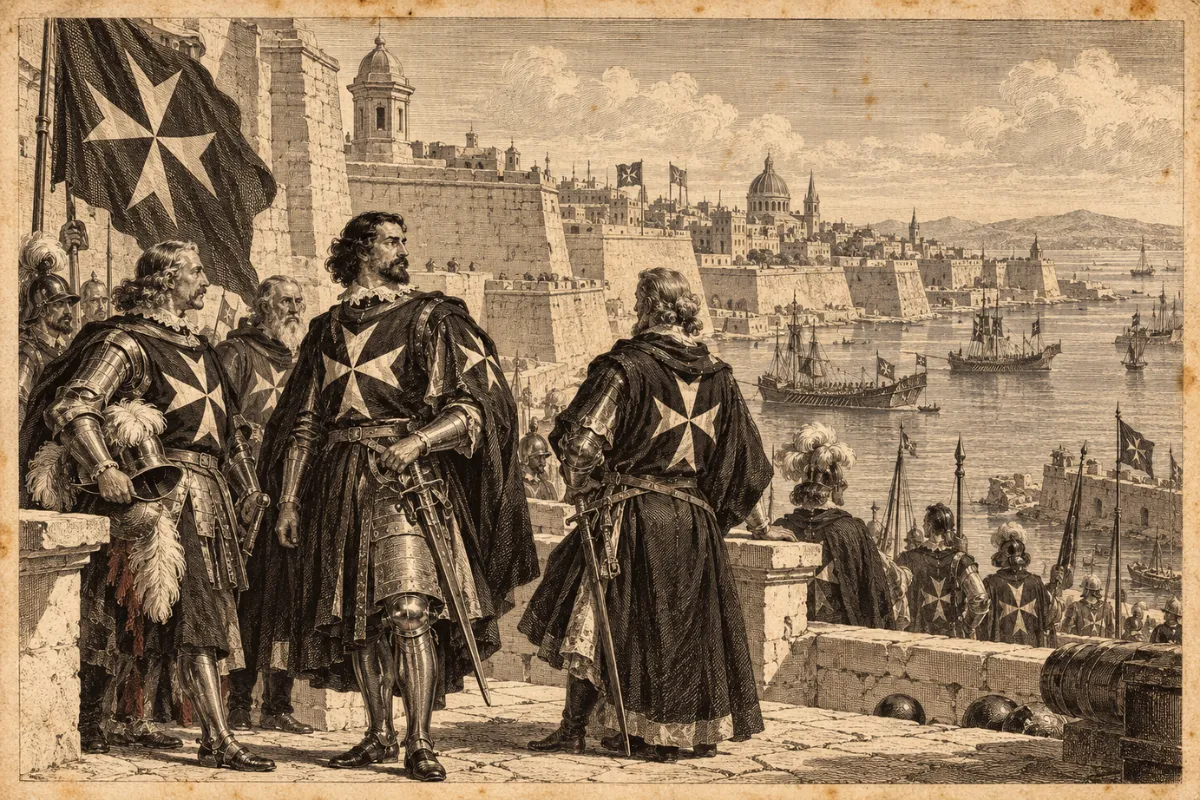
His successors took a different approach. Rather than suppress Carnival, they encouraged it while keeping it carefully controlled, and it gradually became a more structured event. The festivities of the 1500s featured tournaments, pageants, and military displays that let the Knights show off their skills, while the wider population took to the streets for their own celebrations. Authorities stepped in from time to time to restrain the excess, but masking and elaborate spectacle were still permitted.
The Parata took shape during this same period, and it remains one of the defining elements of Maltese Carnival. It is a ritualized sword dance that reenacts the victory of the Great Siege of 1565, with performers dressed as Christians and Turks. For generations it captured the collective memory of that victory and renewed a sense of resilience and defiant resistance shared by the Knights and the Maltese alike.
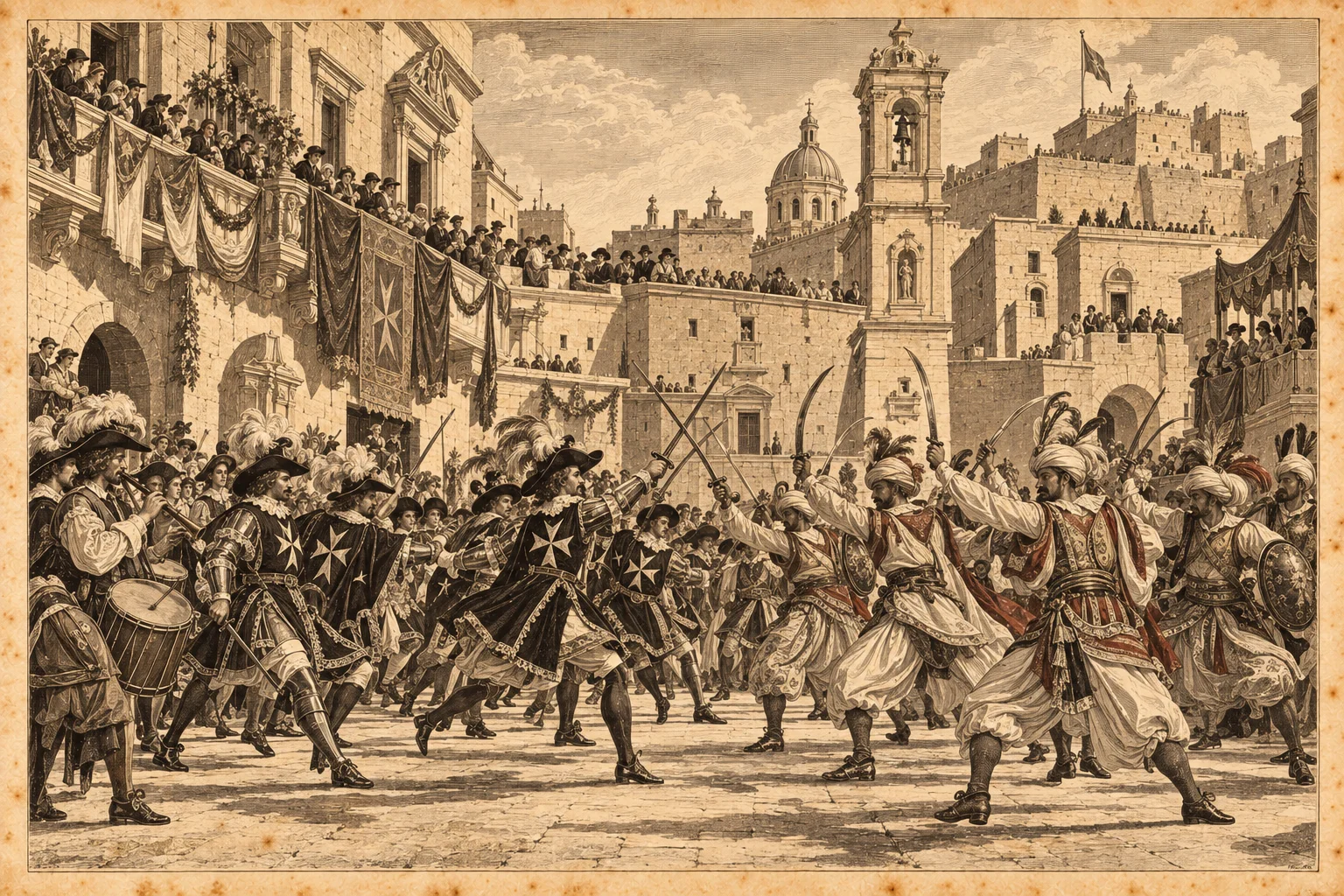
What it means has shifted over time. The Parata was once a solemn communal ritual meant to carry a message, and today it is a symbolic performance carried out mostly by youngsters. Even so, it sits at the center of Maltese Carnival heritage, summed up in a saying you’ll still hear: no Parata, no Carnival.
Disguise is one of the oldest threads running through Carnival, carried over from the ancient festivals that came before it, and in Malta it has been argued over for almost as long. The Knights permitted masking, but the permission came with conditions. From the 17th century onward, as celebrations grew more elaborate, restrictions were imposed from time to time, including bans on women wearing masks or irreverent costumes. Most of those limits were relaxed as the years passed.
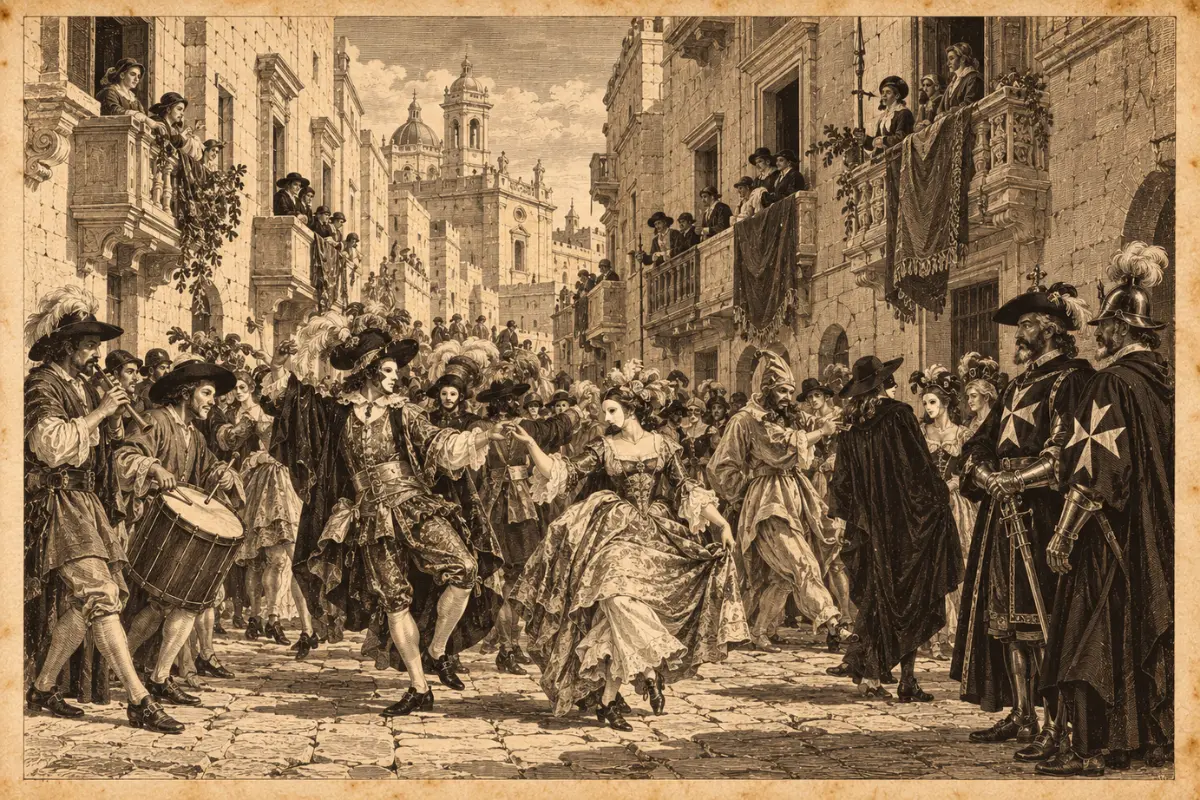
One of them caused a scandal. In 1639, Grand Master Lascaris passed a law limiting women’s masks and regulating comic theater performances. Italian knights protested the restrictions, and the younger ones went further. They ransacked the college run by the Jesuits (a religious order) and demanded that the Jesuits be thrown out of Malta. The Jesuits were temporarily expelled, and the dispute generated extensive correspondence with the Vatican. It also left a mark on the language: the idiom wiċċ Laskri, meaning “face of Lascaris,” is still used for someone who is sad or frustrated.
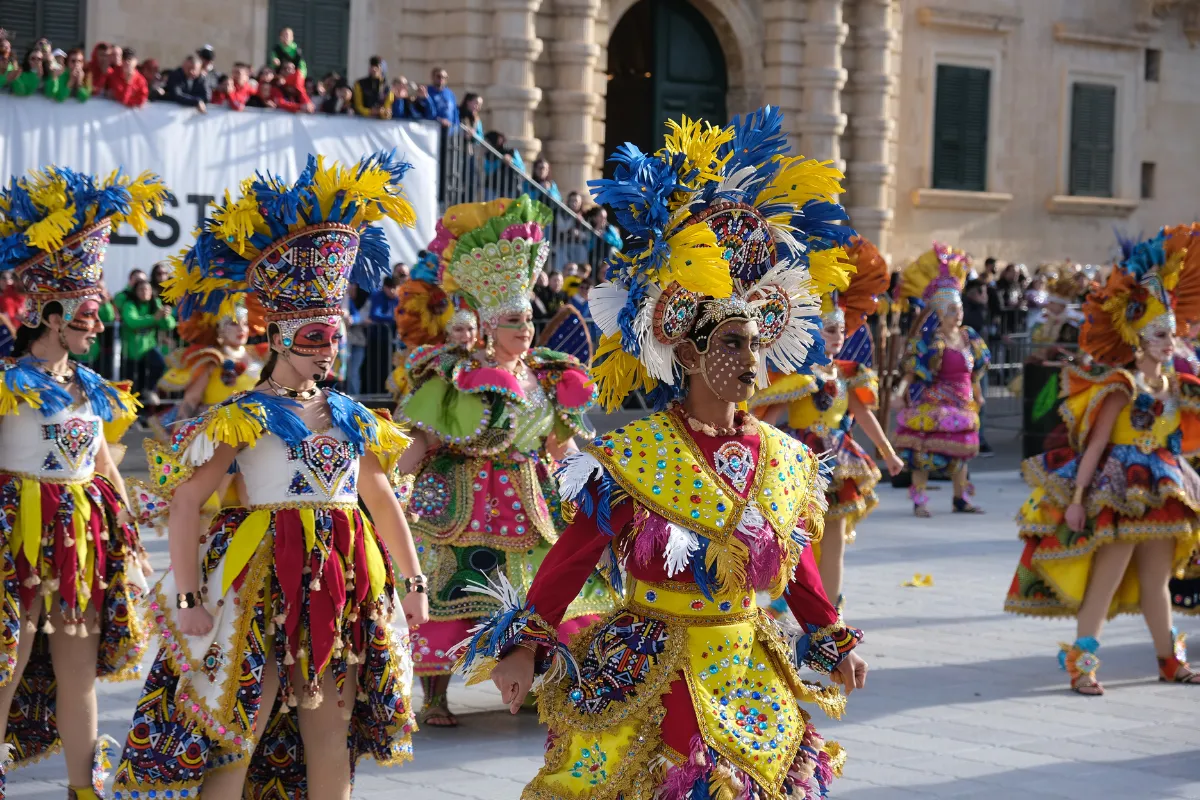
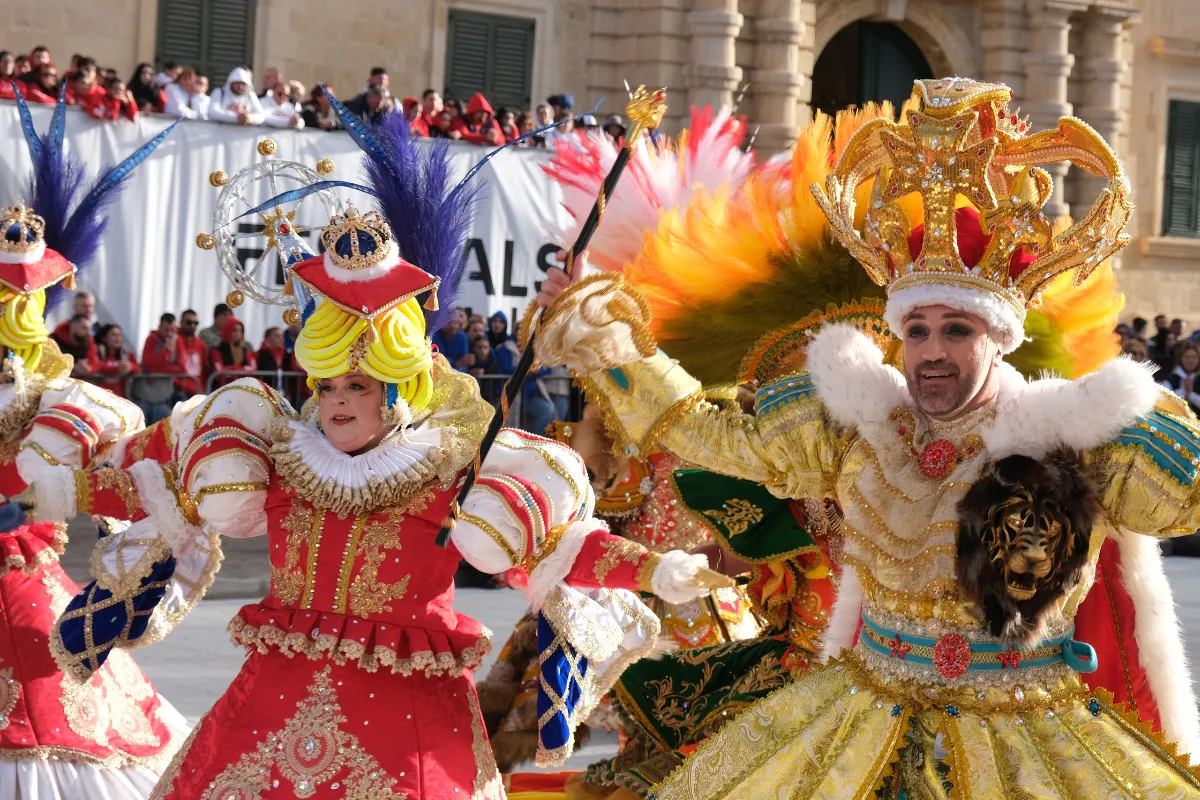
Masks never lost their place. Grotesque masks feature in Valletta’s official Carnival parade today, and in Nadur, on Gozo, crowds fill the streets in all kinds of masks and costumes, many of them funny or grotesque. Peter Paul Buttigieg, a Nadur local and Carnival enthusiast, remembers what made it special: anyone could disguise themselves under a mask and do whatever they wanted.
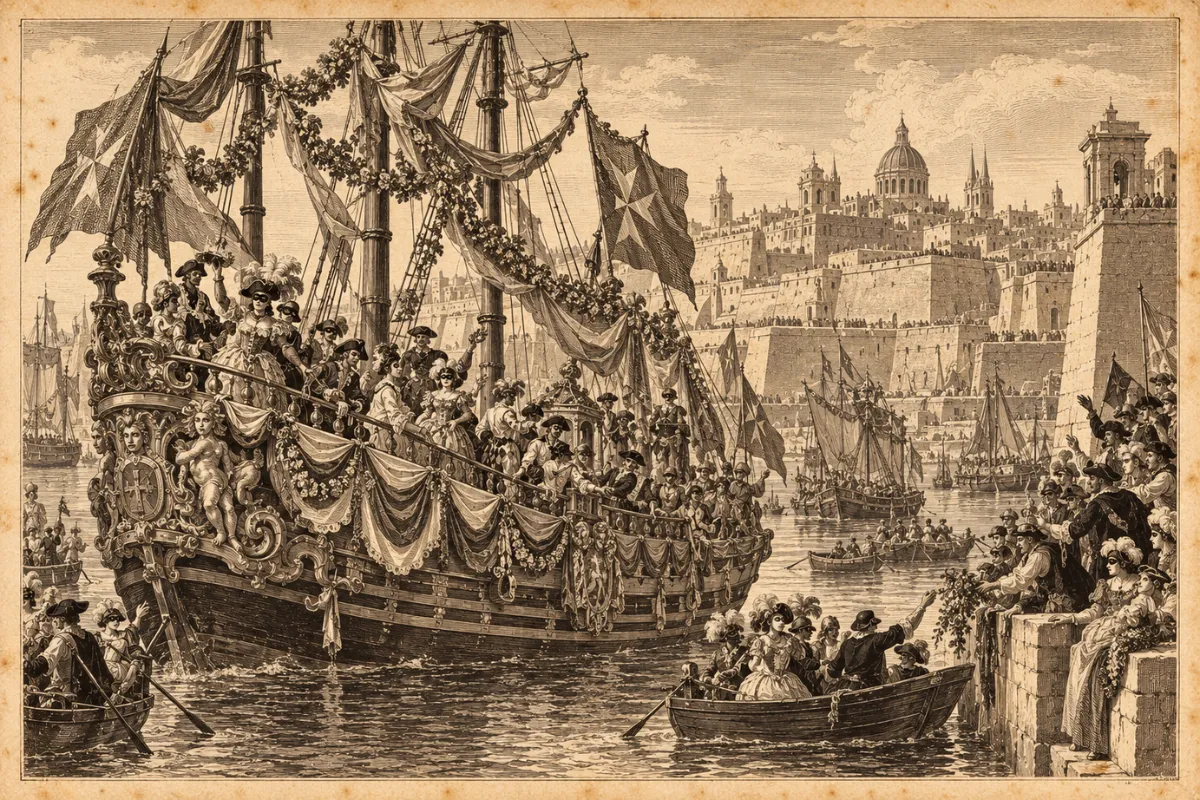
The floats that roll through Valletta today began on the water. Decorated ships came first, and over the 17th and 18th centuries they evolved into land-based parades as Carnival grew steadily more elaborate. By 1730, organized processions in Valletta featured decorated carriages, music, and widespread participation.
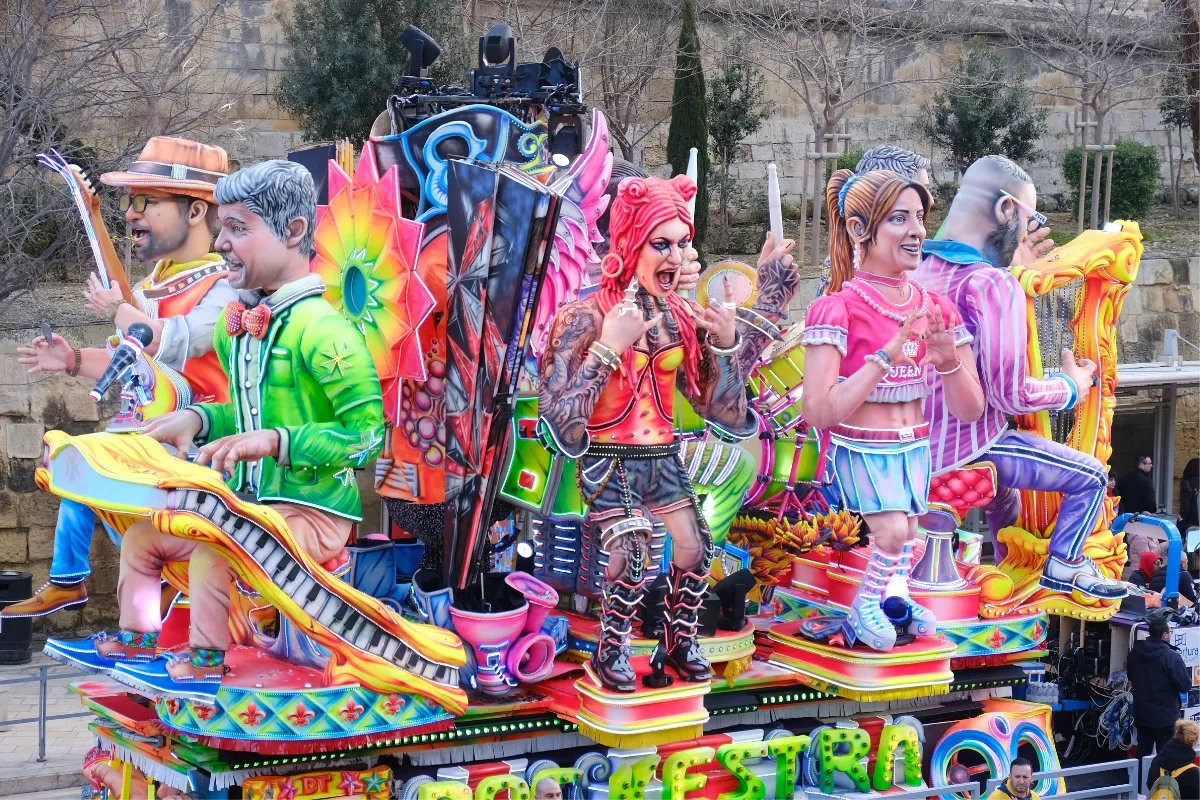
The floats also became a way to talk back. During the 19th and early 20th centuries, Maltese Carnival reached a peak of satirical creativity, with floats caricaturing political figures and their decisions and reflecting public or party sentiment. That unsettled the authorities more than once and led to bans on political satire, notably in 1936. Carnival adapted to each restriction and carried on regardless, keeping its central place in Maltese culture. Today the parade features King Carnival, presiding over the celebrations.
Modern Maltese Carnival was shaped after World War I, when a Carnival Committee was established. It brought formal organization and introduced competitions for dances, costumes, and floats, the structure that still runs the event. Valletta remained the center of it all until the early 1970s, with St. George’s Square, in front of the Grand Master’s Palace, serving as the focal point.
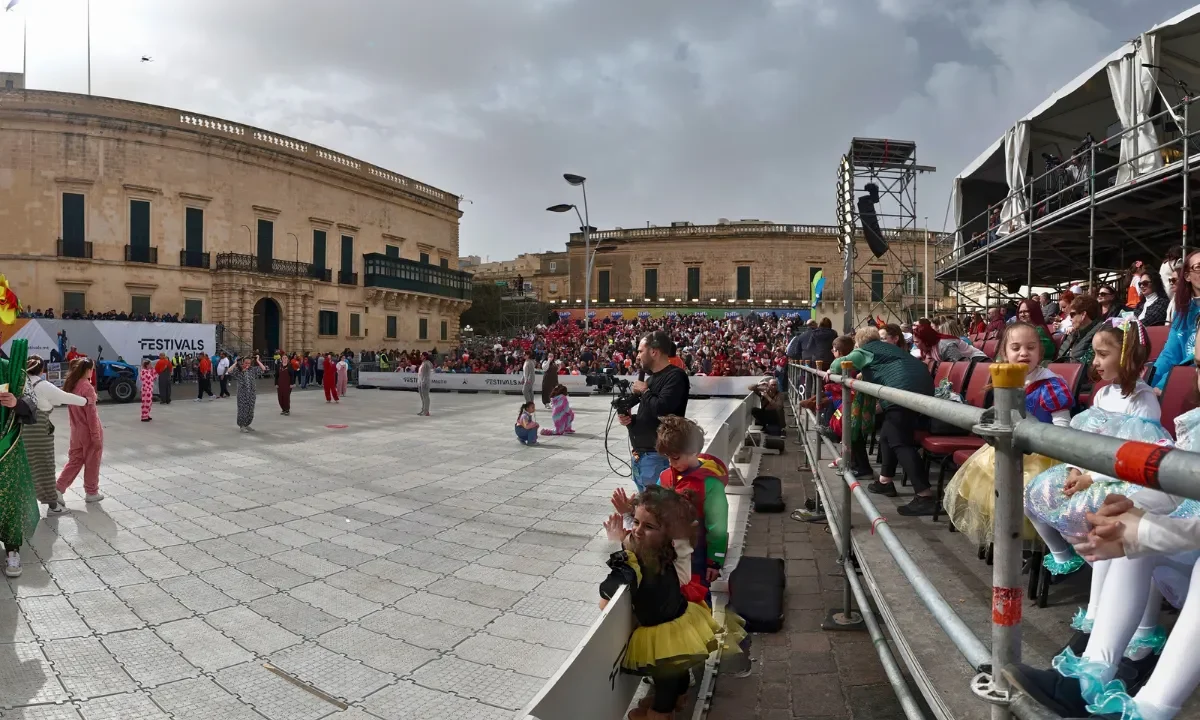
Then Carnival left the square. From 1972 until 1988 it was held in May, with events increasingly concentrated in Freedom Square, the site now occupied by Malta’s Parliament House, designed by the Genoese architect Renzo Piano. Urban development in the early 21st century forced further relocations, but the essence of Carnival endured, and in 2014 it returned to St. George’s Square. That revival brought back elements that had been lost, including overt satire and the Qarċilla (a wandering farce in rhyming verse), and it signaled a renewed appreciation for Carnival’s historical depth and expressive freedom. When we sat in the square in 2026, we were watching Carnival back where it had spent most of the last century.
Carnival in Malta is a blend of tradition and contemporary creativity, held in the days leading up to Ash Wednesday. Valletta hosts the main parades, with large mechanized floats, elaborate choreographed dances, and competitions recognizing artistic excellence. It’s a family affair as much as a spectacle. When we were there in 2026, nearly every child in the crowd was in costume. Check out our 5-day Malta Carnival itinerary if you’re planning your time in the capital.
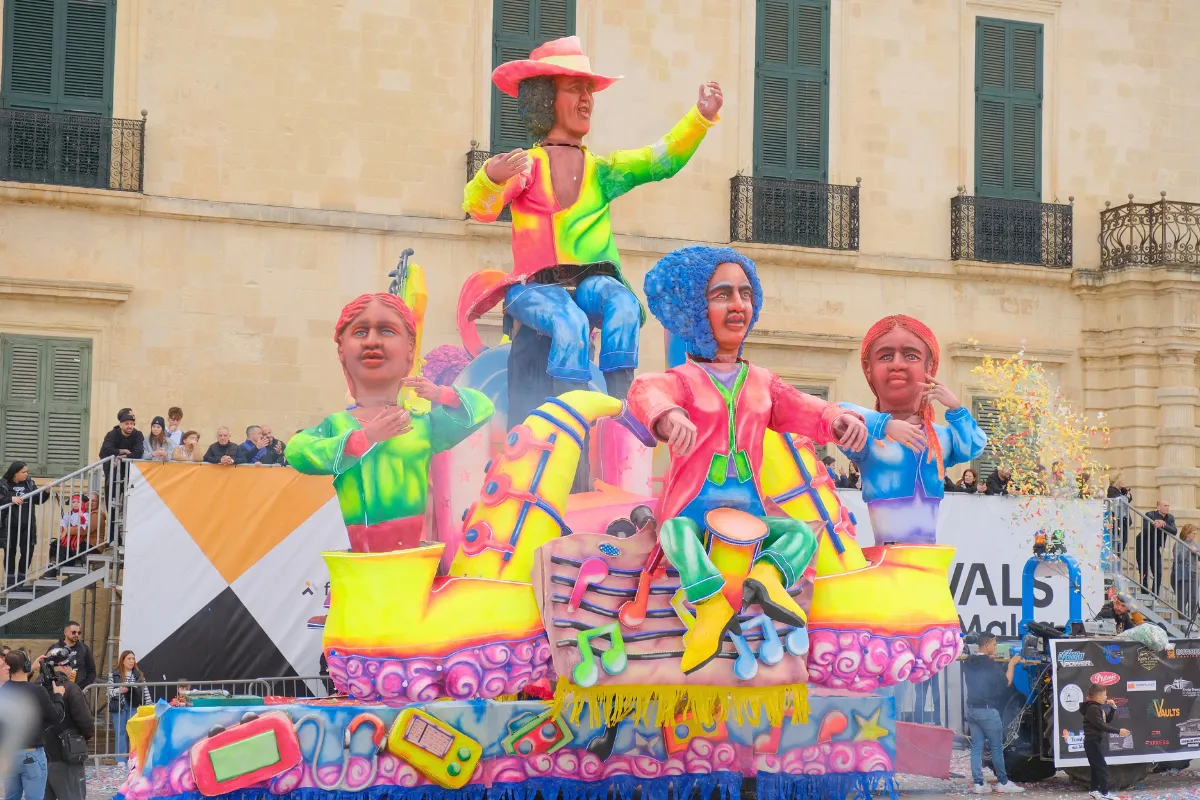
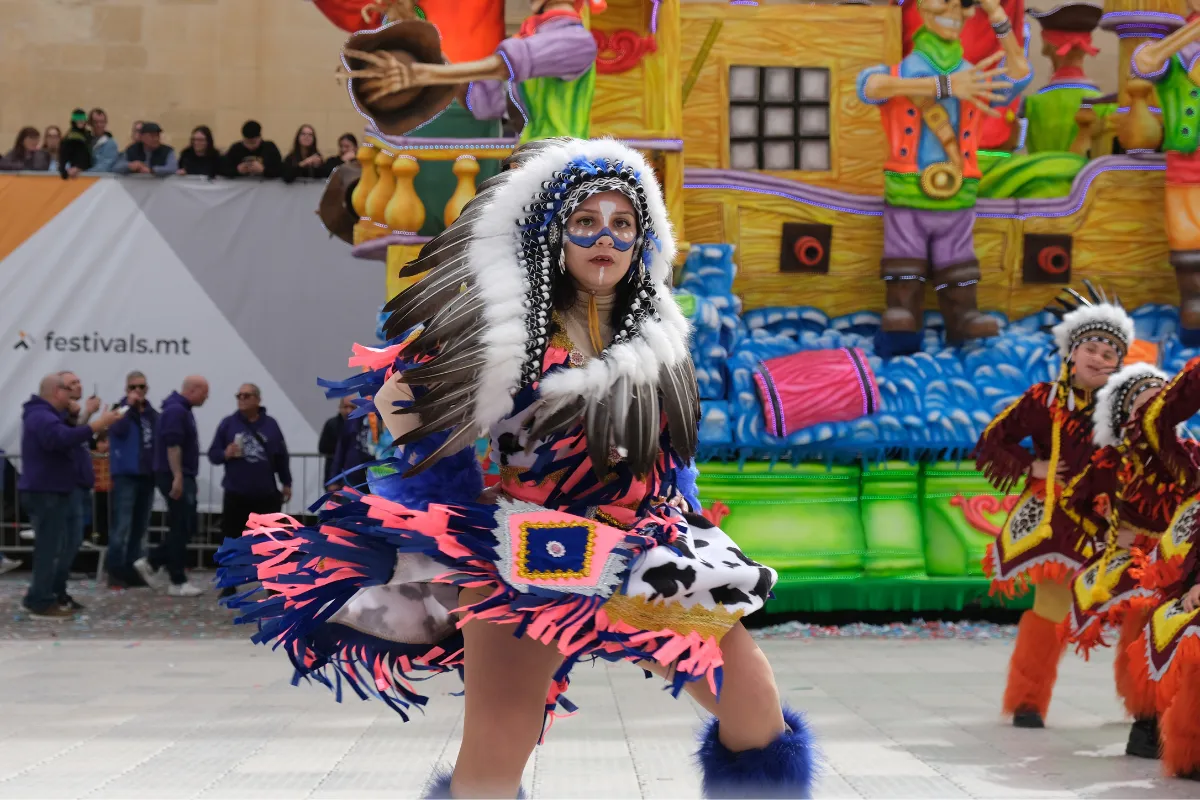
Gozo keeps a distinct Carnival identity, from the grand parades in Victoria to the festivities that animate villages across the island. Nadur is the one that stands apart. There is no program to follow, so people simply show up in the weirdest costume they can come up with, and satirical floats, imaginative group costumes, and unrestrained crowds turn the streets into a spontaneous, grotesque spectacle that captures Carnival’s anarchic spirit.
A lot of this history is still standing. The Grand Master’s Palace dominates St. George’s Square and invites you to walk through 450 years of its life as a center of power and a symbol of the nation. It is now the seat of the Office of the President of Malta, and visitors can access more than 85 percent of the building, including its armory.
Birgu is worth the trip too, since it was the Knights’ principal city before Valletta existed and the place where del Ponte called his assembly at St. Lawrence’s Church. Fort St. Angelo sits there as well. No other fortress shaped Malta’s destiny with the same intensity. The Knights christened it and made it their headquarters, remodeling it with a series of artillery platforms that introduced bastioned defense to the islands.
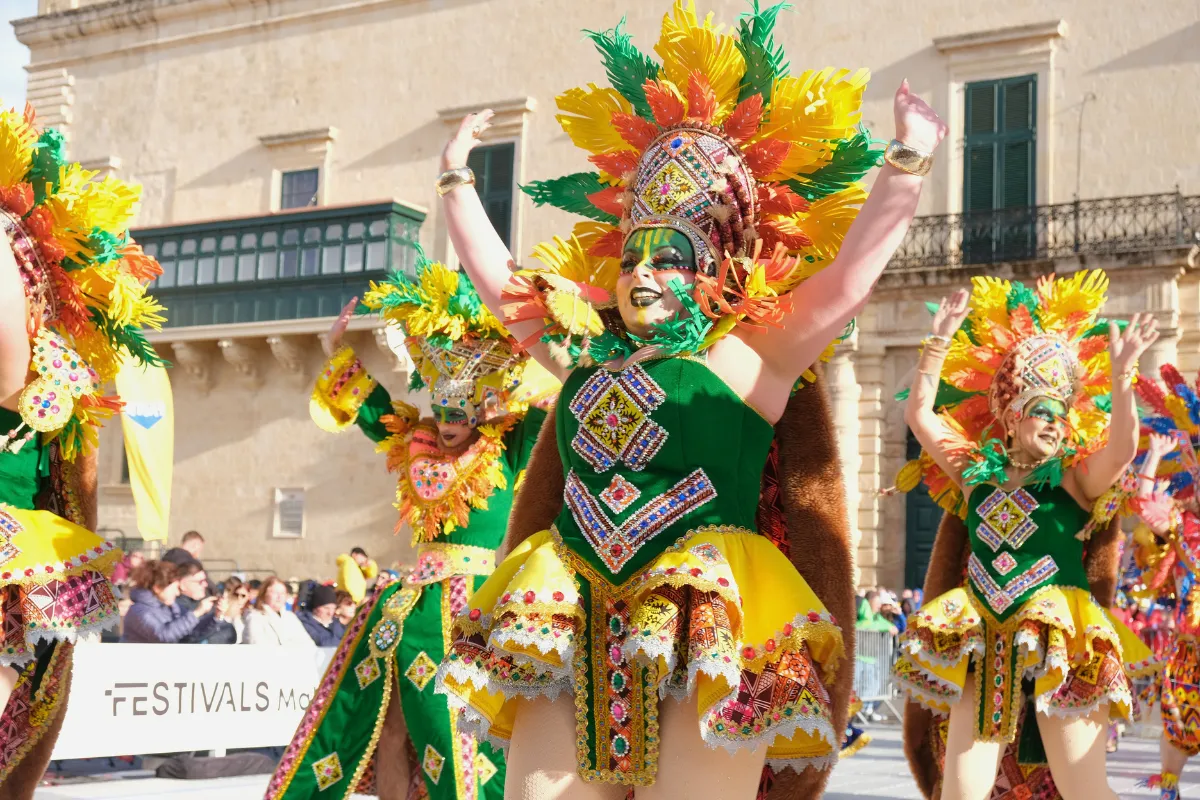
Throughout its long history, Maltese Carnival has reflected society’s changing values, tensions, and aspirations. It has been curbed, banned in parts, moved across the calendar and across the city, and it has come back every time, rooted in ancient ritual and continually reshaped by events around it. That is what makes it one of Malta’s most resilient traditions, and why Valletta and towns across the islands still turn into places where the rules are briefly suspended.
Now that you know the story, see what it looks like in person in our recap of Carnival in Valletta.
More than 500 years. The earliest written evidence comes from minutes of Malta’s town council between 1450 and 1498, and from records of the Santo Spirito Hospital in Rabat covering 1494 to 1562.
No. Carnival is often dated to around 1535, just after the Knights took control, but Professor Stanley Fiorini’s research shows it was already part of Maltese life before they arrived. The misconception comes from the scarcity of medieval Maltese records and from later misreadings of a 16th-century chronicler of the Order.
A ritualized sword dance that reenacts the victory of the Great Siege of 1565, performed by people dressed as Christians and Turks. It began during the era of the Knights, and today it is mostly performed by youngsters. It remains central enough to Maltese Carnival that there’s a saying about it: no Parata, no Carnival.
It means “face of Lascaris,” and it describes someone who is sad or frustrated. The idiom comes from the 1639 clash over Grand Master Lascaris’s edict restricting women’s masks and comic theater, which ended with young knights ransacking the Jesuit College and the Jesuits being temporarily expelled from Malta.
A wandering farce performed in rhyming verse. It was among the traditional elements lost for years and brought back in 2014, when Carnival returned to St. George’s Square, along with overt satire.
No. From 1972 until 1988 it was held in May, with events increasingly concentrated in Freedom Square, the site now occupied by Malta’s Parliament House.